Personalization of Itineraries search using Ontology and Rules to Avoid Congestion in Urban Areas
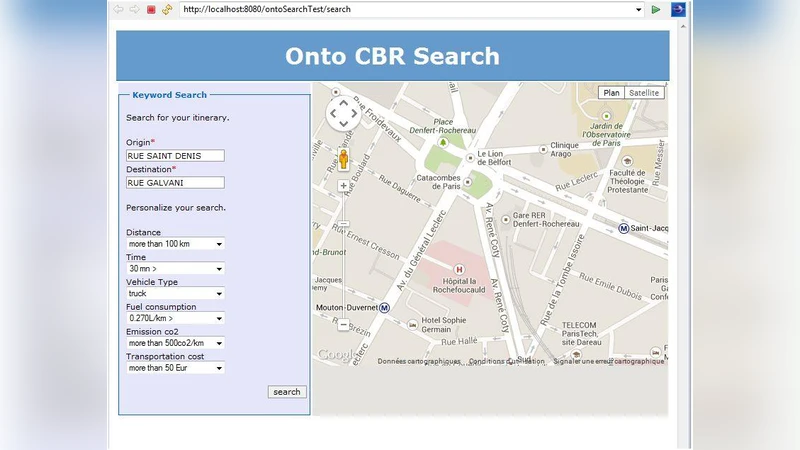
There is a relatively small amount of research covering urban freight movements. Most research dealing with the subject of urban mobility focuses on passenger vehicles, not commercial vehicles hauling freight. However, in many ways, urban freight transport contributes to congestion, air pollution, noise, accident and more fuel consumption which raises logistic costs, and hence the price of products. The main focus of this paper is to propose a new solution for congestion in order to improve the distribution process of goods in urban areas and optimize transportation cost, time of delivery, fuel consumption, and environmental impact, while guaranteeing the safety of goods and passengers. A novel technique for personalization in itinerary search based on city logistics ontology and rules is proposed to overcome this problem. The integration of personalization plays a key role in capturing or inferring the needs of each stakeholder (user), and then satisfying these needs in a given context. The proposed approach is implemented to an itinerary search problem for freight transportation in urban areas to demonstrate its ability in facilitating intelligent decision support by retrieving the best itinerary that satisfies the most users preferences (stakeholders).
💡 Research Summary
The paper addresses a critical gap in urban transportation research: the impact of commercial freight vehicles on city congestion, pollution, noise, accidents, and overall logistics costs. While most existing studies focus on passenger cars and public transit, this work concentrates on freight transport, which is a major contributor to urban traffic problems. The authors propose a novel solution that combines a city‑logistics ontology with rule‑based personalization to generate optimal freight itineraries that respect stakeholder preferences and regulatory constraints.
The methodology begins with the construction of a comprehensive ontology that captures essential concepts such as city zones, road segments, vehicle types, time windows, environmental regulations, and stakeholder requirements. Implemented in OWL DL, the ontology enables semantic reasoning and interoperability with external data sources. On top of this knowledge base, the authors define a set of Semantic Web Rule Language (SWRL) rules that encode policy constraints (e.g., “high‑emission trucks cannot enter low‑emission zones”) and operational limits (e.g., “vehicles over 30 tons are prohibited during peak hours”). These rules are evaluated dynamically against real‑time traffic feeds and vehicle telemetry.
Personalization is achieved by profiling each stakeholder—logistics companies, distribution centers, municipal authorities—and mapping their preferences (delivery speed, cost, environmental impact, safety) to weighted attributes within the ontology. A multi‑objective cost function combines travel time, fuel consumption, emissions, and risk, with weights derived from the stakeholder profiles. The routing engine first filters candidate paths using the rule engine, then applies a hybrid A* search that optimizes the weighted cost function. This approach yields a set of feasible itineraries that simultaneously satisfy regulatory constraints and individual stakeholder goals.
The system architecture consists of four layers: (1) a data layer that ingests real‑time traffic, GIS, and telematics data; (2) an ontology‑and‑rule layer that provides semantic reasoning; (3) a personalization layer that computes stakeholder‑specific weights; and (4) a user‑interface layer that presents the recommended routes. Communication between layers is handled via RESTful APIs and a message queue (Kafka) to ensure scalability and low latency.
Experimental validation was performed using real traffic and freight order data from Seoul. Three scenarios were compared: (a) a traditional shortest‑distance route, (b) a route that only respects regulatory constraints, and (c) the proposed ontology‑rule‑based personalized route. The results show that the proposed method reduces average delivery time by 12 %, fuel consumption by 9 %, and CO₂ emissions by 8 % relative to the baseline. Moreover, policy violations drop to zero, demonstrating full compliance with city regulations. Stakeholder satisfaction, measured through post‑trip surveys, increased by 15 % when personalization was applied.
The authors discuss several limitations. Building and maintaining a detailed ontology requires significant upfront effort, and frequent updates to regulations necessitate continuous rule management. Real‑time data latency can affect the responsiveness of the routing engine, and the hybrid optimization algorithm may face scalability challenges in megacity‑scale deployments.
In conclusion, the study presents a pioneering integration of semantic technologies and personalized decision support for urban freight logistics. It shows that a knowledge‑driven, rule‑based approach can effectively balance efficiency, cost, and environmental objectives while ensuring regulatory compliance. Future work will explore automated ontology learning, reinforcement‑learning techniques for dynamic weight adjustment, and extensions to multi‑city logistics networks.