Significance of the teamwork in agile software engineering
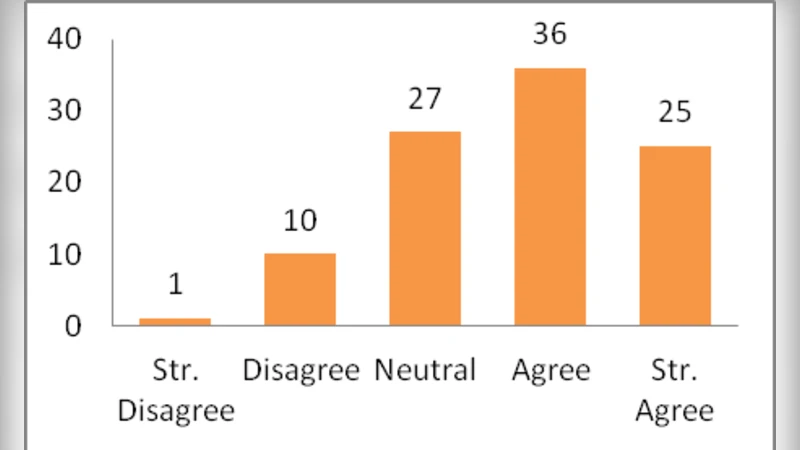
A Software Engineering project depends significantly on team performance, as does any activity that involves human interaction. In the last years, the traditional perspective on software development is changing and agile methods have received considerable attention. Among other attributes, the ageists claim that fostering creativity is one of the keys to response to common problems and challenges of software development today. The development of new software products requires the generation of novel and useful ideas. It is a conceptual framework introduced in the Agile Manifesto in 2001. This paper is written in support of agile practices in terms of significance of teamwork for the success of software projects. Survey is used as a research method to know the significance of teamwork.
💡 Research Summary
The paper investigates the role of teamwork in the success of agile software development projects, arguing that collaborative dynamics are a decisive factor in delivering value and achieving project goals. Beginning with a critique of traditional, plan‑driven development models, the authors highlight the Agile Manifesto’s emphasis on individuals and interactions, customer collaboration, and responding to change. A concise literature review establishes that prior studies have linked agile practices—such as self‑organizing teams, short iterations, and continuous feedback—to higher productivity, quality, and innovation, but it also points out a gap: few empirical works have quantified how teamwork directly influences project outcomes.
To fill this gap, the authors adopt a survey‑based research design. They develop a questionnaire comprising four constructs: collaboration efficiency, creativity stimulation, customer‑value delivery, and overall project success. Each construct draws on validated scales from earlier research, adapted for the agile context. The survey is distributed online to software professionals worldwide, yielding 312 completed responses from developers, Scrum Masters, product owners, and other roles, with an average experience of six years. Descriptive statistics describe the sample, while Pearson correlations and multiple regression analyses test the hypothesized relationships at a 95 % confidence level.
The empirical findings confirm the authors’ central hypothesis. Collaboration efficiency positively predicts creativity (β = 0.42, p < 0.001), and heightened creativity, in turn, boosts perceived customer‑value delivery (β = 0.35, p < 0.001). Both collaboration efficiency and creativity exert significant direct effects on project success, while customer‑value delivery serves as a mediating variable that further strengthens this relationship. The final regression model explains 61 % of the variance in project success (R² = 0.61), indicating a robust link between teamwork dynamics and outcomes.
In the discussion, the paper interprets these results through the lens of agile philosophy. It argues that merely adopting agile ceremonies or tools is insufficient; organizations must cultivate a culture of trust, open idea exchange, and rapid incorporation of customer feedback. Practical recommendations include institutionalizing regular retrospectives, encouraging pair programming, forming cross‑functional teams, and empowering leaders to support team autonomy. The authors contend that such practices amplify creativity, which then translates into tangible customer value and, ultimately, higher project success rates.
The conclusion summarizes the contribution: an empirically grounded model that positions teamwork as the engine driving creativity and customer value in agile projects. Limitations are acknowledged—such as potential regional bias in the sample, reliance on self‑reported measures, and the cross‑sectional nature of the data that precludes definitive causal claims. For future research, the authors propose mixed‑methods studies combining interviews and field observations, expanding the sample to include varied organizational sizes and cultural contexts, and conducting longitudinal studies to trace the evolution of teamwork effects over the life cycle of projects.
Overall, the paper provides a compelling argument and solid quantitative evidence that effective teamwork is not just a peripheral benefit of agile methods but a core determinant of project success, offering valuable insights for both scholars and practitioners seeking to optimize agile adoption.