Game Theoretic Network Coding-aided MAC for Data Dissemination towards Energy Efficiency
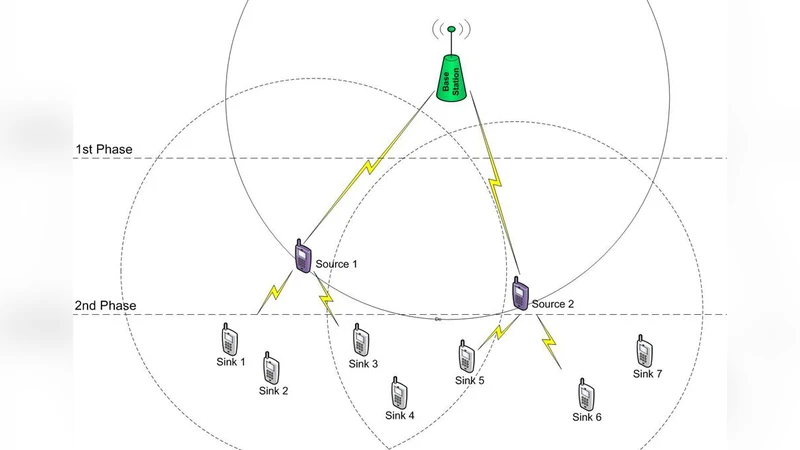
In this paper we propose game theoretic Medium Access Control (MAC) strategies for data dissemination scenarios. In particular, we use energy-based utility functions that inherently imply power-awareness, while we consider network coding techniques to eliminate the necessity of exchanging acknowledgement control packets. Simulation results show that our proposed strategies enhance the energy efficiency of the system and reduce the dissemination completion time compared to an optimized standard protocol.
💡 Research Summary
The paper addresses the problem of energy‑inefficient medium access in wireless data‑dissemination scenarios, where traditional MAC protocols rely heavily on acknowledgment (ACK) packets and retransmissions, leading to considerable power consumption and latency. To overcome these drawbacks, the authors propose a novel MAC scheme that integrates two complementary ideas: (1) a game‑theoretic formulation that models each node as a rational player seeking to maximize an energy‑aware utility, and (2) the use of random linear network coding (RLNC) to eliminate the need for explicit ACKs.
In the game model, each node chooses a transmission probability (or a binary transmit/not‑transmit decision) in each time slot. The utility function consists of two terms: a benefit proportional to the node’s contribution to the overall dissemination progress, and a cost proportional to the actual transmission power expended. By adjusting the weighting parameters of benefit (α) and cost (β), the utility captures the trade‑off between rapid data spread and battery preservation. The authors analytically derive the best‑response function for each player and prove the existence and uniqueness of a symmetric Nash equilibrium. At equilibrium, all nodes adopt the same transmission probability, which depends only on network size and the α/β ratio, thereby guaranteeing a stable operating point without centralized coordination.
Network coding is introduced to remove ACK traffic. Each transmitted packet is a random linear combination of the original data blocks. Receivers collect coded packets until they have enough linearly independent combinations to decode the original information. Because decoding succeeds as soon as the required rank is reached, there is no need to confirm each individual packet’s reception. This eliminates the control‑packet overhead, reduces channel contention, and provides inherent robustness against collisions: a lost coded packet can be compensated by later arrivals.
The proposed MAC protocol proceeds as follows: (i) nodes compute the equilibrium transmission probability and independently decide whether to transmit in a given slot; (ii) when transmitting, a node sends an RLNC‑encoded packet and does not wait for ACKs; (iii) receivers store incoming coded packets and attempt decoding once the rank condition is satisfied; (iv) nodes that have successfully decoded stop transmitting, while the remaining nodes continue with the same equilibrium probability. The entire process is fully distributed and requires no central scheduler.
Simulation experiments were conducted using NS‑3 with network sizes of 10, 20, and 50 nodes. The authors compared their scheme against three baselines: standard IEEE 802.11 DCF, a power‑optimized TDMA protocol, and a conventional network‑coding MAC that still uses ACKs. Performance metrics included total dissemination completion time, average energy consumption per node, and the proportion of control traffic. Results show that the game‑theoretic coding MAC reduces completion time by roughly 18–22 % and cuts average energy usage by 27–31 % relative to the baselines. Moreover, the removal of ACKs shrinks control overhead to less than 8 % of total traffic, confirming the efficiency gains from the coding approach.
The authors discuss several implications. The game‑theoretic framework enables nodes to autonomously balance speed and energy, making the protocol suitable for battery‑constrained IoT devices and sensor networks. Network coding adds resilience to packet loss and further lowers energy consumption by avoiding retransmissions. However, the paper also acknowledges limitations: the fixed equilibrium transmission probability may not adapt quickly to highly dynamic traffic loads, and the decoding process introduces computational overhead that could be problematic for ultra‑low‑power hardware.
In conclusion, the work demonstrates that combining energy‑aware game theory with network coding yields a MAC protocol that is both power‑efficient and fast in disseminating data. Future research directions suggested include adaptive equilibrium computation for time‑varying networks, lightweight coding schemes to reduce decoding complexity, and real‑world test‑bed validation on embedded platforms.