Other-regarding preferences and altruistic punishment: A Darwinian perspective
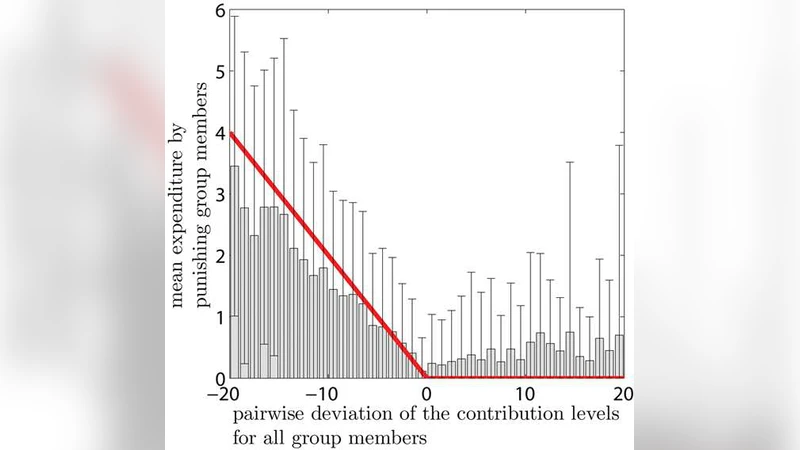
This article examines the effect of different other-regarding preference types on the emergence of altruistic punishment behavior from an evolutionary perspective. Our findings corroborate, complement, and interlink the experimental and theoretical literature that has shown the importance of other-regarding behavior in various decision settings. We find that a selfish variant of inequity aversion is sufficient to quantitatively explain the level of punishment observed in contemporary experiments: If disadvantageous inequity aversion is the predominant preference type, altruistic punishment emerges in our model to a level that precisely matches the empirical observations. We use a new approach that closely combines empirical results from a public goods experiment together with an evolutionary simulation model. Hereby we apply ideas from behavioral economics, complex system science, and evolutionary biology.
💡 Research Summary
The paper investigates how different other‑regarding preference types influence the emergence of altruistic punishment from an evolutionary standpoint. The authors combine empirical data from a public‑goods experiment with an agent‑based evolutionary simulation that incorporates four canonical preference specifications drawn from behavioral economics: pure self‑interest, altruistic concern, disadvantageous inequity aversion (the “selfish” variant of other‑regarding behavior), and advantageous inequity preference.
In the laboratory experiment, participants repeatedly played a standard public‑goods game in which, after observing the contributions of their group mates, they could spend a private cost to punish low contributors. The empirical findings replicate the well‑known pattern that punishment is relatively rare (≈30 % of rounds) but, when it occurs, it is fairly strong (average penalty 0.6–0.8 of the possible maximum). These numbers serve as the benchmark for the model.
The theoretical component formalizes each preference type as a utility function that adds a penalty term for inequity. Disadvantageous inequity aversion, in particular, captures a desire to avoid situations where one’s payoff is lower than that of others, without any explicit concern for the welfare of the other party. This “selfish” other‑regarding preference is the focal point of the analysis.
The evolutionary simulation proceeds in discrete generations. A population of 20 agents is initialized with random preference types. In each generation the agents repeatedly play the public‑goods game, accrue fitness proportional to their monetary payoff, and then reproduce with probability proportional to fitness. Offspring inherit the parent’s preference type, subject to a small mutation probability that can switch the type. The simulation parameters (group size, number of rounds per game, mutation rate, selection intensity) are calibrated to match the experimental setting.
Results show a striking bifurcation. When disadvantageous inequity aversion dominates the population, altruistic punishment quickly becomes an evolutionarily stable strategy. The simulated average punishment frequency and intensity converge to the empirical values observed in the laboratory, indicating that this single preference type is sufficient to quantitatively reproduce real‑world behavior. Conversely, when the population is dominated by pure self‑interest, advantageous inequity preference, or pure altruism, punishment either collapses or remains at negligible levels. Sensitivity analyses reveal that the outcome is robust to variations in mutation rate, selection strength, and group size.
The authors argue that their findings challenge the prevailing “strong reciprocity” narrative, which posits that a dedicated altruistic disposition is required for costly punishment to evolve. Instead, they demonstrate that a relatively modest, self‑protective form of other‑regarding preference can generate the same macro‑level pattern of cooperation enforcement. This parsimonious explanation aligns with a growing body of literature suggesting that many apparently altruistic social norms may be rooted in self‑interest shaped by evolutionary pressures.
Beyond theory, the paper discusses practical implications. Policies aimed at fostering public‑goods provision or collective action could leverage the natural tendency of individuals to avoid disadvantageous inequity. By designing institutions that make being worse‑off than others salient, societies may encourage the spontaneous emergence of punishment mechanisms without incurring large external enforcement costs.
In sum, the study provides a rigorous, interdisciplinary bridge between experimental economics and evolutionary dynamics. It shows that disadvantageous inequity aversion—an economically “selfish” other‑regarding preference—constitutes a sufficient condition for the evolution of altruistic punishment, thereby offering a unified account of a phenomenon that has long puzzled researchers across economics, psychology, and biology.
Comments & Academic Discussion
Loading comments...
Leave a Comment