Caffe: Convolutional Architecture for Fast Feature Embedding
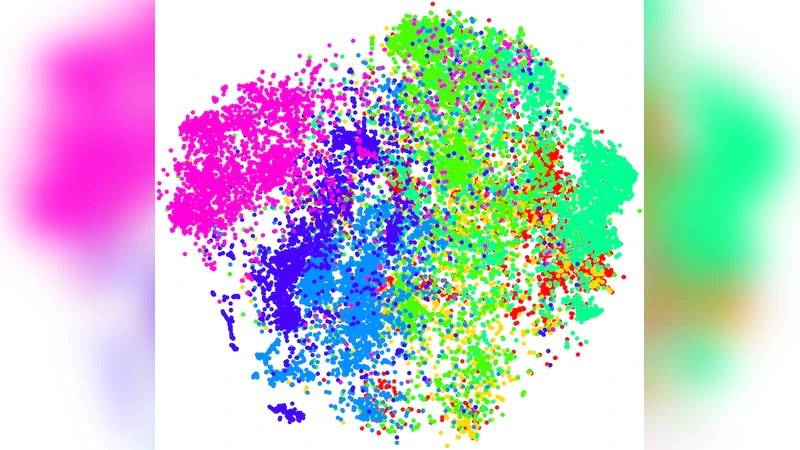
Caffe provides multimedia scientists and practitioners with a clean and modifiable framework for state-of-the-art deep learning algorithms and a collection of reference models. The framework is a BSD-licensed C++ library with Python and MATLAB bindings for training and deploying general-purpose convolutional neural networks and other deep models efficiently on commodity architectures. Caffe fits industry and internet-scale media needs by CUDA GPU computation, processing over 40 million images a day on a single K40 or Titan GPU ($\approx$ 2.5 ms per image). By separating model representation from actual implementation, Caffe allows experimentation and seamless switching among platforms for ease of development and deployment from prototyping machines to cloud environments. Caffe is maintained and developed by the Berkeley Vision and Learning Center (BVLC) with the help of an active community of contributors on GitHub. It powers ongoing research projects, large-scale industrial applications, and startup prototypes in vision, speech, and multimedia.
💡 Research Summary
Caffe, introduced by the Berkeley Vision and Learning Center in 2014, is an open‑source deep learning framework that emphasizes speed, modularity, and reproducibility. Implemented primarily in C++ and released under a BSD license, it provides clean Python and MATLAB bindings, allowing users to prototype, train, and deploy convolutional neural networks (CNNs) with minimal friction.
The core design principle of Caffe is the strict separation of model definition from execution. Network architectures are described in Google Protocol Buffer (proto) files, which encode the directed acyclic graph (DAG) of layers and blobs in a human‑readable text format as well as a compact binary representation. This abstraction enables version control of models, easy migration across platforms, and straightforward sharing of both architecture and trained parameters.
Data flow within Caffe is managed by “blobs,” four‑dimensional tensors that serve as unified containers for inputs, activations, parameters, and gradients. Blobs automatically synchronize between host (CPU) memory and device (GPU) memory, allocating storage lazily to conserve resources. Large datasets are stored in LevelDB, delivering roughly 150 MB/s throughput on commodity hardware with negligible CPU overhead.
Caffe’s layer library covers the full spectrum of operations required for state‑of‑the‑art vision tasks: convolution, pooling, inner‑product, various nonlinearities (ReLU, sigmoid, tanh), local response normalization, element‑wise arithmetic, and loss functions such as softmax and hinge. Each layer implements a forward pass and a backward pass, and developers can add custom layers by adhering to the same interface, making experimentation with novel operators straightforward.
A distinctive feature is the seamless CPU/GPU switch. Both CPU and GPU implementations of each layer coexist within the same class; setting the mode with a single function call (caffe.set_mode(CPU) or caffe.set_mode(GPU)) re‑routes all computation without altering the model definition. This design eliminates hardware‑specific code paths and facilitates deployment on heterogeneous clusters, cloud instances, or edge devices.
Training is performed using stochastic gradient descent (SGD) with support for learning‑rate schedules, momentum, weight decay, and snapshotting. The snapshot mechanism not only enables checkpointing and resumption but also underpins fine‑tuning: a pre‑trained model (e.g., the ImageNet‑trained AlexNet) can be loaded, its weights partially frozen, and the network adapted to a new task with minimal effort. This capability has been instrumental in the success of downstream applications such as R‑CNN object detection, style classification, and open‑vocabulary image retrieval.
Caffe places a strong emphasis on software engineering rigor. Every module is accompanied by unit tests, and no code is merged without corresponding test coverage. The project’s GitHub repository hosts an active community that contributes bug fixes, new layers, and documentation, ensuring the framework evolves with emerging research needs.
Performance benchmarks reported in the paper show that a single NVIDIA K40 or Titan GPU can process over 40 million images per day (approximately 2.5 ms per image), making Caffe one of the fastest CNN implementations of its time. Compared to contemporaries such as Theano, Torch7, and OverFeat, Caffe’s C++ core and efficient memory handling give it a clear advantage in both speed and integration ease for production systems.
Since its public release, Caffe has been adopted in a wide range of academic and industrial projects. It powered object classification demos hosted online, enabled collaborations with Facebook and Adobe, and served as the backbone for the R‑CNN pipeline that achieved top results on the Pascal VOC and ImageNet detection challenges. The framework also supports beginner tutorials ranging from MNIST digit classification to full ImageNet training, fostering accessibility for newcomers.
In summary, Caffe delivers a high‑performance, extensible, and reproducible environment for deep learning research and deployment. Its design choices—protocol‑buffer model files, blob‑based memory abstraction, modular layer architecture, and seamless CPU/GPU switching—address the practical bottlenecks that previously hampered rapid experimentation and large‑scale production. Continued community involvement and planned extensions (e.g., cloud instances, broader language bindings) position Caffe as a lasting cornerstone of the deep learning ecosystem.
Comments & Academic Discussion
Loading comments...
Leave a Comment