Quantum-Classical Transitions in Complex Networks
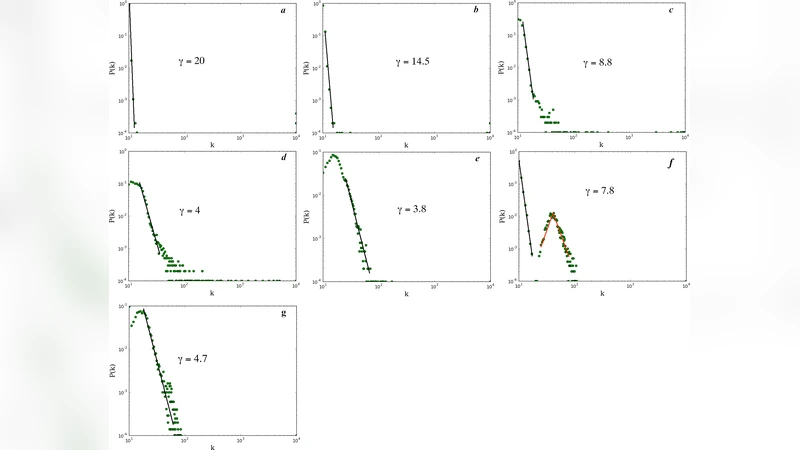
The inherent properties of specific physical systems can be used as metaphors for investigation of the behavior of complex networks. This insight has already been put into practice in previous work, e.g., studying the network evolution in terms of phase transitions of quantum gases or representing distances among nodes as if they were particle energies. This paper shows that the emergence of different structures in complex networks, such as the scale-free and the winner-takes-all networks, can be represented in terms of a quantum-classical transition for quantum gases. In particular, we propose a model of fermionic networks that allows us to investigate the network evolution and its dependence on the system temperature. Simulations, performed in accordance with the cited model, clearly highlight the separation between classical random and winner-takes-all networks, in full correspondence with the separation between classical and quantum regions for quantum gases. We deem this model useful for the analysis of synthetic and real complex networks.
💡 Research Summary
The paper introduces a novel framework that maps the evolution of complex networks onto the temperature‑driven behavior of quantum gases, thereby interpreting structural transitions in networks as quantum‑classical phase transitions. Building on earlier work that used quantum analogies for network analysis, the authors focus specifically on fermionic statistics, which had been largely unexplored in this context. They propose a “fermionic network” model in which each node is assigned an intrinsic energy level εi and the probability that a node acquires a link follows the Fermi‑Dirac distribution f(εi,T)=1/(e^{(εi‑μ)/kT}+1). The temperature T acts as an external control parameter, while the chemical potential μ is adjusted to conserve the total number of links (treated as particles). At high temperatures the distribution flattens, yielding an almost uniform link‑allocation that reproduces the properties of an Erdős‑Rényi random graph. As T is lowered, the distribution becomes sharply peaked at low‑energy nodes, causing a few nodes to accumulate a disproportionate number of links. This results in a winner‑takes‑all topology where a single hub dominates the network. The authors implement the model by starting from a small fully‑connected seed, adding new nodes with random energies, and connecting them to existing nodes with probabilities proportional to their Fermi‑Dirac occupation numbers. Two simulation regimes are examined: (1) constant high temperature, which generates classical random graphs, and (2) a cooling schedule that gradually reduces T, allowing the network to evolve from random to scale‑free (power‑law degree distribution) and finally to a hub‑dominated structure. Quantitative diagnostics—including the degree‑distribution exponent γ, clustering coefficient C, average shortest‑path length ℓ, and centrality measures—show clear signatures of these transitions. Near a critical temperature Tc the network exhibits a power‑law degree distribution (γ≈2–3) and increased clustering, characteristic of scale‑free networks. Below Tc the exponent collapses toward γ≈1, clustering peaks, and ℓ shrinks, indicating the emergence of a dominant hub. These findings mirror the classical‑to‑quantum crossover in fermionic gases, where the Pauli exclusion principle forces particles into low‑energy states at low temperature. The model is further validated on real‑world data sets such as airline route maps, citation networks, and social media follower graphs. By fitting the model to empirical degree distributions, the authors infer effective temperatures that are typically low, suggesting that many real networks naturally reside in the “quantum” regime where winner‑takes‑all dynamics prevail. The paper concludes that fermionic network modeling provides a powerful physical metaphor for understanding abrupt structural changes in complex systems and proposes future extensions that incorporate additional fields, interaction strengths, and temporal dynamics to capture richer phenomena.
Comments & Academic Discussion
Loading comments...
Leave a Comment