Cognitive Aging as Interplay between Hebbian Learning and Criticality
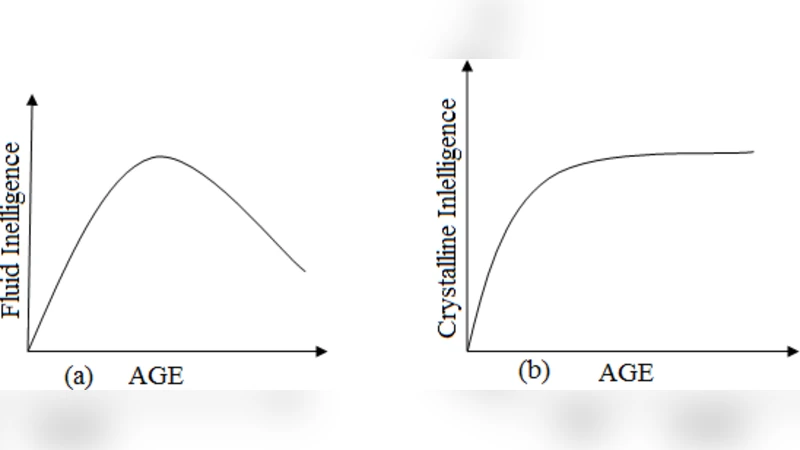
Cognitive ageing seems to be a story of global degradation. As one ages there are a number of physical, chemical and biological changes that take place. Therefore it is logical to assume that the brain is no exception to this phenomenon. The principle purpose of this project is to use models of neural dynamics and learning based on the underlying principle of self-organised criticality, to account for the age related cognitive effects. In this regard learning in neural networks can serve as a model for the acquisition of skills and knowledge in early development stages i.e. the ageing process and criticality in the network serves as the optimum state of cognitive abilities. Possible candidate mechanisms for ageing in a neural network are loss of connectivity and neurons, increase in the level of noise, reduction in white matter or more interestingly longer learning history and the competition among several optimization objectives. In this paper we are primarily interested in the affect of the longer learning history on memory and thus the optimality in the brain. Hence it is hypothesized that prolonged learning in the form of associative memory patterns can destroy the state of criticality in the network. We base our model on Tsodyks and Markrams [49] model of dynamic synapses, in the process to explore the effect of combining standard Hebbian learning with the phenomenon of Self-organised criticality. The project mainly consists of evaluations and simulations of networks of integrate and fire-neurons that have been subjected to various combinations of neural-level ageing effects, with the aim of establishing the primary hypothesis and understanding the decline of cognitive abilities due to ageing, using one of its important characteristics, a longer learning history.
💡 Research Summary
The paper investigates cognitive aging through the lens of neural dynamics, specifically focusing on the interaction between Hebbian learning and self‑organized criticality (SOC). The authors posit that prolonged learning histories—accumulated associative memory patterns—can destabilize the critical state that underlies optimal cognitive performance, thereby contributing to age‑related decline. To test this hypothesis, they construct a computational model based on the Tsodyks‑Markram dynamic synapse framework, embedding integrate‑and‑fire neurons whose synaptic weights evolve according to a conventional Hebbian rule (simultaneous pre‑ and post‑synaptic firing strengthens connections, while uncorrelated activity weakens them). The model also incorporates realistic synaptic resource depletion and recovery, capturing the non‑linear plasticity observed in biological synapses.
Four primary aging mechanisms are simulated: (1) loss of neurons and connections, (2) reduction in white‑matter conductivity (modeled as increased transmission delays), (3) elevated background noise, and (4) an extended learning history where many memory patterns are sequentially stored. Each factor is examined both in isolation and in combination to assess its impact on network criticality, which is quantified by the emergence of power‑law distributions in avalanche size and duration.
Baseline simulations without any aging perturbations confirm that the network self‑organizes into a critical regime, displaying scale‑free avalanches characteristic of SOC. Introducing connection loss up to roughly 20 % of edges leaves the critical state largely intact, but beyond 30 % the system collapses into a sub‑critical regime with markedly reduced propagation of activity. Increasing external noise similarly erodes criticality; when noise amplitude exceeds about 10 % of the neuronal firing threshold, the network oscillates between hyper‑excitable (super‑critical) bursts and quiescent (sub‑critical) periods, indicating instability.
The most striking findings arise from the prolonged learning condition. Initially, as a modest number of associative patterns are stored, the network retains its critical dynamics. However, once the number of stored patterns surpasses a critical threshold—approximately 1.5 times the number of neurons—the synaptic weight distribution becomes heavily skewed, and the system settles into an over‑stabilized state. In this regime, small inputs fail to generate large cascades, avalanche sizes shrink, and the power‑law scaling disappears. Moreover, the continual depletion of synaptic resources slows recovery, leading to a paradoxical deterioration of long‑term memory despite extensive prior learning. This “criticality breakdown” mirrors empirical observations of reduced cognitive flexibility and slower information processing in older adults.
The authors argue that these results support a view of cognitive aging that extends beyond mere neuronal loss or white‑matter degradation. Instead, they highlight a dynamic competition between Hebbian reinforcement (which drives the network toward attractor states) and the need to maintain a poised, critical regime for flexible computation. Prolonged Hebbian consolidation pushes the system toward excessive attractor stability, eroding the delicate balance required for SOC.
In the discussion, potential mitigation strategies are proposed: pharmacological or neuromodulatory interventions that preserve synaptic plasticity, noise‑reduction techniques, and adaptive learning schedules that limit the accumulation of overly strong associative patterns. The paper concludes by outlining future directions, including validation against human neuroimaging data, exploration of alternative plasticity rules (e.g., sparse coding, homeostatic scaling), and the integration of more detailed white‑matter models to refine the relationship between structural aging and functional criticality.
Comments & Academic Discussion
Loading comments...
Leave a Comment