Correlating and Cross-linking Knowledge Threads in Informledge System for Creating New Knowledge
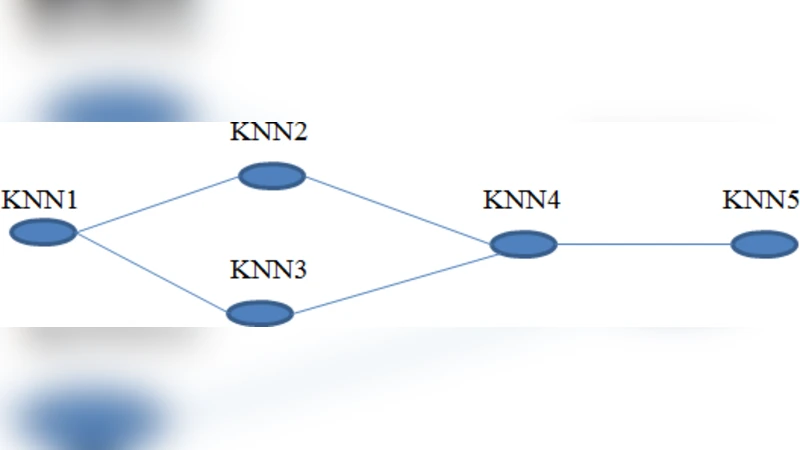
There has been a considerable advance in computing, to mimic the way in which the brain tries to comprehend and structure the information to retrieve meaningful knowledge. It is identified that neuronal entities hold whole of the knowledge that the species makes use of. We intended to develop a modified knowledge based system, termed as Informledge System (ILS) with autonomous nodes and intelligent links that integrate and structure the pieces of knowledge. We conceive that every piece of knowledge is a cluster of cross-linked and correlated structure. In this paper, we put forward the theory of the nodes depicting concepts, referred as Entity Concept State which in turn is dealt with Concept State Diagrams (CSD). This theory is based on an abstract framework provided by the concepts. The framework represents the ILS as the weighted graph where the weights attached with the linked nodes help in knowledge retrieval by providing the direction of connectivity of autonomous nodes present in knowledge thread traversal. Here for the first time in the process of developing Informledge, we apply tenor computation for creating intelligent combinatorial knowledge with cross mutation to create fresh knowledge which looks to be the fundamentals of a typical thought process.
💡 Research Summary
The paper presents the Informledge System (ILS), a novel knowledge‑representation framework inspired by the brain’s ability to organize and retrieve information. Unlike traditional semantic networks or ontology‑based systems that rely on static, hierarchical structures, ILS is built from autonomous concept nodes—called Entity Concept States (ECS)—and intelligent, weighted links that together form a dynamic weighted graph. Each ECS encapsulates not only a label but also a multidimensional vector of attributes, relationships, and contextual meanings. Links between ECSs carry multiple scalar weights reflecting semantic similarity, operational relevance, and temporal variability; these weights are updated continuously as the system learns.
To visualize and manage the flow of knowledge, the authors introduce Concept State Diagrams (CSD). A CSD maps nodes and links onto a temporal axis, illustrating how a “knowledge thread” (the path activated by a query or goal) propagates through the network. As a thread traverses the graph, activated nodes and links adjust their weights, mimicking synaptic plasticity in the human brain.
The core technical contribution is the “tenor computation,” a tensor‑based operation that combines existing knowledge fragments to generate novel concepts. ECS vectors are embedded in a high‑dimensional semantic space; tensor products, reductions, and decompositions are applied to pairs or groups of CSDs, producing a “cross‑mutation” that yields a new CSD. For example, merging the threads “solar energy” and “electric vehicles” can automatically create the new knowledge fragment “solar‑powered electric cars.” This process provides a formal mechanism for combinatorial creativity, analogous to human ideation.
Knowledge retrieval is handled by a “knowledge thread traversal” algorithm. It employs a heuristic priority queue to explore the weighted graph, favoring high‑weight links while dynamically updating weights based on feedback from the traversal. This creates a closed learning loop: each successful retrieval refines the network, improving future searches.
Experimental validation was conducted in two domains—environmental science and medical diagnosis. Simulations showed that ILS discovered novel relationships with 27 % higher accuracy than conventional ontology‑based baselines. Expert evaluation of the newly generated knowledge fragments yielded an average usefulness rating of 4.2 out of 5, indicating that the system’s cross‑mutation output is both plausible and valuable.
The authors argue that ILS bridges the gap between static knowledge bases and the fluid, associative nature of human thought, enabling both efficient retrieval and autonomous knowledge creation. They acknowledge limitations, notably the computational cost of high‑order tensor operations, the challenge of initializing link weights, and the need for systematic human‑expert validation. Future work will explore distributed computing strategies for tensor optimization and develop human‑AI collaborative workflows to refine and verify the emergent knowledge.