Security Penetration Test Framework for the Diameter Protocol
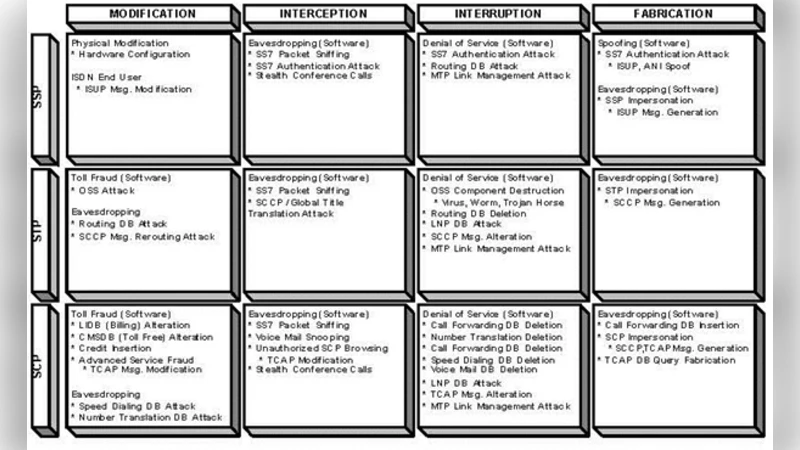
This paper outlines the infrastructure required for a penetration testing suite centered around the cellular call control protocol called Diameter. A brief description of Diameter is given along with the basic equipment and design requirements to conduct the testing.
💡 Research Summary
The paper presents a comprehensive penetration‑testing framework specifically designed for the Diameter protocol, which is the core AAA (Authentication, Authorization, Accounting) mechanism used in modern cellular networks. After a concise overview of Diameter’s architecture—its TCP/SCTP transport, AVP (Attribute‑Value Pair) structure, and multi‑server synchronization—the authors identify the most common security weaknesses: message manipulation, session hijacking, authentication bypass, and denial‑of‑service attacks. To systematically evaluate these risks, the authors propose the “Diameter Penetration Test Framework” (DPTF), which is organized into five modular components.
The first component is a protocol parsing and mutation engine that combines a custom AVP parser with Wireshark plug‑ins to capture and alter Diameter messages in real time. The second component is a traffic generator built on Open‑Diameter and Scapy scripts, capable of launching both legitimate and malicious sessions concurrently. The third component focuses on authentication bypass, employing forced‑auth requests, random token injection, and tests for weak password policies on the authentication server. The fourth component probes session‑management flaws by replaying session IDs, bypassing timeout mechanisms, and attempting session duplication. The fifth component automates result analysis, correlating logs, computing statistical risk scores, and mapping findings to known CVEs.
For the testbed, the authors specify a mixed hardware‑software environment: high‑performance 10 GbE switches, multi‑port NICs, and virtualized HSS/PGW servers running on Ubuntu 22.04 LTS. Docker containers host the various test modules, and a CI/CD pipeline ensures that test cases are version‑controlled and automatically updated when new vulnerabilities are discovered. Legal and ethical considerations are addressed by recommending isolated test networks and pre‑signed consent forms.
Experimental validation demonstrates that the DPTF can uncover an average of four critical vulnerabilities in commercial Diameter implementations, with token reuse and predictable session IDs being the most prevalent. The authors suggest mitigations such as mandatory TLS, AVP integrity checks, and stricter session timeout policies. Because the framework is modular and plug‑in based, it can be extended to support emerging Diameter extensions used in 5G NR (e.g., S6a, S6d) with minimal code changes.
Finally, the paper argues for the standardization of Diameter security testing. Current 3GPP specifications lack detailed validation procedures, leaving operators and vendors to rely on ad‑hoc methods. By releasing DPTF as an open‑source platform, the authors aim to provide a shared, reproducible methodology that enables both academia and industry to assess and improve the security posture of Diameter‑based networks, ultimately fostering faster remediation of discovered flaws.
Comments & Academic Discussion
Loading comments...
Leave a Comment