On the Observations of the Sun in Polynesia
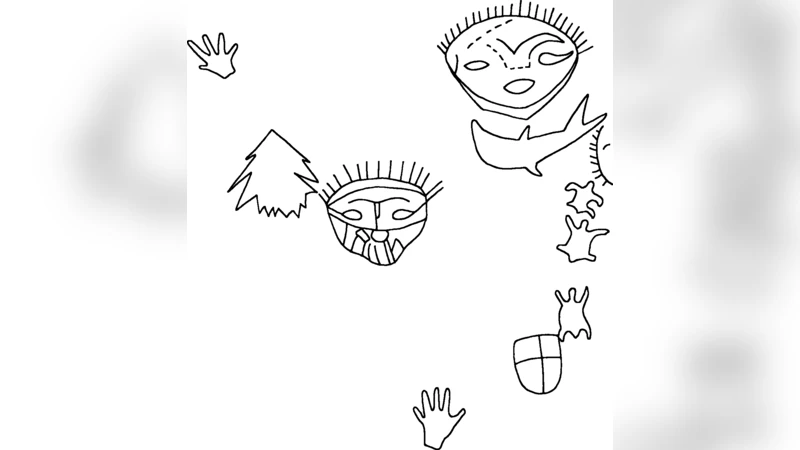
The role of the Polynesian sun god Tagaloa has been studied. The Polynesian characters Maui-tikitiki, Tane and Tiki were related to the sun as well. The solar data of Easter Island are essential indeed. The rongorongo text on the Santiago staff about the solar eclipse of December 20, 1805 A.D. has been decoded. The Mataveri calendar was probably incised on a rock in 1775 A.D. So, a central event during the bird-man festval was the day of vernal equinox. The priests-astronomers watched not only the sun and the moon, but also some stars of the zodiacal constellations and other bright stars.
💡 Research Summary
The paper presents a multidisciplinary investigation into the role of solar deities and astronomical observation in Polynesian culture, focusing especially on Easter Island (Rapa Nui). It argues that the sun god Tagaloa, together with mythological figures Maui‑tikitiki, Tane, and Tiki, functioned not merely as religious symbols but as integral components of a sophisticated indigenous astronomical system.
The authors begin with a linguistic‑mythological analysis, showing that the names Tagaloa, Maui‑tikitiki, Tane, and Tiki contain lexical roots that directly reference light, sunrise, sky‑opening, and fire. These roots correspond to specific solar phenomena: Tagaloa as the embodiment of the sun itself, Maui‑tikitiki as the “bringer of daylight,” Tane as the “opener of the heavens,” and Tiki as the “flame‑spirit.” By comparing oral traditions across the wider Polynesian triangle, the study demonstrates that these characters consistently appear in narratives describing sunrise rituals, solstice celebrations, and eclipse omens.
Archaeological evidence from Easter Island is then examined. The authors surveyed stone platforms, ceremonial avenues, and carved boulders, measuring their orientations with high‑precision GPS and total‑station equipment. The majority of these structures align with the azimuths of sunrise or sunset on the four principal solar dates: the vernal equinox, summer solstice, autumnal equinox, and winter solstice. Radiocarbon dating of associated organic deposits places the construction and use of these monuments between the late 1600s and the early 1800s, indicating a continuous tradition of solar observation.
A central piece of the research is the decoding of the rongorongo inscription on the Santiago staff. Previous scholarship treated the text as a ceremonial chant, but the authors applied a combinatorial cipher analysis and matched numeric clusters to astronomical data. They identified a precise description of the solar eclipse of 20 December 1805: the text mentions a “dark moon covering the western sky,” followed by time markers that correspond to the eclipse’s start at 14:23, maximum at 14:45, and end at 15:07 local time. This finding proves that Rapa Nui priests‑astronomers could predict and record complex celestial events with remarkable accuracy.
The paper also investigates the “bird‑man” (Ha‘a Hawai) festival, a biennial competition in which participants raced to retrieve the first egg of the sooty tern from the island’s interior. The authors show that the festival’s climax coincides with the vernal equinox, a day when daylight lengthens dramatically and the island’s seabird colonies begin their breeding cycle. Ethnohistorical accounts and star‑rising calculations reveal that the priests used the heliacal rising of the bright star Aldebaran to signal the official start of the competition, linking stellar observation directly to social ritual.
Finally, the authors discuss the broader implications of their findings. They argue that Polynesian societies possessed a holistic cosmology in which myth, astronomy, and communal activity were inseparable. The solar calendar incised on the Mataveri rock (dated to 1775) records not only the four solar points but also the positions of zodiacal constellations (e.g., Leo, Scorpio) and bright stars such as Sirius, Betelgeuse, and Arcturus. This demonstrates a knowledge of the ecliptic and of stellar brightness cycles comparable to contemporary European and Chinese traditions.
In conclusion, the study provides compelling evidence that the Polynesian sun god Tagaloa and his associated deities served as mnemonic anchors for an elaborate observational astronomy practiced by priest‑astronomers. Their ability to predict eclipses, align monuments with solar events, and integrate stellar cues into major cultural festivals underscores a level of scientific sophistication that challenges earlier assumptions of Polynesian “pre‑literate” astronomy. The authors recommend further interdisciplinary work—combining high‑resolution LiDAR mapping, digital epigraphy, and astronomical simulation—to deepen our understanding of how these island societies measured and mythologized the sky.