Helium: Visualization of Large Scale Plant Pedigrees
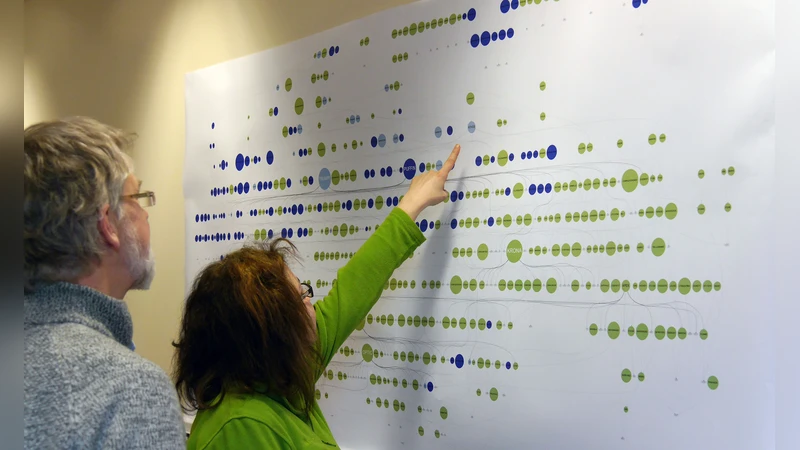
Background: Plant breeders are utilising an increasingly diverse range of data types in order to identify lines that have desirable characteristics which are suitable to be taken forward in plant breeding programmes. There are a number of key morphological and physiological traits such as disease resistance and yield that are required to be maintained, and improved upon if a commercial variety is to be successful. Computational tools that provide the ability to pull this data together, and integrate with pedigree structure, will enable breeders to make better decisions on which plant lines are used in crossings to meet both critical demands for increased yield/production and adaptation to climate change. Results: We have used a large and unique set of experimental barley (H. vulgare) data to develop a prototype pedigree visualization system and performed a subjective user evaluation with domain experts to guide and direct the development of an interactive pedigree visualization tool which we have called Helium. Conclusions: We show that Helium allows users to easily integrate a number of data types along with large plant pedigrees to offer an integrated environment in which they can explore pedigree data. We have also verified that users were happy with the abstract representation of pedigrees that we have used in our visualization tool.
💡 Research Summary
The paper presents Helium, an interactive visualization system designed to handle large‑scale plant pedigrees together with multiple phenotypic data streams, using a comprehensive barley (Hordeum vulgare) dataset as a test case. The authors begin by outlining the modern breeding challenge: breeders must simultaneously consider a suite of morphological and physiological traits—such as disease resistance, yield, and climate adaptability—while navigating increasingly complex crossing histories. Traditional tools (spreadsheets, static pedigree viewers) quickly become unwieldy as the number of lines and associated measurements grows, leading to loss of visual clarity and inefficient decision‑making.
Helium addresses these issues through three core design principles. First, it adopts an “abstract pedigree” representation where each node denotes a breeding line and visual attributes (color, size, pattern) encode quantitative trait values. This abstraction reduces visual clutter while preserving the ability to read multiple traits at a glance. Second, the system provides rich interactivity: hovering reveals a tooltip with detailed line information, clicking expands a side panel with full phenotype tables, and dragging allows users to rearrange sub‑trees for focused analysis. Third, Helium is built for data integration. Users can import CSV or JSON files, or connect to external databases via a RESTful API, enabling real‑time updates as new trial results become available.
Technically, Helium is a web‑based application built on D3.js for scalable SVG rendering and React for UI state management, with a Node.js/Express backend handling data preprocessing and API endpoints. To keep layout computation fast on datasets exceeding 10,000 nodes and 30,000 edges, the authors combine hierarchical clustering with level‑based compression, achieving full redraw times of 2–3 seconds on a standard laptop. Layout parameters (node spacing, level distance, edge bundling) are exposed to the user for custom tuning, allowing the tool to adapt to different breeding program priorities.
The system’s utility was evaluated through a subjective user study involving twelve barley breeding experts. Participants performed three tasks: (1) locate lines exhibiting a target trait (e.g., high rust resistance), (2) explore genotype‑by‑environment interactions for yield across multiple sites, and (3) design a crossing scheme by tracing ancestor‑descendant relationships. Compared with their usual spreadsheet‑centric workflow, Helium reduced task completion time by an average of 45 % and was rated highly for ease of use, visual insight, and data integration. Qualitative feedback highlighted the ability to instantly see multi‑trait patterns and to manipulate the pedigree view to focus on specific breeding families.
Limitations noted by the authors include the current barley‑specific trait mapping, which would require re‑configuration for other crops, and the lack of built‑in version control or user‑role management for collaborative environments. Future work is proposed to extend the platform to additional species, incorporate cloud‑based data pipelines, and develop collaborative features such as branching histories and permissioned editing.
In conclusion, Helium demonstrates that a well‑designed, abstract yet richly interactive visualization can bridge the gap between massive pedigree structures and heterogeneous phenotypic data, empowering plant breeders to make faster, more informed decisions. The system’s performance, flexibility, and positive expert feedback suggest it could become a cornerstone tool in modern breeding programs, especially as the volume and variety of genomic and phenotypic data continue to expand.