Nonlinear Boundaries in Quantum Mechanics
Based on empirical evidence, quantum systems appear to be strictly linear and gauge invariant. This work uses concise mathematics to show that quantum eigenvalue equations on a one dimensional ring can either be gauge invariant or have a linear bound…
Authors: Arthur Davidson
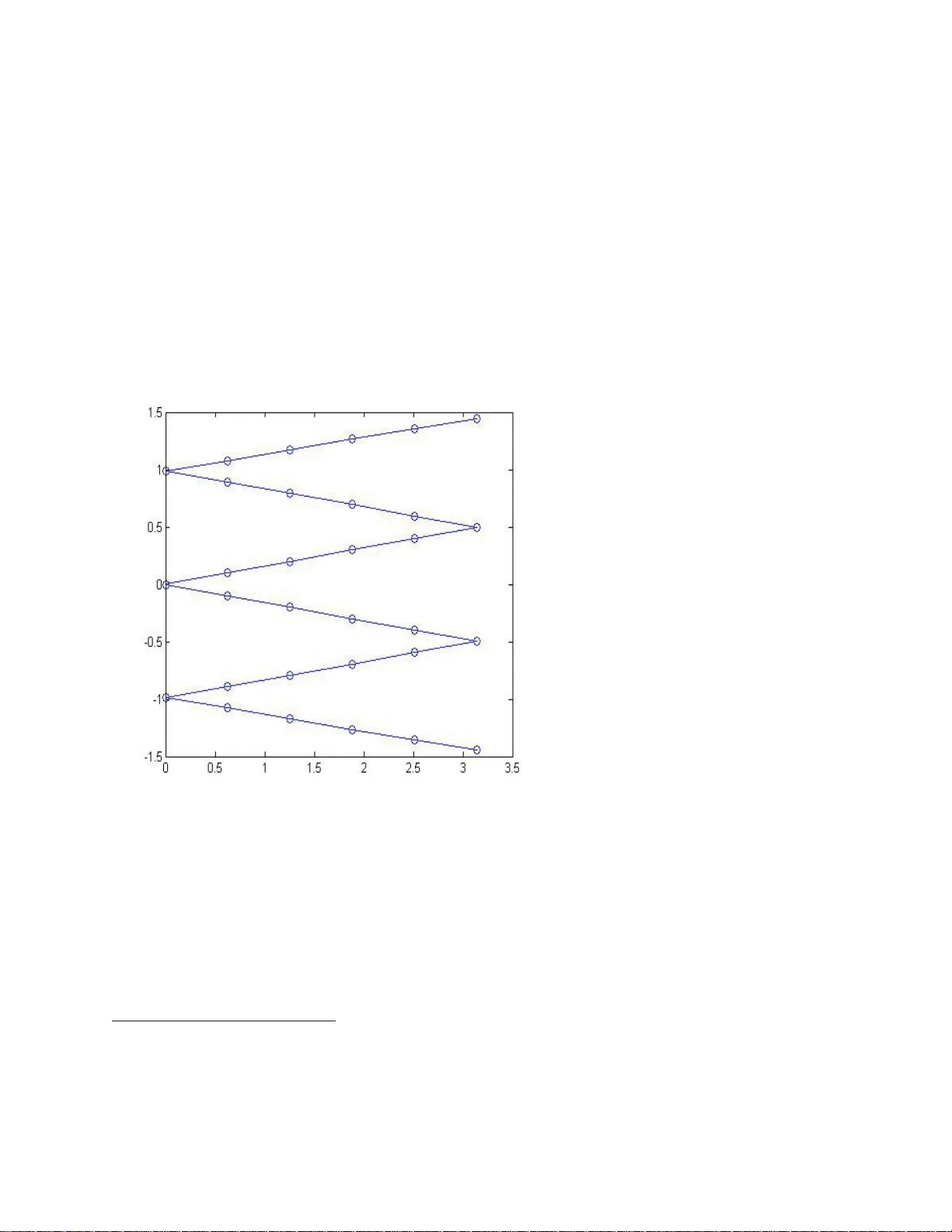
1 Non linear Boundaries in Quantum Mechanics A rt hur Davids on ECE D ep ar tm en t Ca r neg ie M ello n U n iv er sit y , P i tt sburgh, PA 15213 art dav@e ce. c m u.edu Abstract: B as e d on em piri cal evi den ce , 1 quantum syste m s appear t o be str i ct ly linear and gauge invariant. Th is wor k uses co ncise mat hem at ics to show t hat quant um eigenvalue equat i o ns on a one dimens i ona l r in g can e i t her be gauge invar i ant o r hav e a linear boundar y co nd it io n, bu t no t bot h. Fu rt her ana l ys is s ho ws t hat no n- line ar bo u nda r ie s fo r t he r i ng r est o r e gauge invariance but l ead u nexpect edly t o eigenfunct i ons wi t h a cont inuous eigenvalue spect rum, a d i s cr eet subset of which for m s a H il ber t space w ith en erg y bands. T his Hilbert space main ta ins the pr in ciple o f superpos i t i o n of ei genfunct ions despite t he n onlinear i t y . The m o mentu m op erator rem ains Hermi t ian. I f phy s ical reali t y requires gauge invar iance, i t woul d appear t hat quan t um mechanics s houl d inco rpor ate these nonli near boundary co nd i t i ons. Int roduc tion T o st art , t he t heo r y wil l be r e v ie wed s ho w ing t hat mo me nt u m in a n in f in i t e 1 d ime n s io na l syste m (not a ring) wi th boundaries at infini t y is fu lly linear and gaug e invari ant . T he m o mentu m e igenvalue equat ion will be wr i t t en expli ci t ly in gaug e dependent for m , and i t w ill be sh ow n t hat i dent ical eigenvalues resu l t, in dependent o f gauge. The lineari t y o f t his infini t e o ne d ime ns io na l s ys t e m w it h e f fe ct ive l y no bo u nd a r y c o nd i t io ns w il l a ls o be ap p a r e nt . T hese r e su lt s, o f cour se, are ex pected from the linear i t y and gauge invariance o f standard quant um mechanics. Next, a fini te 1 d imens i o nal r in g will be cons idered, aga in wi t h a mo mentu m eigenvalue e q u a ti on th at c an b e w r i tte n i n g a u g e de p en d en t f orm . B ut n ow th e wav e f un c ti on i s fi ni te all th e way around t he ring, and the wa y it in ter act s w i t h i t self at t he b o undary must be d escribed. I t will be shown that linear boundar y co ndit i o ns lead to dif ferent e i genvalues f or d if ferent gauges. It will t hen be shown that g ivi ng up linear i t y at the boundar y re st ores gauge invar i ance. The gauge invar iant e i genvalues w ill for m a co ntinuous spectr u m o f real numbers. Ho wever, a subset o f t he ei ge nfu nct i ons will be allowed by t he n onlinear boundary co ndi t i ons to form a Hilbert space a nd be superpo sable. This su bset t ur ns out to be w i t hi n a p hase fact or of the co m p let e o rthonor m al set all o wed by li near bo undaries, if t h e i ssue o f gauge i nvar iance is ignored. Thus the ad vantage o f nonlinear boundar y co ndi t i o ns f o r t he one d imensi o nal r ing is t hat essen t i a ls o f Hilbert space and the superpo siti o n pr in cip le are mainta ined al o ng w i t h gauge invariance and Her mi t ici t y o f the m o m entu m operato r. The eigenfunct i ons as soc iated w i th t he continuous spect rum are gener ally not o rthonorm a l or superpo sable. Thus it ca nnot be simply assumed that a ll eigenstat es of a syste m are superposable: i t may be t h at Schrodinger’s cat i s never f ou nd in super po sit i on b ecau se the t wo st ates of the cat ar e not ort honorm al a nd not super po sable . L ikewise, superpo sa bili t y ca nnot be assumed f or all eigenstat es or qubi t s o f a quantum co m puter . 2 The Infini te One Dime nsional Cas e Consider one coo r din ate d im ens i o n extending to ward p l us a nd minus infini t y . The gauge de p e nd e nt mo m e nt u m o p e r at o r c a n be w r it t en: = െ݅ డ డ௫ െ ݇ . Eq. 1 Un it s h a ve bee n c ho se n so t ha t ƫ = 1 , k is a n ar bi tr ary rea l constant d i ffere nt f o r eac h gauge and x repr esen t s the coordin ate. The gauge depen de nt ei ge nfu nct i on ca n b e wr i t t en ߰ ( ݔ ) = ܣ݁ ( ା ) ௫ Eq. 2 where A is a constant det ermi n ed by normalizat i o n. As is well kno wn in sta ndard quantu m mechanics, an oper ato r applied to one of i ts e i genfu nct i ons s houl d yield a rea l constant eigenv alu e mul t iplyi ng the same eigenfunction: Thus ቀെ݅ డ డ௫ െ ݇ቁ ൫ ܣ݁ ( ା ) ௫ ൯ = ݊ ൫ ܣ݁ ( ା ) ௫ ൯ Eq . 3 so that the real nu mber n is t he gauge independent e i genvalue. The number k, which is gauge depende nt, cance ls o ut of t he ei genva lue. Not e that bo undary cond i t i o ns play no role in this one d ime ns io nal p r o b le m e xt end ing far f ro m t he o rig i n. As u su a l in st and a r d q u ant u m me c ha nic s, t he eigenf unct i o ns ext end o ver the who le do m ain, a nd n f or m s a co ntin uous spect rum o f rea l values. S ince E q. 3 is linear and ho m o geneo us in th e eigenfu nct i on, a nd there are no e ffect ive boundary cond i t i o ns ot h er t han no r m alizat i o n, t hi s s ys t em, inc luding the op erato r and eigenfunct ion together, i s linear. All eigenfunct i o ns are part of t he Hi l bert space. Th i s sy s tem ha s a ga ug e d e pen den t m om en tum op e ra tor , a n d ga u g e de pen d en t eigenfunct i ons. Ho wever, w hen the o perator and an e igenf unct ion are put to gether t he resul t is a gauge indepe ndent e igenvalue. S ince measurement t heor y ho lds t hat t he eigenva l ue s hou ld co rrespond to possible measured m o ment um values, t he overall quantu m syste m here is pro perl y gauge inv ar i ant. T her e fo r e , it ha s be e n c o nf ir me d t hat t his in f in it e o ne d ime n s i o na l s ys t e m is l in ea r a nd gauge invariant . All t he eigenfu nct i o ns form t he usual ort honormal Hilbert space, and all ca n be superpo sed wi t h one anot h er in any linear co mbi nat ion. The Finite One Dimens io nal R ing wi th Linear Bound ary Condi tions Equat i ons 1, 2, and 3 sh ou l d appl y t o t he f i nite o ne d im ensi o nal ring as well , e xcept t hat t he ei ge nfunct i ons s hou l d n ow a l so sat isfy a defini te boundar y co ndi t io n. Standard quan t u m mechanics and mo st physicists ’ star t in g assu mpt i on wo u l d be t hat t hese boundary co ndi t i o ns are linear. T hat is, even t hough the coo r din ate may have a d isco ntin uit y so m ew here due t o the n atu r e of th e ri ng ge om etry , th e w av e fun c ti on sh oul d j o i n on to i tse l f sm ooth ly ev ery wh er e , including at the boundary in d icat ed by t he coo r din ate d i scont in uit y. Thus, if t h e coo rdinate i s c h osen su ch th at x ex t en ds f ro m – ʌ aro und the r ing to ʌ t hen t h e eigenfu nct i on in Eq. 2 m ust have (n + k) = m , where m is a n in teger . T his is needed f or t he wave funct i on t o b e period i c a nd to j o in s m oo t hly a nd linearly wit h i t s elf. The eigenvalue s pectr u m is discreet but gauge dependent . T hat i s, the e igenvalue n co rr esponding to equat i o n 3 will be n = m – k. T his eigenvalue depends explici t ly on k, an d so i s dependent o n the gauge. 3 There are o nl y two differences betwee n the infini t e line a nd the r in g: t he r i n g has a f ini t e c o ord in a te , a n d h a s a def i ni te b oun dary con di ti on. T h e f i ni te ri ng dom ai n i s th e sy s tem un de r invest i gat i on, so t he sali ent t hi ng to chan ge to resto re gauge invari an ce is t he boundar y c o n d it io n . The Finite One Dimens io nal Ring w ith Nonlinear Bou ndary Condi tions What boundar y co ndit i o n wou ld restore gauge invariance o f the m o mentu m ei genva lue? Th e ob vi ous thi n g to try is to d em an d sm ooth n ess a t th e c oo rd i n ate di sc on ti n ui ty n ot of < th e wa ve fu nct io n it se l f, bu t o f t he pr o bab i l it y de ns it y ȥ ȥ and the probabi li t y curre nt densi t y ȥȥ ) ) , where ) i s t he grad i ent o f the gauge dependent wave f u nct i on phase. Asi de f ro m being dist in ct l y no nlinear, t hese funct i ons o f the wave fu nct i on wou ld all ow t he phase ) to be di sc on ti n u ou s a t the b ou n da r y , wh er e th e c oordi n a te i s al s o di s c on t i n uou s. I t s h oul d b e n ote d t hat these pro posed nonlinear boundar y condit i o ns w ill not change t he Hermi t ian c haract er o f the m o mentu m operato r. The change f ro m linear co ndit i ons can be acco mm od at ed by phase rot ations o f the m o m entu m operat o r i n oppo site d i rect i o ns at t he b o undary , w hich pre serves Her mi t ici t y . T h e char act er o f the mo mentum o perator as a mat rix w i t h no nlinear boundaries i s devel o ped in A pp e ndix A . S in ce each e i ge nfunct i o n in Eq. 2 has a const ant am p li tude a nd consta nt phase grad ient, t he nonli near boundary condit i o ns are met for a ll r ea l n a nd k, e ven though ) i t se lf i s n ot gauge invariant. Thus the set of eigenfunct ions selected by t he boundary is the same cont inuous spect rum as f o r the i nfin i t e li ne discussed a bove. This means that all r ea l v alues are all ow ed for t he ei ge nvalue n, and thus gauge invar iance is resto red, j ust as f or the infi nite line. Of course, wi th i n te g ra ti on ov e r th e fi ni te d om ai n of th e ri ng co or d i n a te , th e s et of ei gen fun c ti ons wi th a co nt inuo us spect rum l o ses its o rt hono r m al it y. I n o t her w o r d s, i t c a nno t be as su med t hat fo r t he r ing a ll e ig e nfu nct ions w i t h r ea l eigenvalues w ill for m a Hilbert space. It i s kno wn, for examp le, t hat when two or m o r e eigenfunct ions wit h the for m of Eq. 2, wi th di ff er ent val ues o f n are put in s uperpo sit i on, t he r es u l t ing p r o ba b i l it y de ns it y w i l l ha ve p er io d i c var ia t io n, a nd no t a ll va lu e s o f n w ill p e r mit matching the per iod to that o f t he coordin ate r i n g. To ma k e t his expl ici t , suppo se one eigenfunct ion is c hosen as t he ini t i al st at e of the r ing, say wit h arbitrar y rea l m o m entu m ei gen val ue q. Th en we can sy stem ati cal ly go th rou gh all th e o th er ei gen f un cti on s , a d d th em all to t hat ini t ial st at e, and ask w hic h subset o f them w ill resu l t in p er i od ici t y o f t he probabi li t y dens i t y th at m a tc h es th e ri n g. T h e s up er p os i t i on wi l l l ook li ke ߰ ( ݔ ) = ܣ݁ ௫ ݁ ௫ ܽ ݁ ௫ ୀା ஶ ୀି ஶ Eq. 4 whe r e k is st ill t he g a u g e v a r i a b le, a nd n is st ill t he se t o f re a ls a prior i . q is selected f ro m t he rea l co nt i n uous spect r um o f m o ment u m e igenvalues , a nd t he set a n is co mposed o f co m p le x co efficient s. W r i te o ut the superpo sed eigenfu nct i ons st art ing w i th lowe st o r der ter m , n=0, w hich was t he a ssu med in it ia l st at e o f t he p r o ble m: 4 ߰ ( ݔ ) = ܣ݁ ௫ ݁ ௫ ( ܽ + ܽ ଵ ݁ భ ௫ + ܽ ଶ ݁ మ ௫ + ڮ ) Eq . 5 where A is a rea l no r malizat ion constant, and t he a j are co m p le x coefficie nts. Th e n j are t aken a priori to be an arbi t r ar y sequence o f rea l numbers in increas ing order. W e are l oo king f or a subset o f n j ’s t hat will a ll ow ȥ ȥ to b e pe ri odi c on th e i n terv a l from – ʌ [ ʌ The complex conjugat e o f the above superpos i t i o n i s ߰ כ ( ݔ ) = ܣ݁ ି௫ ݁ ି ௫ ( ܽ כ + ܽ ଵ כ ݁ ି భ ௫ + ܽ ଶ כ ݁ ି మ ௫ + ڮ ) Eq. 6 Co nsider the pro duct cross ter m s of Eq. 5 and Eq. 6 that contain terms wit h the zero -th orde r c o ef fi ci ents a 0 and a 0 *: ߰ כ ߰ = ܣ ଶ ( ܽ ܽ ଵ כ ݁ ି భ ௫ + ܽ כ ܽ ଵ ݁ భ ௫ ) + ( ܽ ܽ ଶ כ ݁ ି మ ௫ + ܽ כ ܽ ଶ ݁ మ ௫ ) + … Eq. 7 Each of these zero order terms can be writt en as periodic real expressi o ns suc h as: ( ܽ ܽ ଵ כ ݁ ି భ ௫ + ܽ כ ܽ ଵ ݁ భ ௫ ) = 2 | ܽ || ܽ ଵ | cos ( ݊ ଵ ݔ + ߔ ଵ ) Eq. 8 where ) 01 i s t he p hase angle o f the co m plex number ( a 0 a 1 *). Each ter m will ha ve the n eeded pe ri odi ci t y onl y if th e n j are in t egers. Mo reover, since the hi gher o rder cross t erms will be funct ions o f di ffere nces between t hese integers, t h ose t er m s w ill a lso be prop er ly per i od ic. Therefor e, t he gen era l wave- funct i on w i t h superpo sed e i ge nfu nct i ons ca n be wr i t ten as Eq. 4, with n rest r i ct ed to t he set o f in tegers, while k a nd q r e main arbi t rar y reals. Also, t he indiv idual t erm s o f eq. 4, w i t h n rest ricted to in tegers f o rm an ort h onormal s et a nd a co nventiona l quantu m Hilbert space. I n f act , sinc e t h e measured k inet i c energ y o f this s ys t em is pro port i onal t o t he square o f (q + n), wi t h q conti nuous and n discrete, the Hilbert space w ill be t hat of a f ree part icle in a sys t e m o f quadrat ic en erg y bands. Compar ison to th e We inberg n onl ine a rity . The well known Weinberg nonlinear i t y 2 i s th ou g h t to c on f l i ct wi th ca us ali t y . E s sen ti all y , t hi s is because t hat class of nonlinear i t y m ixes e i genvect or s and changes their direct i o ns in Hilbert space. T he nonlinear boundary co ndi t io ns discuss ed here w ill not have t his pr o perty. Cro ss terms will be gener at ed at the boundar y f ro m the ȥ ȥ nonlinear i t y, but t hese onl y co ntribute to ei ge nfunct i o n select ion, and do n ot feed back in to t he eige nfunct ions t hems elve s. The dynamic vari able r e mains t he co m ple x w ave funct i o n e vo lvi ng acco r din g to t he still perfect l y linear Schrö d in ger equat ion. 5 Summary Because gauge invar iance appare nt ly requi r es no nlinear bo undaries in the o ne d ime ns io na l r ing, t he r e is a co nt inu o us in fi n it y o f no n o rt ho no r ma l mo m e nt u m e ig e n fu nct i o ns with a continuous spectr u m o f real gauge independe nt e i ge nvalues. A di s cret e subset o f t hes e eigenfunct i ons i s all o wed i n o r t honormal superp o si t ion by the n o nlinear b oundar y condit i o ns. This su bset is w hat co nvent i o nal qua ntu m mechanics wo u l d select as t h e co mplete s et , but without gauge inva r iance a nd only a d iscreet spe ct rum . T he subset re m ains superpo sa ble suc h t hat a ray in Hi lbert space, once set up, i s unpert urb ed by the boundary no nlinear i t y . Th e i m pac t of thi s w ork i s l eas t on th e p h y si cs of th e on e di m en si o n al p e ri odi c sy s tem f or wh ic h e xpe r ime nt a l d iffe r e nc e s ma y b e d if f i c u l t t o d ist ing u ish. H o weve r , t h is ve r y s tra i ghtf orwa rd m ath em a t i c al pres enta t i on ope ns qua n tum mech an i cs to th e n onl in ea r r e al i t y t h at per m eates Newto ni an mechanic s and genera l r e lativi t y . The necessit y o f nonli near boundaries f o r thi s st raightf o rward s y ste m suggest s that nonlinearit y may be import ant f or t he desc r ipti on o f a quantu m syste m coup l ed to i t s environment, possibly alo ng the line of Fer mi 3 Ko s t in 4 N. Gisin 5 , D a vi ds on 6 , and others . Cert ainly the Josep hs on ju nct i ons used in s o me important quantum co m put er experiments 7 need to be re-examined, since t h ese de vices can be mod e l ed as a part icle o n a ring suc h as co nsidered her e . It ma y be no t e d t ha t Jos e p hso n ju nct io ns in t he qu a nt u m li m it h a ve b e e n a s su me d t o have d i scret e energ y levels. 8 This wo r k predicts t hat th e se junct ions will be fou nd to hav e e nerg y ba nd s inst ea d . Refe r enc es 1 J.J. Bo llinger , D . J. H e inze n, Wa yne M. I t a no, S . L. G ilbert , D.J. W ine land, P hys. Re v. Let t. 63, 10, 1031 (1989). 2 Steven W e inberg, Phys. Rev . Lett. 62, 485 (1989 ). 3 E. Fermi , Re nd. Lincei . 5, 795 ( 1927) 4 M. D. K ostin , J. Ch em. Phys , 57,3589 ( 1972), and M .D. Kostin , J. Stat. Phy s, 12, 145, (1975). 5 N. Gisin , J. Phys . A: M ath. Gen. 14 (1981) 2259-2267 6 A . Davidso n, Phy s. Rev . A, 41, 6, p . 3395 (1990 ) 7 N. Grøn bech-Jensen an d M. Ci rill o, Phys.Rev.L et t.95, 067001 (2005). 8 John M. Martini s, S. Nam , J. Aumentado, and C. Urbi na, Phys . Rev. Lett. 89, 117901 (2002). 6 Appendix A Nonlinear Hermiti an Bound ary Cond i tion for the Mome n tum Operator I t has be e n s ho w n in t h is a r t i c le t hat lin e ar bo und a r y co nd it i o n s fo r t he mo m e nt u m o perator on a 1D ring pro duce gauge depe ndent e i ge nvalues, w hich m ust be u nphysical. There f or e e i t her t he r ing is not a val id quantu m do m a in or t he li near boundar y condi t i o n s must be w r o ng. The a p p e nd ix la ys o ut so me de t a ils o f t he alt e r na t ive no nl in ea r a nd in ho mo g e neo us boundaries. The art icle showed t hat gauge inv ar iance was r est o red by cont i n u i t y at t he boundary o f t he wave f unct i o n a m plitude a nd of t he gradie nt o f t he phase. T hese nonli near boundar y co ndi t i ons added a co nt inuous spectr um o f eigenvalues to a m o d ified but still ort honormal and superpo sable Hilbert space. The appe ndix w ill sho w t hat t he m o m entu m o perat o r wi t h nonlinear boundaries st ill wo rk s in the us ual operato r ei genva l ue equat i o n f or m o m entu m . Th e pl an h er e i s to s tar t by p res en t i n g th e m a tr i x f orm of th e m o m en tum ope ra tor i n th e spatia l r epre se ntat i o n f or li near per iod i c boundar y condit i o ns. By “spat ial represe ntat ion” is meant t hat t h e syste m vect or is repres e nted by values o f t h e co m p lex wa ve-fu nct i on at d if ferent spatia l l o c at i ons aro und t he ring. In addi t i o n to lineari t y , st andard qua ntum mecha nics requ i res He r mi t ic it y, w hic h me a ns t he ma t r ix mu st be sq ua r e , w i t h r e a l d ia g o na l e le me nt s, a nd ot her elements suc h that t ranspos i t ion of rows and colu mns are co mplex conjugat es. The vari o us m atri x el em en ts c a n th en b e ch os en to c o r re s p on d i n th e l i m i t of sm all coo rd i n a te di f f ere n ce s to th e u s ual di ff eren t i al m o m en tum ope r a tor . Next, it will be considered how t his part i cu lar mat rix mo mentu m o perato r woul d change because of t he proposed nonli near boundary co nd i t i o ns. It will be argued t hat the only change necessar y is a ro t ation of the oper ato r in two par ticular ce lls suc h that Her mi t ici t y is pres erved. Th e de gr e e of ro ta ti on i n th os e tw o c el l s of th e ope r a tor d e p e n ds on th e ph a se of th e wav e- f unc t i on . Th i s de pen den c e o f th e tw o c el l s on th e wa v e f un cti on m a ke s th e op e ra tor n onl i n e a r in pr in cip le, but pr eserves the essent i al str uct ure of Hil bert space. F ina ll y, a c o mmer c ia l ma t rix so lver a was used t o fi nd t he eigenvalues a s the nonlinear boundary co ndit i on was varied in a 20 by 20 mo mentu m oper ator m at r i x . The predicted co ntin uous a nd discret e par t s of the eigenva lue spectr u m emerged, d irect ly co nf irming co ns ist enc y in t he u s e o f no nl in e ar bo u nd ar ie s. The linear period ic mome ntum opera tor The mat rix f or m o f t h e linear m o mentu m o perator i n t he s pat i a l represe ntat i o n wi t h l inear per i od ic b o undar y condi t i o ns is shown b elow in Eq . a1. Th e gauge t erm is s et to zero. This oper ato r is Her mi t ian. I t s size, 7 by 7, re flect s a div isi o n o f t he ring into 7 seg ments to be used as different i al e lements o f the oper a to r. The in creme nt repr esented by o n e segment i s dx . Ne xt neare st neighbor s are used t o cal culat e t he der ivative so t hat t he diago nal meets t he requ i re ment to be real , and t he matr i x as a who le to be Hermi t ian. Not i ce t he i and –i in t he (1 ,7) and (7, 1) co rners, which gives t he o perat or linear per iod i c bo undary co ndit i ons. T he op erato r is bot h l i near and h o m o geneous through t he wh o le do m a in, including t he b oundar y . A 7x7 m atr i x 7 was chose n here simply for co nv enience o f displ a y . Lat er, calculat i o n s wil l be s hown fro m a simil ar 20x20 matrix wi t h n o nlinear boundar i es. ܲ = ଵ ଶ ௗ௫ × Change to n onlinear boundary cond itions Ho w does t hi s matr ix oper ato r change for t he propo sed nonlinear bo undary cond i t i o ns ? Fi r st, express the der ivat ive o f an ar bi t rar y co m p lex funct i o n ȥ in t er m s o f i t s a mp l i t ud e A an d phase D : ݀Ȳ ݀ݔ = ( ܣ ௫ + ݅ܣ D ୶ ) e ୧ D where the x subscr ipt deno t es different iat i on by t he coo r din ate var iable. Ther e f o re, if t he no n l in e a r bo und ar y co nd it io n is t hat A, A x , an d D R x are s m oot h, then what i s requ i red is a way t o d if ferent i at e acro ss the boundar y w here t here m ay be a d i scont inui t y in D . T he li near m at r ix ope ra tor ܲ in Eq. a1 different ia t es acro ss the boundar y twice, o nce in t he fi r st row, and once in th e l as t row , s o th e s al i en t thi n g to d o a t th e b oun da ry o f th e n onl i nea r ope ra to r i s to r ota te th e (1, 7) an d (7,1) ce ll s in oppo si te d irecti ons by Ȱ = οȽ , a s sho wn be l o w in Eq . a3 : ܲ = ଵ ଶ ௗ௫ × Here Ȱ = οȽ is the ph ase d iscont inui t y o f D at the boundary . So if the eigenfunct ion being o perated on ha s ph ase q x, where q i s real and x goes from – S to S , the n ) = 2 S q. 0- i 0 0 0 0 i i 0 - i 0 000 0 i 0 - i 000 00 i 0 - i 00 000 i 0 - i 0 0000 i 0 - i - i 0000 i 0 0 - i 0000 ie i ) i 0 - i 000 0 0i0 - i 0 0 0 00 i 0 - i 0 0 000 i 0 - i0 0000 i 0- i - ie - i ) 0000 i 0 Eq. a 1 Eq. a 3 Eq. a 2 8 W av e Func tion Phase Disconti nuity ) = 2 S q Momentum Eigenval ue O = (n + q ) - q - 1 q - 1 O = 1 + q 1 - q q - q T h i s ma k e s t h e ma t r i x o p e r a t o r fo r ܲ in E q. a3 i nhom o geneous in the wav e f u nct i o n, and since t hose t wo cells no w depend on the p hase o f the wave- f u nct i on, nonl inear as well. T he de r iva t ive o f t he w a ve - fu nct ion c a lc u lat ed t his w a y w i l l no net he le ss be s mo o t h and c o nt inu o us everywhere e xcept for the d iscont in u i t y in D , whi ch is exact l y what is needed to preserve gauge invariance. Eig enva lue sol uti on s A mat rix of the f o r m of Eq. a3, b ut 20 by 20 in stead o f 7 by 7, was diagonalized by the “e ig ” fu nct io n in Ma t la b a , fo r va r io us va lu es o f ) bet ween zero and S . Figure a1 be l ow p l ot s t he numerical value o f a r a nge o f t he “eig” so lut i ons for t he eigenvalues vert i ca lly against ) on th e ho r izo nt a l ax is. If O is t he real eigenvalue o f th e op era tor , th e s o l uti on f or th e nonlinear boundaries is O = (q+n ), wh e re q is an el em en t of th e cont in uo us a nd real e igenvalue spectr um , and n is an integer. Thi s is prec ise ly what e merged f ro m t he M a tl ab di ag on al i za ti on . In co nt r ast , line ar bo und ar y co nd it io ns would all o w ) = 0 only, a nd give o nly the quant ized m o mentu m v al ues on the l ef t verti cal axi s. F ig u re a1. T he l i nes re p re se nt t he v a ria t io n o f the eig e nvalu es of th e mo me ntum o per ato r abo ve, as c alcu late d by th e M atlab “e ig” f unct io n. a The magnitude o f th e phase disc ontinu ity I of th e w av e functio n is p lo tte d o n the hor izo ntal ax is , f rom 0 to S . The v ertic a l axis is t h e mo me ntum e ige nv alue no r mali zed to ƫ . Whe n I on th e lef t axis, t h e e ige n val ues are dis cre e t w ith the v alue s -1 , 0 a n d + 1 s h o w n . A s I inc rease s, eac h ei ge n valu e s pli ts i nto tw o mome n tum b ands . An a r bit rary state will h ave a si ngle rea l v alue o f q, b ut mu l tip le n s ta te s i n supe rpo sitio n. Appen dix Endn ot e a Matr ix com put at i ons done wi t h co mm ercia l package Matlab 2008a, The MathWorks, Natick, MA (2008).
Original Paper
Loading high-quality paper...
Comments & Academic Discussion
Loading comments...
Leave a Comment