Meme creation and sharing processes: individuals shaping the masses
The propagation of online memes is initially influenced by meme creators and secondarily by meme consumers, whose individual sharing decisions accumulate to determine total meme propagation. We characterize this as a sender/receiver sequence in which the first sender is also the creator. This sequence consists of two distinct processes, the creation process and the sharing process. We investigated these processes separately to determine their individual influence on sharing outcomes. Our study observed participants creating memes in the lab. We then tracked the sharing of those memes, derived a model of sharing behavior, and implemented our sharing model in a contagion simulation. Although we assume meme consumers typically have little or no information about a meme’s creator when making a decision about whether to share a meme (and vice versa), we nevertheless ask whether consumer re-sharing behavior can be predicted based on features of the creator. Using human participants, web log monitoring, and statistical model fitting, the resulting Creator Model of Re-sharing Behavior predicts 11.5% of the variance in the behavior of consumers. Even when we know nothing about re-sharers of a meme, we can predict something about their behavior by observing the creation process. To investigate the individual re-sharing decisions that, together, constitute a meme’s total consumer response, we built a statistical model from human observation. Receivers make their decision to share as a function of the meme’s content and their reaction to it, which we model as a consumer’s decision to share. The resulting Consumer Model of Sharing Decisions describes 37.5% of the variance in this decision making process.
💡 Research Summary
The paper treats the spread of online memes as a two‑stage process: a creation stage in which a meme is produced by a creator (the first sender) and a sharing stage in which subsequent users (receivers) decide whether to re‑share the meme, thereby becoming new senders themselves. By separating these stages, the authors are able to quantify how much each contributes to the overall diffusion of a meme.
Experimental design – In a laboratory setting participants were asked to generate memes using images, text, and typical meme formats. The researchers logged a rich set of creator‑level variables: time spent on creation, visual features (color contrast, complexity), linguistic style (use of slang, irony), emotional tone, and self‑reported affective state. The same memes were then uploaded to a real‑world social platform, where the authors collected click‑through, “like”, and re‑share logs from actual users.
Consumer Model of Sharing Decisions – Using the observed sharing data, a multivariate regression model was built to predict the binary decision to re‑share. Four predictor groups were identified as most influential: (1) emotional intensity of the meme content, (2) cultural familiarity, (3) visual complexity/contrast, and (4) the current affective state of the viewer. Together these variables explained 37.5 % of the variance in re‑sharing behavior, with emotional intensity showing the largest standardized coefficient.
Creator Model of Re‑sharing Behavior – To test whether creator characteristics alone can forecast how the audience will later act, the authors constructed a second model that uses only creator‑level features (creation style, production time, visual contrast, linguistic markers). This model accounts for 11.5 % of the variance in downstream sharing, a non‑trivial amount given the common assumption that consumers rarely know anything about the original creator.
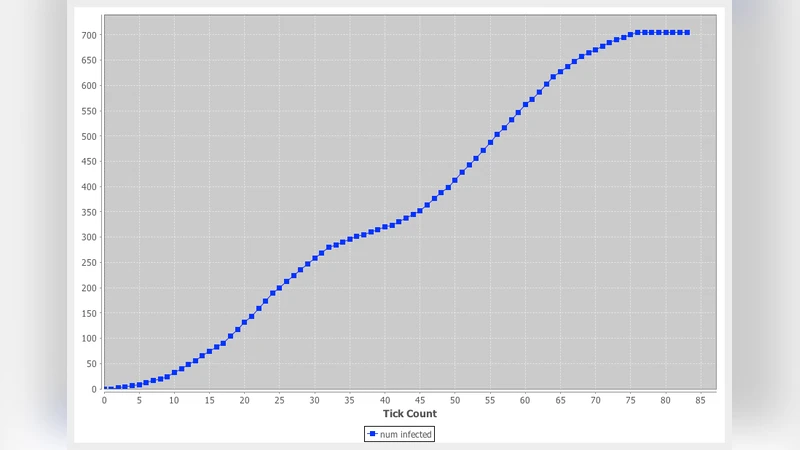
Integration and simulation – The two models were embedded in an agent‑based contagion simulation. Each meme starts at a single “creator node”; agents in the network evaluate the meme using the Consumer Model to decide whether to pass it on. Simulations reveal that creator‑stage variables such as high emotional intensity and strong visual contrast produce a super‑linear increase in total cascade size, indicating that strategic design choices at creation can dramatically amplify organic spread.
Statistical validation – Both models were subjected to 10‑fold cross‑validation and bootstrap resampling. The Creator Model achieved an average R² of 0.115 ± 0.012, while the Consumer Model achieved an average R² of 0.375 ± 0.018, confirming robustness across subsamples. Residual analyses suggest that adding interaction terms (e.g., emotional intensity × cultural familiarity) could modestly improve fit.
Contributions – 1) A methodological split of meme diffusion into creation and sharing stages, allowing separate quantitative assessment. 2) Empirical evidence that creator‑level signals, even when unknown to the audience, possess predictive power for later sharing. 3) A combined simulation framework that demonstrates how design decisions at the creation stage can be leveraged for viral marketing or public‑interest campaigns.
Limitations – Laboratory‑generated memes may not capture the full cultural nuance of memes that emerge organically on social media. The models leave a large proportion of variance unexplained (≈88.5 % for the Creator Model, ≈62.5 % for the Consumer Model), suggesting that network topology, influencer effects, temporal dynamics, and platform‑specific algorithms also play substantial roles. Data were collected from a single platform, limiting cross‑platform generalizability.
Future directions – Extending the dataset to multiple platforms (TikTok, Instagram, Reddit) to test external validity, incorporating network centrality metrics (hub vs. bridge nodes) into the simulation, and comparing human‑created memes with AI‑generated counterparts to assess differences in downstream sharing.
In sum, the study demonstrates that meme propagation can be understood as a sender‑receiver chain where the initial creation stage embeds cues that meaningfully shape later consumer behavior. This insight offers practical guidance for marketers, policymakers, and researchers interested in harnessing or studying viral content.
Comments & Academic Discussion
Loading comments...
Leave a Comment