Human Communication Systems Evolve by Cultural Selection
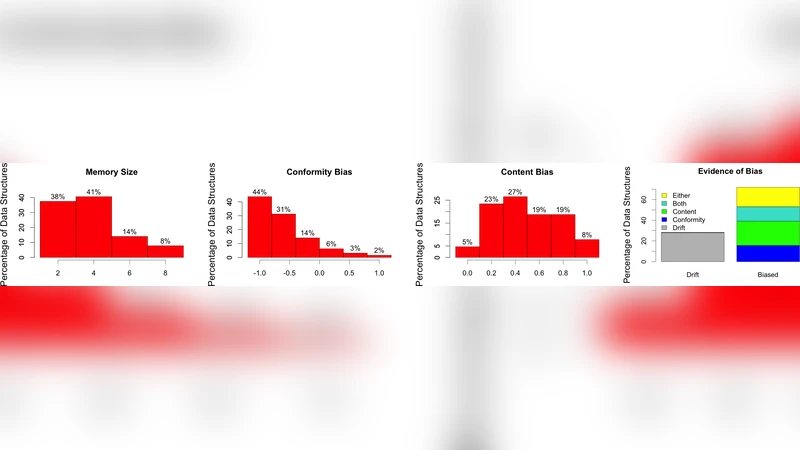
Human communication systems, such as language, evolve culturally; their components undergo reproduction and variation. However, a role for selection in cultural evolutionary dynamics is less clear. Often neutral evolution (also known as ‘drift’) models, are used to explain the evolution of human communication systems, and cultural evolution more generally. Under this account, cultural change is unbiased: for instance, vocabulary, baby names and pottery designs have been found to spread through random copying. While drift is the null hypothesis for models of cultural evolution it does not always adequately explain empirical results. Alternative models include cultural selection, which assumes variant adoption is biased. Theoretical models of human communication argue that during conversation interlocutors are biased to adopt the same labels and other aspects of linguistic representation (including prosody and syntax). This basic alignment mechanism has been extended by computer simulation to account for the emergence of linguistic conventions. When agents are biased to match the linguistic behavior of their interlocutor, a single variant can propagate across an entire population of interacting computer agents. This behavior-matching account operates at the level of the individual. We call it the Conformity-biased model. Under a different selection account, called content-biased selection, functional selection or replicator selection, variant adoption depends upon the intrinsic value of the particular variant (e.g., ease of learning or use). This second alternative account operates at the level of the cultural variant. Following Boyd and Richerson we call it the Content-biased model. The present paper tests the drift model and the two biased selection models’ ability to explain the spread of communicative signal variants in an experimental micro-society.
💡 Research Summary
This paper examines the evolution of human communication systems, such as language, through cultural selection processes. Traditionally, neutral evolutionary models (or ‘drift’) have been used to explain how these systems evolve culturally. Under drift, cultural change is unbiased and can be seen in phenomena like vocabulary spread, baby names, and pottery designs spreading randomly.
However, the paper argues that while drift serves as a null hypothesis for cultural evolution models, it doesn’t always adequately explain empirical results. Therefore, two alternative selection models are proposed: conformity-biased and content-biased selection.
The conformity-biased model suggests individuals tend to adopt similar labels and linguistic representations (including prosody and syntax) during conversations, leading to the spread of a single variant across an entire population through computer simulations. This model operates at the individual level.
On the other hand, the content-biased selection model proposes that adoption depends on the intrinsic value of the variant, such as ease of learning or use. This model operates at the cultural variant level and is also known as functional selection or replicator selection.
The paper tests these three models—drift, conformity-biased, and content-biased selection—to explain the spread of communicative signal variants in an experimental micro-society. Through this analysis, the study aims to provide a deeper understanding of how human communication systems evolve culturally and to distinguish between neutral evolution and cultural selection processes.
Comments & Academic Discussion
Loading comments...
Leave a Comment