Guidelines to minimize cost of software quality in agile scrum process
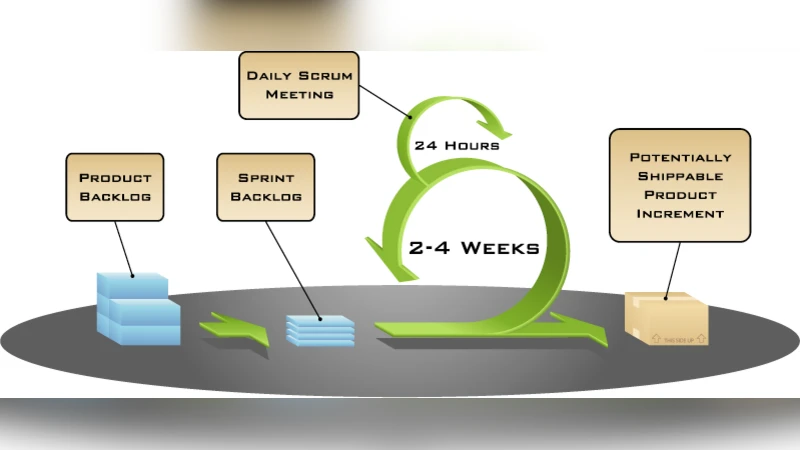
This paper presents a case study of Agile Scrum process followed in Retail Domain project. This paper also reveals the impacts of Cost of Software Quality, when agile scrum process is not followed efficiently. While analyzing the case study, the gaps were found and guidelines for process improvements were also suggested in this paper.
💡 Research Summary
The paper presents a detailed case study of an Agile Scrum implementation in a retail‑domain software project and investigates how inefficiencies in the Scrum process inflate the Cost of Software Quality (CSQ). CSQ is broken down into four categories—prevention costs (planning, training, tools), appraisal costs (testing, reviews, verification), internal failure costs (rework, defect fixing), and external failure costs (post‑release defects, customer dissatisfaction). The authors map each of these cost categories to Scrum ceremonies and artifacts to illustrate where quality‑related expenses are incurred.
The studied project spanned twelve months and consisted of eight two‑week sprints involving roughly 120 personnel (developers, testers, business analysts, and product owners). In the first two sprints the product backlog was poorly refined, leading to inaccurate story‑point estimates and a “Definition of Done” (DoD) that varied across teams. Because automated testing was not introduced early, regression testing relied on manual effort, extending test cycles by more than 30 %. Sprint reviews failed to capture stakeholder feedback in a structured way, causing late requirement changes and resulting in 15 post‑release defects.
Through a gap analysis the authors identified four primary sources of CSQ escalation: (1) inadequate backlog grooming and lack of a “Ready” definition, (2) an ambiguous DoD that omitted mandatory code reviews, unit‑test coverage thresholds, and automated regression tests, (3) insufficient adoption of test‑automation and continuous‑integration (CI) tooling, and (4) ineffective retrospectives where improvement actions were not tracked or executed. Each gap directly contributed to higher prevention, appraisal, or failure costs. For example, unclear backlog items caused frequent rework (internal failure), while an inconsistent DoD allowed defects to escape to production (external failure).
Based on these findings the paper proposes four concrete, actionable guidelines to minimize CSQ in Scrum environments:
-
Strengthen Requirements Management – Product owners should run regular domain workshops to elaborate backlog items, enforce a “Ready” checklist before sprint planning, and involve the whole team in story‑point estimation to improve forecast accuracy.
-
Standardize Quality Criteria – Codify a universal DoD that mandates peer code review, a minimum of 80 % unit‑test coverage, and inclusion of automated regression tests. The DoD should be treated as a sprint‑goal prerequisite, ensuring that every increment meets the same quality baseline.
-
Implement Test Automation and CI/CD Pipelines Early – Develop automated test scripts at the start of each sprint, integrate static analysis, security scans, and regression suites into a CI pipeline, and enforce “fail‑fast” policies where build failures trigger immediate remediation. This reduces test‑cycle time by at least 30 % and cuts rework rates dramatically.
-
Operationalize Retrospectives – Capture improvement actions as explicit sprint backlog items, assign owners, and monitor progress with a tracking tool (e.g., JIRA). Review the status of these actions in the next retrospective to ensure accountability and continuous learning.
A pilot implementation of these guidelines on a subset of the project team yielded measurable improvements over a three‑month period: sprint goal attainment rose from 62 % to 85 %, rework frequency dropped by 40 %, and the point at which defects were discovered shifted from post‑release to development, achieving a 25 % reduction in external failure costs. The results demonstrate that systematic attention to backlog quality, a unified DoD, early automation, and disciplined retrospectives not only curtails CSQ but also accelerates delivery and boosts customer satisfaction.
In conclusion, the study argues that effective CSQ management in Agile Scrum hinges on four pillars—rigorous backlog grooming, consistent quality definitions, robust automation infrastructure, and accountable retrospectives. By providing concrete, evidence‑backed guidelines, the paper offers practitioners a practical roadmap to prevent cost overruns associated with poor quality while fostering a truly quality‑centric, high‑velocity development culture.
Comments & Academic Discussion
Loading comments...
Leave a Comment