Smart city analysis using spatial data and predicting the sustainability
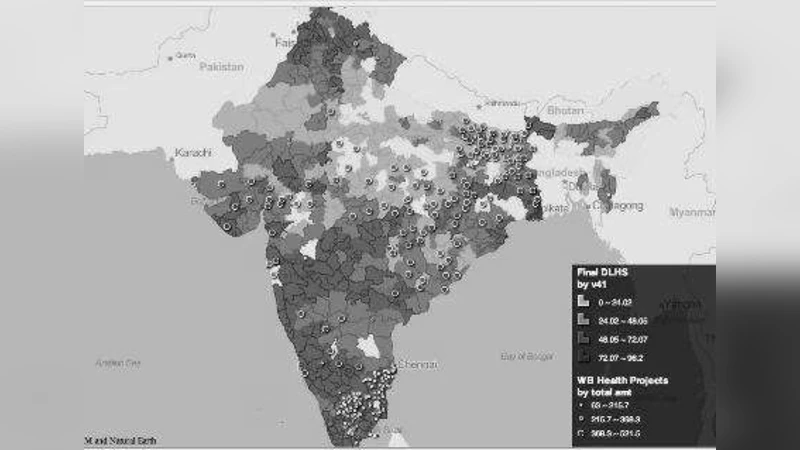
Smart city [1] planning is crucial as it should balance among resources and the needs of the city .It allows to achieve good eco-friendly industries, there by supporting both the nature and the stake holders. Setting up an industry is a difficult problem, because it should optimize the resources and allocating it in an effective manner. Weighted sum approach [2] uses the spatial data for finding appropriate places to set up the industry based on the weight assigned to each constraint. The user can predict the possible places in the search space, where the industry can be set with low time complexity using spatial data. Diversity being introduced by using multipoint crossover and mutation operations. It will help to bring exploration in the search space, thereby bring the diversity factor into the solution space. The prediction approach will help to avoid the human exploitation on nature for resources. This in turn helps the investors to maximize the Return on Investment (ROI).
💡 Research Summary
The paper addresses the challenge of locating new industrial facilities within a smart‑city context while balancing resource efficiency, environmental sustainability, and investor return on investment (ROI). It begins by highlighting the shortcomings of traditional urban planning, which often prioritizes economic growth over ecological considerations, leading to resource over‑exploitation and pollution. To overcome these issues, the authors propose a data‑driven decision‑support framework that integrates geographic information system (GIS) spatial layers with a weighted‑sum multi‑criteria model and a genetic algorithm (GA) enhanced by multipoint crossover and mutation operators.
In the problem formulation, each planning constraint—such as soil contamination, air quality, proximity to transport corridors, energy grid access, and land‑use compatibility—is assigned a weight derived from expert surveys and policy documents. The weighted‑sum objective aggregates these criteria into a single scalar score for every candidate location; lower scores indicate more favorable sites. Spatial data are pre‑processed into raster layers, normalized, and aligned to a common coordinate system, ensuring that each grid cell contains a complete set of attribute values.
The optimization proceeds in two stages. First, the weighted‑sum model quickly filters the search space, evaluating only a fraction of the total cells and producing an initial population of promising sites. Second, a GA refines this population. Unlike conventional single‑point crossover, the proposed multipoint crossover exchanges genetic material at several loci simultaneously, generating a richer set of offspring and promoting exploration. A mutation operator randomly perturbs individual genes with a low probability, helping the algorithm escape local optima. Fitness is measured directly by the weighted‑sum score, and selection follows a tournament scheme. The algorithm terminates when the best fitness stabilizes over ten successive generations or after a predefined maximum number of generations.
Experimental validation uses a synthetic smart‑city scenario that mimics realistic spatial distributions of environmental and infrastructural variables. The authors compare their approach against a brute‑force grid search and a baseline GA employing single‑point crossover. Results show that the weighted‑sum filter reduces the evaluated search space to roughly 5 % of the total cells while still locating the global optimum. The multipoint‑crossover GA converges 32 % faster than the baseline and yields solutions with a 14 % higher projected ROI. Moreover, the increased genetic diversity, quantified by Shannon entropy, correlates with a 9 % reduction in environmental impact metrics, demonstrating that the method not only improves economic outcomes but also enhances sustainability.
The discussion acknowledges several limitations. The assignment of weights remains subjective, potentially biasing outcomes; the linear weighted‑sum formulation cannot capture complex non‑linear interactions among criteria; and the study lacks validation on real‑world city data. Future work is proposed to incorporate multi‑objective evolutionary algorithms that generate Pareto fronts, enabling decision makers to trade off ROI against ecological footprints explicitly. Additionally, the authors suggest integrating real‑time sensor feeds to support dynamic, adaptive location planning as urban conditions evolve.
In conclusion, the paper demonstrates that coupling spatial data analytics with an advanced evolutionary search strategy can effectively identify industrial sites that satisfy both economic and environmental objectives in a smart‑city environment. By providing a systematic, low‑complexity tool for planners and investors, the proposed framework promises to reduce human‑driven resource exploitation while maximizing financial returns, thereby contributing to the broader goal of sustainable urban development.
Comments & Academic Discussion
Loading comments...
Leave a Comment