Predictive Modelling of Bone Age through Classification and Regression of Bone Shapes
Bone age assessment is a task performed daily in hospitals worldwide. This involves a clinician estimating the age of a patient from a radiograph of the non-dominant hand. Our approach to automated bone age assessment is to modularise the algorithm into the following three stages: segment and verify hand outline; segment and verify bones; use the bone outlines to construct models of age. In this paper we address the final question: given outlines of bones, can we learn how to predict the bone age of the patient? We examine two alternative approaches. Firstly, we attempt to train classifiers on individual bones to predict the bone stage categories commonly used in bone ageing. Secondly, we construct regression models to directly predict patient age. We demonstrate that models built on summary features of the bone outline perform better than those built using the one dimensional representation of the outline, and also do at least as well as other automated systems. We show that models constructed on just three bones are as accurate at predicting age as expert human assessors using the standard technique. We also demonstrate the utility of the model by quantifying the importance of ethnicity and sex on age development. Our conclusion is that the feature based system of separating the image processing from the age modelling is the best approach for automated bone ageing, since it offers flexibility and transparency and produces accurate estimates.
💡 Research Summary
This paper presents a modular framework for automated bone‑age assessment that operates on the outlines of individual hand bones extracted from radiographs. The authors first segment and verify the hand outline and each bone, then transform each bone’s contour into a set of clinically meaningful shape features. Two complementary modelling strategies are explored. The first trains classifiers to predict Tanner‑Whitehouse (TW) stage categories for each bone, effectively reproducing the traditional scoring system. The second builds regression models that map the same shape features directly onto chronological age.
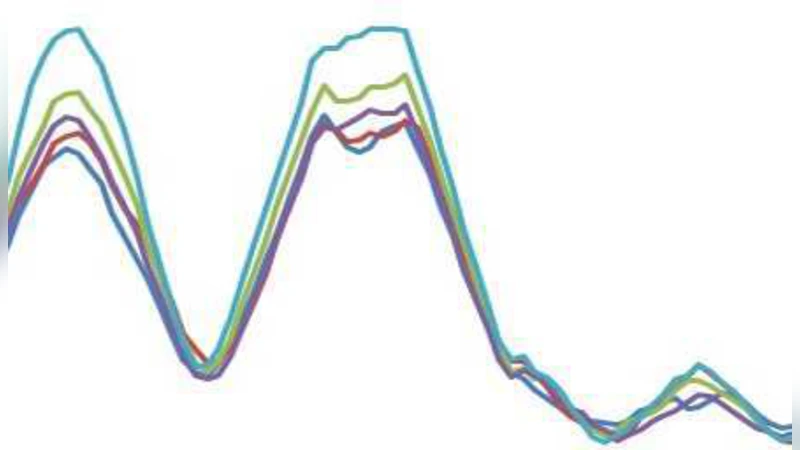
Three representations of the bone outline are compared: (1) a one‑dimensional elastic‑distance based series, (2) a shapelet‑like subsequence approach that discovers discriminative patterns in the series, and (3) a set of “summary shape features” derived from TW descriptors (e.g., epiphysis‑metaphysis width ratios, curvature, length of specific segments). Experiments on a dataset of 2–18‑year‑old children from Children’s Hospital Los Angeles show that models built on the summary features consistently outperform those using raw one‑dimensional series. In classification, the feature‑based classifiers achieve high agreement with expert TW scores (over 90 % within one stage) and outperform the elastic‑distance and shapelet baselines on at least one bone.
For regression, both linear and non‑linear regressors (kernel regression, Gradient Boosting) are trained on the same feature set. The resulting mean absolute error (MAE) ranges from 0.6 to 0.8 years, comparable to the performance of state‑of‑the‑art systems such as BoneXpert, despite using only three bones (distal phalanx of the middle finger, radius/ulna, and a carpal bone). Importantly, the authors incorporate sex and ethnicity as covariates, quantifying their influence on skeletal development; for example, certain ethnic groups exhibit a systematic offset of several months in predicted age.
The paper argues that separating image processing from age modelling yields several advantages. Feature extraction is transparent and clinically interpretable, facilitating communication with radiologists and allowing easy adaptation to new demographic groups without retraining the entire segmentation pipeline. The modular design also avoids the heavy labeling requirements and population bias inherent in Active Appearance/Shape Model approaches. Moreover, the finding that accurate age estimates can be obtained from only three bones suggests robustness to incomplete or low‑quality images.
Future work outlined includes expanding the dataset to cover a broader age range and more diverse populations, integrating deep‑learning based segmentation to further automate the pipeline, and developing real‑time clinical decision support tools. Overall, the study demonstrates that a feature‑driven, modular approach can achieve expert‑level bone‑age predictions while offering flexibility, interpretability, and the ability to model demographic effects—key steps toward reliable, widely deployable automated bone‑age assessment systems.
Comments & Academic Discussion
Loading comments...
Leave a Comment