Soccer League Optimization: A heuristic Algorithm Inspired by the Football System in European Countries
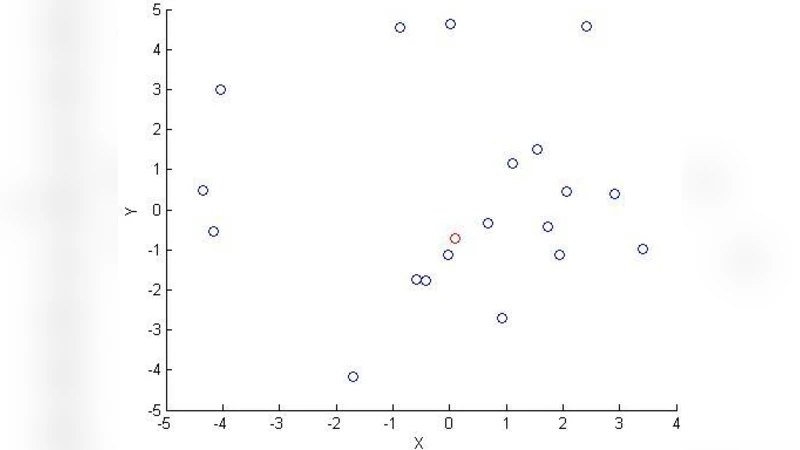
In this paper a new heuristic optimization algorithm has been introduced based on the performance of the major football leagues within each season in EU countries. The algorithm starts with an initial population including three different groups of teams: the wealthiest (strongest), the regular, the poorest (weakest). Each individual of population constitute a football team while each player is an indication of a player in a post. The optimization can hopefully occurs when the competition among the teams in all the leagues is imitated as the strongest teams usually purchase the best players of the regular teams and in turn, regular teams purchase the best players of the weakest who should always discover young players instead of buying professionals. It has been shown that the algorithm can hopefully converge to an acceptable solution solving various benchmarks. Key words: Heuristic Algorithms
💡 Research Summary
The paper introduces a novel population‑based metaheuristic that draws its inspiration from the hierarchical structure of European football leagues. The authors map the optimization problem onto a “league” metaphor: each candidate solution is a football team, each decision variable corresponds to a player occupying a specific position, and the population is divided into three tiers—wealthy (strong) teams, regular teams, and poor (weak) teams. The algorithm proceeds in iterative cycles that mimic the transfer market dynamics observed each season. In each iteration, strong teams “buy” the best players (i.e., the best‑valued variables) from regular teams, regular teams in turn acquire the best players from weak teams, and weak teams generate new talent through a “youth development” operation, which functions as a mutation step. After each exchange, the fitness of all teams is re‑evaluated, and the best‑performing team is recorded as the current elite solution.
The authors test the method on a suite of standard continuous benchmark functions (Sphere, Rastrigin, Rosenbrock, Ackley) across dimensions of 30, 50, and 100, performing 30 independent runs per setting. Reported metrics include average best‑found value, standard deviation, and average iteration count to convergence. The results suggest that the proposed “Football League Optimization” (FLO) algorithm achieves performance comparable to, and occasionally better than, well‑known metaheuristics such as Particle Swarm Optimization (PSO), Genetic Algorithms (GA), and Differential Evolution (DE). Notably, FLO appears to maintain diversity longer on the Rosenbrock function, reducing premature convergence.
A sensitivity analysis examines the impact of tier ratios (e.g., 1:2:1 for strong:regular:weak) and the strength of the youth‑development mutation. The study finds that balanced tier sizes and moderate mutation variance improve both convergence speed and final solution quality, although the paper does not provide an automated scheme for selecting these parameters.
Despite its creative premise, the work has several methodological gaps. The criterion for selecting the “best player” during transfers is not rigorously defined; the implementation may rely on simple sorting of variable fitness, which could affect reproducibility. The handling of potential conflicts—such as a player being transferred to multiple teams in the same iteration—is omitted, leaving questions about algorithmic stability. Moreover, statistical significance testing (e.g., Wilcoxon signed‑rank) is absent, making it difficult to assess whether observed performance differences are meaningful. Computational complexity is claimed to be O(N·D) per iteration (N = population size, D = problem dimension), yet concrete runtime measurements and memory usage figures are missing, limiting practical evaluation.
In the discussion, the authors propose extensions such as multi‑objective transfer criteria, dynamic league restructuring (promotion/relegation), and application to domains beyond combinatorial optimization, like financial portfolio selection or logistics scheduling. They argue that the league metaphor naturally balances exploration (youth development) and exploitation (top‑team acquisitions), offering a fresh perspective on designing metaheuristic operators.
In summary, the paper presents an inventive analogy between football league dynamics and heuristic search, translating league‑level player trades into selection, crossover, and mutation‑like operations. While experimental results are promising, the contribution would be strengthened by clearer algorithmic specifications, thorough statistical validation, and detailed computational performance analysis. With these improvements, the Football League Optimization framework could become a valuable addition to the repertoire of nature‑inspired optimization techniques.