Identifying roles of clinical pharmacy with survey evaluation
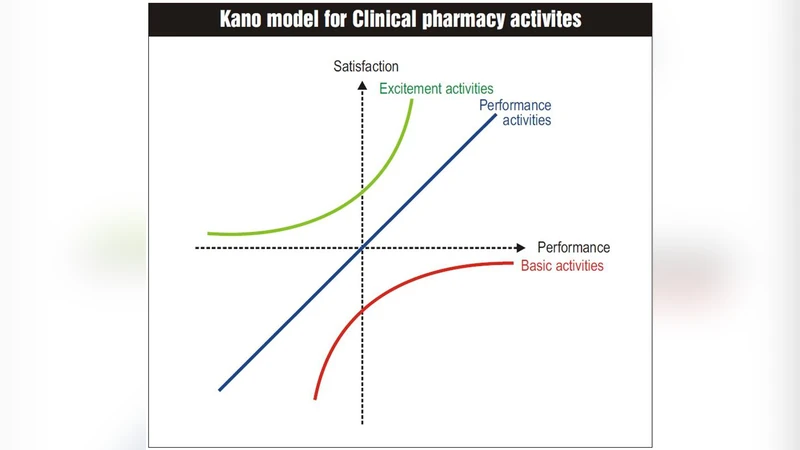
The survey data sets are important sources of data and their successful exploitation is of key importance for informed policy-decision making. We present how a survey analysis approach initially developed for customer satisfaction research in marketing can be adapted for the introduction of clinical pharmacy services into hospital. We use two analytical approaches to extract relevant managerial consequences. With OrdEval algorithm we first evaluate the importance of competences for the users of clinical pharmacy and extract their nature according to the users expectations. Next, we build a model for predicting a successful introduction of clinical pharmacy to the clinical departments. We the wards with the highest probability of successful cooperation with a clinical pharmacist. We obtain useful managerially relevant information from a relatively small sample of highly relevant respondents. We show how the OrdEval algorithm exploits the information hidden in the ordering of class and attribute values and their inherent correlation. Its output can be effectively visualized and complemented with confidence intervals.
💡 Research Summary
The paper addresses the challenge of introducing clinical pharmacy services into hospitals by leveraging survey data that capture the expectations and experiences of frontline healthcare professionals. Recognizing that such data are often under‑utilized, the authors adapt an algorithm originally designed for customer‑satisfaction research in marketing—OrdEval—to the healthcare setting. The study proceeds in two analytical stages.
In the first stage, OrdEval is applied to a questionnaire completed by 85 clinicians (physicians, nurses, and pharmacists) across twelve clinical departments in three large hospitals. The survey asks respondents to rate, on a five‑point Likert scale, the importance and perceived performance of several clinical pharmacist competencies (e.g., medication‑therapy management, drug‑interaction review, patient education). OrdEval exploits the ordinal nature of both the class variable (overall satisfaction) and the attribute variables (competency ratings). It calculates, for each attribute, an “importance score” that reflects how strongly the attribute influences the ordering of satisfaction levels, and a “reinforcement score” that indicates whether the attribute tends to push satisfaction upward (positive reinforcement) or downward (negative reinforcement). By bootstrapping the data, the authors also generate 95 % confidence intervals for each score, thereby providing a statistical safeguard despite the modest sample size. The results highlight that medication‑therapy management and drug‑interaction review have the highest positive reinforcement (0.68 and 0.64, respectively), while patient education shows a sizable importance gap between expectation and perceived performance.
The second stage builds a predictive model of successful clinical‑pharmacy integration at the department level. Using the OrdEval‑derived scores as key independent variables, the authors augment the model with department‑specific characteristics such as the proportion of specialists, existing medication‑management infrastructure, and patient volume. Both logistic regression and a classification‑and‑regression‑tree (CART) are trained, evaluated with five‑fold cross‑validation, and assessed via the area under the ROC curve (AUC = 0.82 for the logistic model). Departments that lack a mature medication‑management system, have a lower specialist ratio, and rate the two high‑reinforcement competencies above four on the Likert scale emerge as the most likely to benefit from a clinical pharmacist. Conversely, departments already equipped with robust drug‑therapy oversight show a lower probability of added value.
The authors discuss several implications. First, OrdEval’s ability to disentangle directionality (positive vs. negative reinforcement) from magnitude (importance) offers richer managerial insight than traditional mean‑score analyses. Second, the approach demonstrates that even small, highly targeted survey samples can yield actionable intelligence when ordinal information and confidence intervals are properly leveraged. Third, the predictive modeling underscores the necessity of a tailored rollout strategy: rather than a blanket implementation, hospitals should prioritize pilot units that exhibit both high unmet competency expectations and structural readiness gaps.
Limitations include the single‑country, limited‑sample design and reliance on self‑reported perceptions rather than objective clinical outcomes. The authors propose future work that expands the dataset across multiple health systems, links survey‑derived insights to hard endpoints such as medication error rates or cost savings, and integrates OrdEval with more advanced machine‑learning pipelines to create real‑time decision‑support dashboards for hospital administrators.
In conclusion, the study successfully adapts a marketing‑originated ordinal evaluation technique to the health‑care domain, providing a systematic method for identifying critical pharmacist competencies, visualizing their impact, and forecasting department‑level success probabilities. This dual‑stage framework equips hospital leadership with evidence‑based guidance for efficient resource allocation and strategic planning when launching clinical pharmacy services.
Comments & Academic Discussion
Loading comments...
Leave a Comment