Component Based Software Development: A State of Art
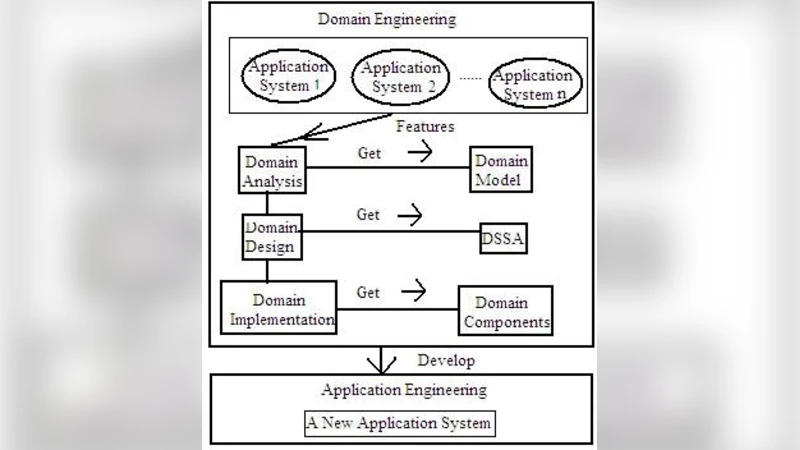
One of the goals of Software design is to model a system in such a way that it is reused. Actively reusing designs or code allows taking advantage of the investment made on reusable components. However development of domain specific components and its impact on effort in terms of cost and time is still a challenging issue. The component based technology has transformed over a period of time from a simple component to the domain specific components. This paper presents a state of art of the drastic change in component technology from component engineering to domain engineering.
💡 Research Summary
The paper provides a comprehensive state‑of‑the‑art review of Component‑Based Software Development (CBSD) with a particular focus on the evolution from generic component engineering to domain‑specific engineering. It begins by reaffirming that software reuse is a primary lever for reducing development cost, shortening time‑to‑market, and improving quality. Traditional component engineering is described as a “function‑centric” approach that emphasizes standardized interfaces and implementation independence, yet it often falls short when applied to concrete problem domains because additional adaptation work is required.
The authors then introduce domain engineering as the next logical step in the CBSD lifecycle. Domain engineering systematically creates reusable assets that are tailored to a specific industry, application area, or problem space. The process is broken down into three core activities: (1) domain analysis to identify core concepts, variation points, and commonality; (2) domain modeling, which builds a meta‑model or family model that captures the identified concepts and their relationships; and (3) automated generation and configuration of domain‑specific components using model‑based engineering (MBE) tools. By formalizing the domain knowledge, developers can generate families of components that retain high reusability while being instantly adaptable to particular project requirements.
Empirical evidence is presented from several case studies. Projects that adopted domain‑specific components achieved an average reduction of 30‑45 % in development schedule and a 20‑35 % decrease in overall cost compared with traditional code‑re‑write approaches. The paper emphasizes that these gains are realized only when the upfront investment in domain modeling and tool acquisition is amortized across multiple projects, and when robust versioning, interface contracts, and governance processes are in place.
Technical challenges are examined in depth. First, defining clear domain boundaries is often ambiguous, leading to “scope creep” and reduced reuse. Second, managing inter‑component dependencies can cause a dependency explosion, inflating system complexity and maintenance effort. Third, existing automation tools lack the scalability needed for large, heterogeneous domains. Fourth, organizational resistance to changing established development processes can impede adoption. To mitigate these issues, the authors propose a lightweight service‑oriented architecture (SOA) or micro‑service overlay that decouples components, a plug‑in based dependency injection framework to handle dynamic binding, and a rigorous component governance model that includes automated compatibility testing and semantic versioning.
Looking forward, the paper outlines three promising research directions. (a) AI‑driven domain model extraction: machine‑learning techniques can mine legacy codebases and documentation to automatically infer domain concepts and variation points, accelerating the initial modeling phase. (b) Blockchain‑based component provenance and integrity verification: distributed ledger technology can provide tamper‑evident records of component creation, modification, and distribution, enhancing trust in third‑party reusable assets. (c) Cloud‑native dynamic component deployment: container orchestration platforms (e.g., Kubernetes) combined with serverless functions can enable on‑demand scaling, hot‑swapping, and runtime composition of domain‑specific components, further reducing time‑to‑value.
In conclusion, the paper argues that CBSD has matured from a simple reuse mechanism into a sophisticated, domain‑aware engineering discipline capable of delivering substantial economic benefits. However, realizing its full potential requires disciplined domain analysis, robust tooling, and cultural shifts within organizations. By integrating emerging AI, blockchain, and cloud‑native technologies, future CBSD practices are poised to become even more agile, trustworthy, and scalable, thereby solidifying component‑based approaches as a cornerstone of modern software engineering.
Comments & Academic Discussion
Loading comments...
Leave a Comment