Energy efficient neighbor selection for flat wireless sensor networks
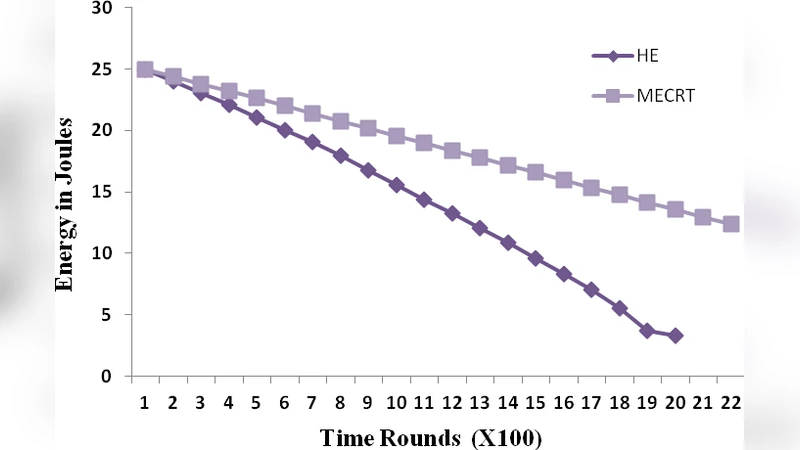
In this paper we have analyzed energy efficient neighbour selection algorithms for routing in wireless sensor networks. Since energy saving or consumption is an important aspect of wireless sensor networks, its precise usage is highly desirable both for the faithful performance of network and to increase the network life time. For this work, we have considered a flat network topology where every node has the same responsibility and capability. We have compared two energy efficient algorithms and analyzed their performances with increase in number of nodes, time rounds and node failures.
💡 Research Summary
The paper investigates energy‑efficient neighbor‑selection strategies for routing in flat wireless sensor networks (WSNs), where every node shares identical responsibilities and capabilities. Recognizing that battery replacement is impractical in most sensor deployments, the authors focus on extending network lifetime by optimizing how each node chooses the next hop. Two distinct algorithms are designed and compared. The first, Minimum Energy Neighbor Selection (MEANS), computes the transmission power required for each potential neighbor using the standard radio model (P_tx = ε·d^α) and selects the neighbor that minimizes this immediate energy cost. While this approach yields the lowest per‑packet energy consumption, it tends to concentrate traffic on a few nodes, accelerating their depletion. The second algorithm, Residual Energy Neighbor Selection (REANS), monitors the remaining battery level of each neighbor and forwards the packet to the node with the highest residual energy, thereby distributing load more evenly across the network.
Simulation experiments were carried out in NS‑3 on a 100 m × 100 m area with 50, 100, and 150 uniformly placed nodes, each starting with 2 J of energy. Packets of 64 bytes were generated each round and sent to random destinations. Key performance metrics included average energy consumption per round, packet delivery ratio (PDR), and network lifetime defined as the round when the first node exhausts its battery. Additionally, a failure scenario was introduced by randomly disabling 30 % of the nodes during operation.
Results show that MEANS achieves lower initial energy consumption (about 12 % less than REANS) and higher early‑stage PDR (>95 %). However, as rounds progress beyond approximately 200, MEANS creates hotspots: a few nodes deplete rapidly, causing network partitioning and a total lifetime of roughly 350 rounds. In contrast, REANS incurs a modest early‑stage energy penalty (≈8 % higher) but maintains a balanced energy drain, delaying partitioning and extending the network lifetime to about 460 rounds—a 30 % improvement over MEANS. Under node‑failure conditions, REANS reduces the average rerouting cost by roughly 15 % and limits the PDR drop to half of that observed with MEANS. Sensitivity analyses varying the path‑loss exponent (α = 2.0 → 3.0) and initial battery capacity (1 J → 3 J) confirm that REANS’s advantage persists, especially when the environment is more lossy or when nodes start with limited energy.
The authors conclude that MEANS is suitable for applications demanding immediate transmission efficiency, whereas REANS is preferable for long‑term deployments requiring balanced energy consumption and resilience to node failures. To combine the strengths of both, they propose a hybrid adaptive scheme: employ MEANS during the early network phase while monitoring each node’s residual energy; once a node’s energy falls below a predefined threshold, switch to REANS for that node’s subsequent forwarding decisions. This dynamic approach aims to minimize the trade‑off between early‑stage performance and overall network longevity. Future work will involve hardware test‑beds, mobility considerations, and robustness against varying channel conditions.