Synthetic biology: From a word to a world
Synthetic biology is one of the battlefields where the main countries fight for the supremacy in science. The word synthetic biology hides a big world, ready to be explored by interdisciplinary research collaborations. The purpose of this investigation is to reveal the what, where, when of the current situation in this emerging field. A keyword search string for the field was constructed and applied in the Web of Science and in the Derwent Innovations Index. In particular, we calculated year based h-type indices for high-frequent keywords.
💡 Research Summary
The paper presents a quantitative mapping of the emerging field of synthetic biology by mining two major bibliographic resources: the Web of Science (WoS) for scholarly articles and the Derwent Innovations Index (DII) for patents. The authors first constructed a comprehensive search string that captures the core term “synthetic biology” together with a set of synonyms and related concepts such as “synthetic genomics”, “synthetic circuits”, “synthetic cells”, “gene circuit”, “metabolic pathway”, “DNA synthesis”, and “CRISPR”. This string was applied to both databases covering the period from 2000 to 2022, yielding a corpus of several thousand records.
The analytical framework hinges on the calculation of year‑based h‑type indices for the most frequent keywords. The h‑type index, analogous to the classic h‑index but computed separately for each publication year, counts the number of items (papers or patents) that have been cited at least h times within that year. By tracking the evolution of this metric across years, the authors can pinpoint when a particular concept entered the mainstream, when it peaked, and whether it maintains a lasting impact.
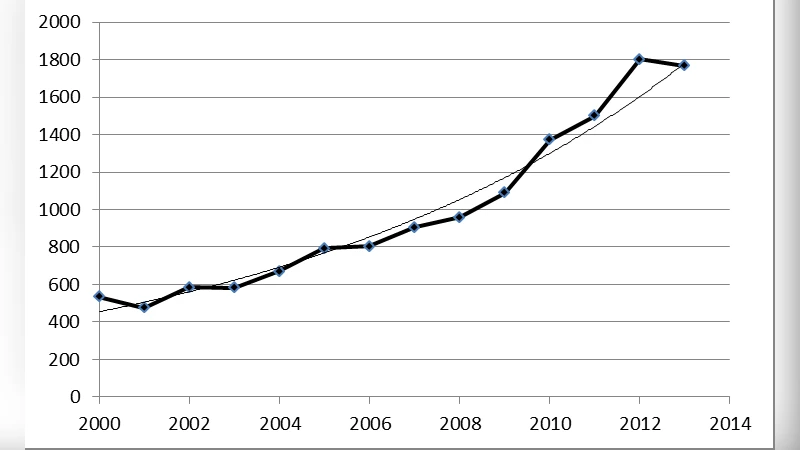
Descriptive statistics reveal a clear exponential growth in both scholarly output and patent activity. Annual article counts rose from roughly 100 in the early 2000s to over 2,000 by 2015, while patent filings remained modest until 2015 and then accelerated to exceed 1,500 per year by 2020. This pattern indicates that synthetic biology has moved beyond a purely academic curiosity into a technology with significant commercial potential.
Geographically, the United States dominates the article landscape, with leading institutions such as MIT, Harvard, and Stanford accounting for a large share of high‑impact publications. China leads in patent filings, driven by the Chinese Academy of Sciences and major universities in Beijing and Shanghai. The United Kingdom, Germany, and Japan also contribute meaningfully, especially in niche areas like ethics and policy where Oxford University stands out.
Keyword‑level analysis uncovers several persistent “core” topics—gene circuits, metabolic pathways, DNA synthesis, and CRISPR—each maintaining high year‑based h‑type values throughout the study period. Notably, from 2018 onward, newer terms such as “cell‑free system”, “minimal genome”, and “synthetic organelle” exhibit sharp increases in their h‑type scores, signalling a shift toward cell‑free and minimal‑cell platforms. Concurrently, terms linked to societal concerns—“bio‑security”, “ethical”, “policy”—show a modest but steady rise, reflecting growing awareness of the dual‑use nature of the technology.
The authors also construct co‑occurrence networks of high‑frequency keywords to reveal interdisciplinary clusters. For example, the simultaneous prominence of “metabolic engineering” and “computational modeling” marks the emergence of a bio‑engineering‑informatics nexus, while “policy” and “regulation” remain peripheral but increasingly connected, suggesting that governance discussions are beginning to integrate with technical research.
Limitations are openly discussed. The reliance on WoS and DII introduces coverage bias (e.g., non‑English literature, proprietary patents not indexed). The search string, while extensive, is inevitably subjective and may miss emerging jargon. Moreover, citation‑based metrics can under‑represent very recent breakthroughs that have not yet accumulated citations. To mitigate these issues, the authors propose future work that incorporates additional sources such as Scopus, Dimensions, and Google Scholar, and that applies advanced network‑science and text‑mining techniques to capture latent topics and cross‑domain influences.
In conclusion, the study demonstrates that synthetic biology is experiencing rapid, globally distributed growth, with distinct temporal patterns for foundational technologies versus emerging platforms and societal considerations. Year‑based h‑type indices prove to be a valuable tool for tracking the rise and persistence of specific concepts within a fast‑moving field. The insights generated can guide funding agencies, policymakers, and research institutions in prioritizing investments, fostering international collaborations, and shaping regulatory frameworks that balance innovation with responsible stewardship.
Comments & Academic Discussion
Loading comments...
Leave a Comment