Network Function Virtualization based on FPGAs:A Framework for all-Programmable network devices
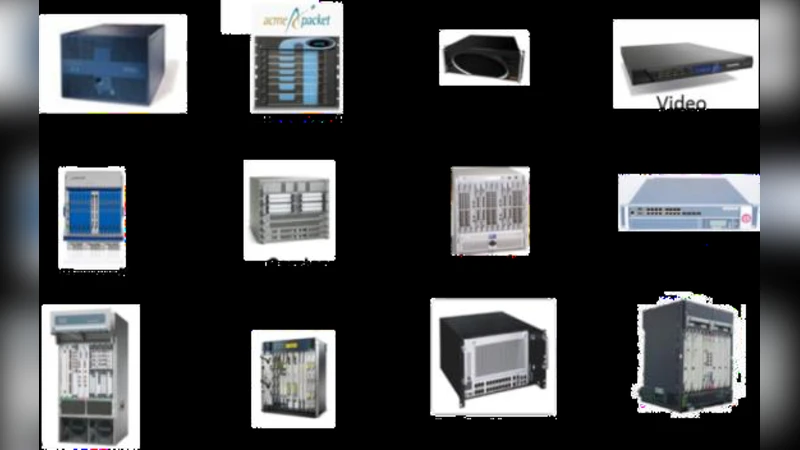
Network Function Virtualization (NFV) refers to the use of commodity hardware resources as the basic platform to perform specialized network functions as opposed to specialized hardware devices. Currently, NFV is mainly implemented based on general purpose processors, or general purpose network processors. In this paper we propose the use of FPGAs as an ideal platform for NFV that can be used to provide both the flexibility of virtualizations and the high performance of the specialized hardware. We present the early attempts of using FPGAs dynamic reconfiguration in network processing applications to provide flexible network functions and we present the opportunities for an FPGA-based NFV platform.
💡 Research Summary
Network Function Virtualization (NFV) aims to replace dedicated network appliances with software‑based services running on commodity hardware, thereby improving operational flexibility, reducing capital expenditures, and accelerating service deployment. To date, most NFV implementations rely on general‑purpose processors (GPPs) or generic network processors (NPs) hosted in virtual machines or containers. While this approach delivers the promised agility, it often falls short when confronted with high‑throughput, low‑latency workloads such as deep packet inspection, high‑speed encryption, or large‑scale routing table look‑ups. The paper proposes field‑programmable gate arrays (FPGAs) as an alternative substrate for NFV, arguing that the reconfigurable nature of FPGAs can bridge the gap between the flexibility of software virtualization and the raw performance of purpose‑built hardware.
The authors first review prior work that leverages FPGAs for network processing. Examples include hardware‑accelerated packet classification engines that emulate TCAM behavior, trie‑based routing lookup modules, and dedicated AES cores for line‑rate encryption. Empirical results from these studies consistently show order‑of‑magnitude improvements in packet‑per‑second throughput and latency reductions from milliseconds to microseconds when compared with CPU‑only implementations. Moreover, the paper highlights the use of dynamic partial reconfiguration (DPR) – a technique that allows a portion of the FPGA fabric to be reprogrammed while the rest of the device continues to operate. DPR enables on‑the‑fly updates of individual network functions (e.g., swapping a firewall rule set or inserting a new DPI module) without requiring a full system reboot, thereby minimizing service disruption.
Building on these observations, the paper outlines the architectural considerations for an FPGA‑based NFV platform. Key points include:
- Modular IP Core Management – A repository of version‑controlled, parameterizable IP blocks is essential for rapid composition of network service chains. Standardized metadata facilitates automated placement and interconnection.
- Reconfiguration Overhead Minimization – The time required to load a new partial bitstream directly impacts service continuity. Strategies such as minimizing the reconfigurable region, employing high‑bandwidth interfaces (PCIe Gen4, CXL), and pre‑fetching bitstreams can reduce downtime to sub‑millisecond levels.
- Security and Multi‑Tenancy – In shared‑infrastructure scenarios, hardware‑level isolation mechanisms (e.g., memory protection units, access control lists embedded in the fabric) are required to prevent cross‑tenant leakage and to enforce policy compliance.
- Development Productivity – High‑level synthesis tools (SDx, OpenCL, HLS) lower the barrier for software engineers to generate hardware accelerators. Integration with existing NFV orchestration frameworks (OpenStack, ONAP) through standardized APIs enables automated deployment, scaling, and monitoring of FPGA‑backed functions.
The authors identify three primary research directions that must be addressed before FPGA‑centric NFV can achieve mainstream adoption. First, reconfiguration scheduling algorithms need to be refined to coordinate simultaneous updates of multiple functions while preserving overall throughput. Second, virtualization of FPGA resources must be realized, allowing fine‑grained allocation of logic, DSP, and memory blocks to distinct tenants in a manner analogous to CPU core scheduling. Third, tight coupling with cloud‑native orchestration is required to support service chaining, auto‑scaling, and fault tolerance across heterogeneous hardware pools.
In conclusion, the paper makes a compelling case that FPGAs, especially when combined with dynamic partial reconfiguration and modern high‑level design flows, can deliver the dual benefits of NFV’s flexibility and the deterministic performance of specialized ASICs. By addressing the outlined challenges—efficient reconfiguration, secure multi‑tenant isolation, and seamless integration with orchestration platforms—FPGA‑based NFV platforms have the potential to become a cornerstone of next‑generation, all‑programmable network infrastructures.