Entropy Based Cartoon Texture Separation
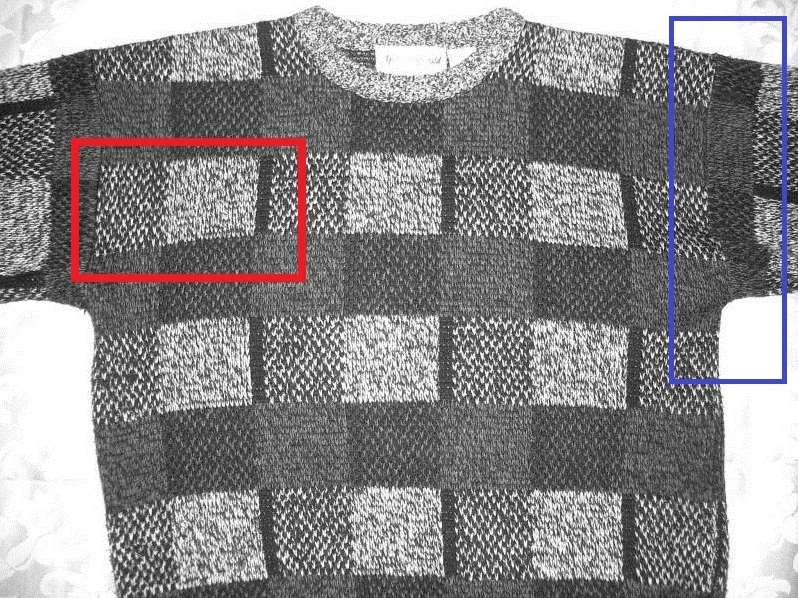
Separating an image into cartoon and texture components comes useful in image processing applications, such as image compression, image segmentation, image inpainting. Yves Meyer’s influential cartoon texture decomposition model involves deriving an energy functional by choosing appropriate spaces and functionals. Minimizers of the derived energy functional are cartoon and texture components of an image. In this study, cartoon part of an image is separated, by reconstructing it from pixels of multi scale Total-Variation filtered versions of the original image which is sought to be decomposed into cartoon and texture parts. An information theoretic pixel by pixel selection criteria is employed to choose the contributing pixels and their scales.
💡 Research Summary
The paper proposes a novel entropy‑based method for separating cartoon (piecewise‑smooth structure) and texture components in images. Building on the classic total‑variation (TV) denoising model of Rudin‑Osher‑Fatemi (ROF) and the functional framework introduced by Meyer, the author generates a set of multi‑scale cartoon approximations by applying the ROF model with a range of λ parameters. Small λ values produce heavily smoothed images where textures are largely removed, while large λ values retain more of the original detail.
The key insight is that texture regions exhibit a more uniform intensity distribution within a local neighbourhood, leading to higher Shannon entropy, whereas cartoon regions have a more concentrated distribution and thus lower entropy. For each pixel, the entropy H_k is computed over a k×k window (the experiments use 9×9). Assuming the pixel intensities in the window are independent and identically distributed, the probability of each intensity value is estimated by its relative frequency. The author formalizes the hypothesis: “the entropy of a block centred on a texture pixel is always greater than that of a block centred on a cartoon pixel.”
Using this hypothesis, each pixel is classified as texture (p_t) or cartoon (p_c) based on its entropy value. A simple linear bin‑matching scheme then maps the entropy range
Comments & Academic Discussion
Loading comments...
Leave a Comment