An adjustable-width window with good dynamic range
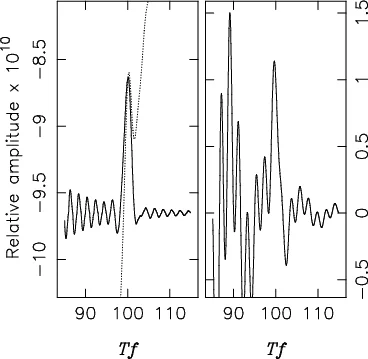
A new variable-width window is presented and compared with several other windows, both of variable and fixed widths. The comparison focuses on sensitivity and dynamic range. The equivalent noise bandwidth or ENBW (or rather, its reciprocal) is used as a proxy for the first; maximum sidelobe level and high-frequency roll-off in the Fourier transform, for the second. The new window can access any value of ENBW by appropriate choice of the width parameter. At any given value of ENBW below about 3, a setting can be found at which the sidelobes of the window are lower than those of any other in the moderate frequency regime below about 100 cycles.
💡 Research Summary
The paper addresses a fundamental problem in discrete Fourier analysis: spectral leakage caused by the abrupt truncation of a finite‑length signal. Traditional remedies involve applying a window function before the DFT, but each fixed‑width window (e.g., top‑hat, Hann, Kaiser, Nuttall) imposes a trade‑off among three key performance metrics defined by Harris (1978): equivalent noise bandwidth (ENBW), maximum sidelobe level, and roll‑off rate of the Fourier transform. ENBW quantifies the loss of sensitivity for incoherent noise relative to a coherent tone; the smaller the ENBW, the better the sensitivity. Sidelobe level determines how well weak tones can be detected near a strong tone, while roll‑off describes how quickly the spectral leakage decays at high frequencies.
The author introduces a new family of variable‑width windows called the “hyperbolic window.” Its time‑domain definition is
\
Comments & Academic Discussion
Loading comments...
Leave a Comment