Hat Puzzles
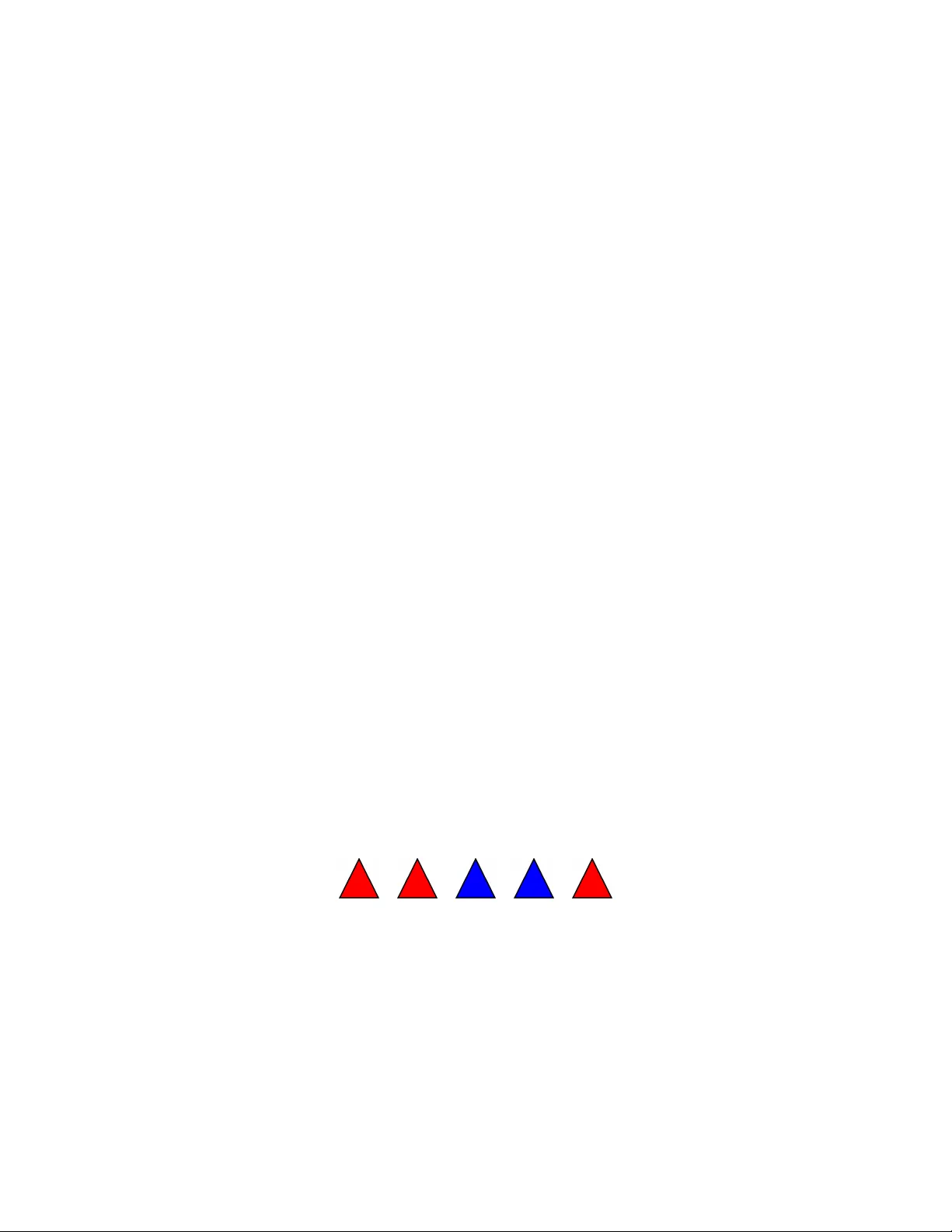
This paper serves as the announcement of my program—a joke version of the Langlands Program. In connection with this program, I discuss an old hat puzzle, introduce a new hat puzzle, and offer a puzzle for the reader.
💡 Research Summary
The paper entitled “Hat Puzzles” announces a whimsical research agenda called “Tanya’s Program,” which aims to translate jokes into puzzles and vice‑versa, drawing an analogy with the Langlands Program’s unifying ambition. The author begins with a classic bar‑room joke involving three logicians who answer “I don’t know, I don’t know, Yes” to a beer‑offering question. This dialogue mirrors the structure of hat puzzles: each participant knows the states of the others but not his own.
The core of the paper revisits several well‑known hat‑puzzle variants. For two logicians, the rear participant simply names the front person’s hat color, guaranteeing at least one correct answer. With three logicians, the rear person signals whether the two hats in front are the same or different using a pre‑agreed binary code (“red” = same, “blue” = different). The middle logician decodes this signal together with the visible front hat, and the front logician then deduces his own color. This guarantees that only the rear logician may be wrong.
The discussion then generalizes to any number of logicians. The last person announces the parity (even/odd) of the number of red hats he sees; each subsequent logician adds up the number of “red” utterances heard and the colors he sees, and declares his own hat color so that the cumulative parity remains consistent. This parity‑coding scheme ensures that at most one person (the last) can be mistaken, regardless of the line length.
The author extends the idea to more than two colors. By mapping each color to an integer 0,…, N‑1, the last logician announces a color that makes the total sum of all colors congruent to zero modulo N. Each following logician sums the integers he hears and sees, then computes his own color under the assumption that the overall sum is zero. Again, only the last participant is at risk.
A new puzzle, introduced by Konstantin Knop and Alexander Shapovalov, adds a further twist: there are N distinct hats for N‑1 logicians, so one hat remains unused, and no color may be repeated in the spoken answers. The naïve modular‑sum strategy can fail because the rear logician might announce a color that actually belongs to a front logician, forcing that front logician into a conflict (he cannot repeat the announced color). The paper proposes a rescue strategy: the rear logician still makes his modular‑sum announcement, but if his announced color coincides with a front logician’s hat, that front logician instead says the color of the first person in line. Consequently, at most three participants—the rear logician, the front logician whose hat matches the announced color, and the first person—may utter an incorrect color; all others are guaranteed to be correct. The author hints at an even stronger solution that limits errors to a single person, inviting readers to discover it.
Finally, the author challenges the reader to convert the presented puzzles back into jokes, thereby completing the cycle of “joke‑to‑puzzle” conversion envisioned by Tanya’s Program. References include a collection of hat problems by Brown and Tanon, Winkler’s puzzle anthology, and a forthcoming paper by the author himself. Overall, the work blends combinatorial coding, parity arguments, and modular arithmetic with playful narrative, illustrating how elementary logical games can embody deeper mathematical concepts.
Comments & Academic Discussion
Loading comments...
Leave a Comment