Statistical mechanics of human resource allocation: A mathematical modeling of job-matching in labor markets
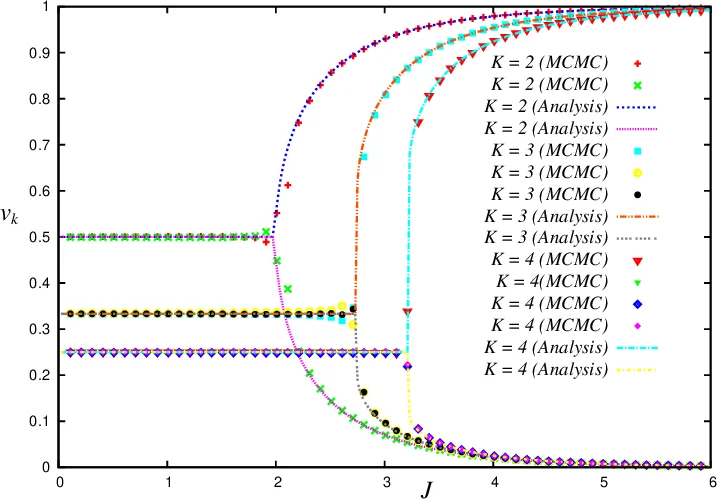
We provide a mathematical model to investigate the human resource allocation problem for agents, say, university graduates who are looking for their positions in labor markets. The basic model is described by the so-called Potts spin glass which is well-known in the research field of statistical physics. In the model, each Potts spin (a tiny magnet in atomic scale length) represents the action of each student, and it takes a discrete variable corresponding to the company he/she applies for. We construct the energy to include three distinct effects on the students’ behavior, namely, collective effect, market history and international ranking of companies. In this model system, the correlations (the adjacent matrix) between students are taken into account through the pairwise spin-spin interactions. We carry out computer simulations to examine the efficiency of the model. We also show that some chiral representation of the Potts spin enables us to obtain some analytical insights into our labor markets.
💡 Research Summary
**
The paper proposes a statistical‑mechanical framework for the allocation of human resources, focusing on university graduates seeking employment in Japan. The authors model each graduate as a Potts spin that can take one of K discrete states, each state representing a particular company to which the graduate applies. The central object of the study is a Hamiltonian (Eq. 10) that incorporates three distinct influences on a graduate’s decision: (i) a collective effect mediated by an adjacency matrix (c_{ij}) that captures interpersonal relationships among students; (ii) a ranking effect weighted by a parameter (\gamma) and a company‑specific rank (\varepsilon_k); and (iii) a market‑history term weighted by (\beta) that penalises applications to companies whose current applicant pool deviates from a target quota (v_k^*).
The adjacency matrix can be positive (friendship), zero (independence) or negative (antagonism), allowing the model to represent a wide variety of social network structures. The decision variable (\sigma_i(t)) denotes the company chosen by student (i) at discrete time step (t). After the application stage, each student either receives an acceptance ((\xi_i(t)=1)) or a rejection ((\xi_i(t)=0)). The acceptance probability (A(\sigma_i)) is defined in Eq. (15) using a step function that compares the current number of applicants (v_k(t)) with the quota (v_k^*). Conditional on (\sigma_i), the probability of (\xi_i) follows a simple Bernoulli law (Eq. 14).
Assuming that the configuration of spins follows a Gibbs–Boltzmann distribution (P(\boldsymbol\sigma)\propto e^{-H(\boldsymbol\sigma)}), the authors derive an exact expression for the macroscopic employment rate (1-U(t)=\frac{1}{N}\sum_i \xi_i(t)) as the average of the acceptance ratio over the Boltzmann ensemble (Eq. 19‑20). This provides a direct link between microscopic decision rules and observable macro‑variables such as the unemployment rate (U) and the labor‑shortage ratio (\Omega).
Two analytical regimes are examined. First, when the interaction strength (J) is set to zero, the Hamiltonian decouples into single‑spin terms (Eqs. 21‑22). In this case the dynamics reduce to a set of recursive equations for the company‑wise applicant fractions (v_k(t)) (Eq. 23) and a closed‑form expression for the employment rate (Eq. 24). Numerical integration of these recursions reproduces the time evolution of (U(t)) for various numbers of companies (K=3 and K=50) and shows how the parameter (\gamma) (ranking bias) controls the steady‑state employment level. The authors also recover the previously reported linear relation (U=\Omega) when the job‑offer ratio (\alpha=1) (Eq. 26).
Second, the paper briefly explores the case (J\neq0), where student‑student correlations are present. By employing a chiral (complex) representation of the Potts spins, the authors obtain mean‑field‑type analytical insights and observe a phase‑transition‑like behaviour: strong positive (J) leads to collective alignment of applications (many students flock to the same high‑rank firms), while negative (J) promotes diversification. However, detailed results for this regime are limited to small‑scale simulations, and the authors acknowledge the need for larger‑network studies.
The manuscript also situates the Potts‑spin approach within the broader literature on urn models. The urn model, reviewed in Section 2, captures Bose‑Einstein‑type condensation phenomena when balls (resources) are indistinguishable, but it lacks any interaction among agents. By contrast, the Potts model explicitly incorporates pairwise interactions, making it more suitable for describing real labor markets where information sharing and peer influence are crucial.
In the concluding section, the authors argue that the Potts‑spin glass formulation offers a versatile, analytically tractable platform for linking micro‑level job‑search behaviour to macro‑level labor‑market outcomes. They suggest several extensions: incorporating empirically measured social networks, allowing firms to have heterogeneous hiring policies, and integrating unstructured data such as resumes or online profiles. Overall, the paper contributes a novel interdisciplinary bridge between statistical physics and labor‑economics, providing both a theoretical framework and preliminary empirical validation for the dynamics of job matching.
Comments & Academic Discussion
Loading comments...
Leave a Comment