Reduction of Field Loss by a Video Processing System
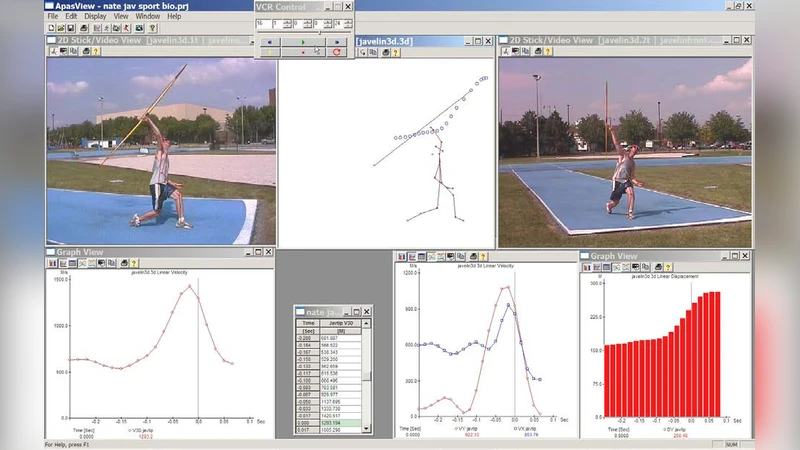
Streaming of 60 de-interlaced fields per second digital uncompressed video with 720x480 resolution without a loss of video fields is one of the desired technologies by scientists in biomechanics. If it is possible to stream digital uncompressed video without dropped video fields, then a sophisticated computer analysis of the transmitted via IEEE 1394a connection video is possible. Such process is used in biomechanics when it is important to analyze athletes performance via streaming digital uncompressed video to a computer and then analyzing it using specific software such as Arial Performance Analysis Systems.
💡 Research Summary
The paper investigates the loss of video fields that occurs when streaming uncompressed digital video at 720 × 480 resolution and 60 de‑interlaced fields per second over an IEEE 1394a (FireWire) connection to a laptop computer for biomechanical analysis. The motivation is that dropped fields compromise the integrity of motion‑analysis software (specifically Ariel Performance Analysis System, APAS) and therefore limit the ability to evaluate athletes’ performance.
The authors set out three research questions: (1) whether hardware configuration—particularly RAM size and hard‑disk rotational speed (RPM)—affects field loss; (2) whether the number of simultaneous video sources (cameras) influences loss; and (3) whether a combination of these variables can predict the number of lost fields. To answer these questions, they built a test platform using a Gateway 450ROG laptop running Windows XP Professional 32‑bit, equipped with either 512 MB or 1024 MB of RAM, and with two hard‑disk options: a 5400 RPM Hitachi model and a 7200 RPM Hitachi model. Video sources were DV camcorders connected via IEEE 1394a; the connection was made either through a COMPAQ 2‑port FireWire PC‑Card or the laptop’s onboard controller, depending on the number of cameras (one or two cameras used the PC‑Card, three cameras used the onboard controller).
A factorial experimental design was employed: 2 (RAM) × 3 (hard‑disk RPM) × 2 (number of video streams: 1 vs. 2) × 30 repetitions, yielding a total of 360 measurement blocks. Each block consisted of a 10‑second video capture at the target rate, during which APAS logged any dropped fields. The authors performed a two‑way ANOVA to assess main effects and interactions.
Key findings:
- RAM size had no statistically significant effect on field loss; both 512 MB and 1024 MB configurations performed similarly.
- Hard‑disk speed was significant: the 7200 RPM drives produced more dropped fields than the 5400 RPM drives, contrary to the expectation that faster disks would be better. The authors suggest that higher rotational speed may increase latency or expose driver/controller incompatibilities.
- The number of video sources was also significant; adding a second (or third) camera increased the likelihood of dropped fields, indicating that the FireWire bus bandwidth and buffer management become limiting factors under multi‑camera loads.
- Interaction effects showed that the worst performance occurred with the combination of 1024 MB RAM, 7200 RPM disk, and multiple cameras, while the most stable runs (over 300 frames captured without loss) were observed with 5400 RPM disks and moderate RAM when only a single camera was used.
Based on these results, the authors propose several practical recommendations: use slower‑spinning (5400 RPM) hard drives for video capture, prioritize FireWire controllers with larger buffers or consider RAID configurations to improve I/O throughput, and explore CPUs with dynamic clock‑stepping or multi‑core architectures that can adapt processing speed to the incoming video load. They also suggest future experiments to compare SATA II versus SATA III controllers, evaluate cache sizes on drives (2 MB vs. 16 MB), and test newer FireWire 800 or USB 3.0 interfaces.
The study’s limitations include a narrow RAM range (only two sizes), lack of direct measurement of the underlying cause of dropped fields (e.g., buffer overflow vs. transmission error), and the absence of CPU performance variables in the current experiment despite being highlighted in the discussion. Nonetheless, the work provides a clear empirical basis showing that hard‑disk rotational speed and the number of concurrent video streams are the dominant factors influencing field loss in high‑rate DV streaming over FireWire, while RAM size is relatively unimportant. Future research that expands the hardware parameter space and incorporates real‑time packet logging should be able to define an optimal, reproducible configuration for biomechanical video capture at 60 fields/s.
Comments & Academic Discussion
Loading comments...
Leave a Comment