GRB 090618: The First Example of a Neutron Star Gravitational Collapse to a Black Hole Induced by a Type Ib/c Supernova
A novel concept has been recently proposed for explaining the temporal coincidence of some Gamma Ray Bursts (GRBs) with an associated Supernova (SN) in terms of the gravitational collapse of a neutron star (NS) to a Black Hole (BH), induced by a type Ib/c SN explosion. We apply these considerations to the exceptional case of GRB 090618, for which there is evidence of a SN $\sim 10$ days after the GRB occurrence. We calculate the accretion rate and total accreted mass onto a NS from a SN Ib/c originated from a companion evolved star. It is shown that the NS reaches in a few seconds the critical mass and undergoes gravitational collapse to a BH leading to the emission of a GRB. We find for the mass of the NS companion, $M_{\rm NS}$, and for the SN core progenitor, $M_{\rm core}$, the following mass ranges: $1.8\lesssim M_{NS}/M_\odot \lesssim 2.1$ and $3\leq M_{\rm core}/M_\odot \leq 8$. Finally, we discuss the complementarity of these considerations to alternative processes explaining long and short GRBs.
💡 Research Summary
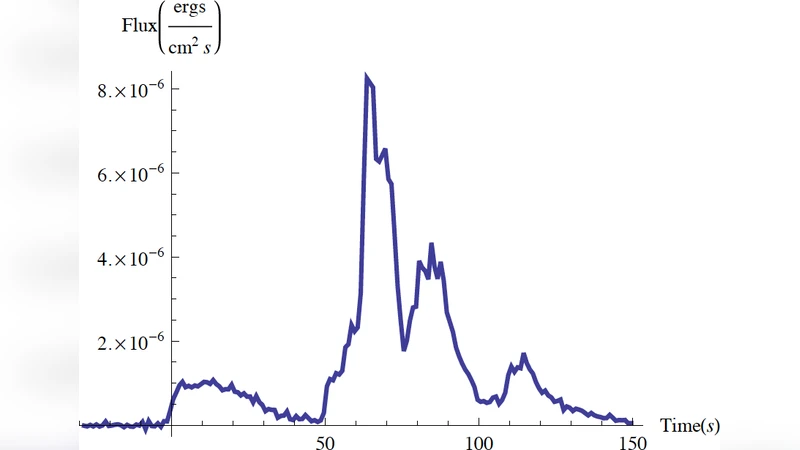
The paper presents a novel “Induced Gravitational Collapse” (IGC) scenario to explain the temporal coincidence of GRB 090618 and a Type Ib/c supernova (SN) observed roughly ten days later. The authors begin by summarizing the observational properties of GRB 090618—its prompt emission light curve, spectral evolution, and afterglow—and by confirming the presence of a SN Ib/c component in the late‑time optical data. They argue that the conventional collapsar model, which invokes the direct collapse of a massive single star, cannot simultaneously account for the distinct SN signature and the GRB timing in this case.
In the IGC framework, the system consists of a binary composed of a massive star that undergoes a core‑collapse SN Ib/c and a compact neutron star (NS) companion. When the SN explodes, a dense, high‑velocity ejecta shell expands outward and intercepts the NS. The authors model the accretion of this ejecta onto the NS using a Bondi‑Hoyle–type capture radius (R_{\rm acc}=2GM_{\rm NS}/v^{2}), where (v) is the ejecta velocity. The instantaneous mass‑accretion rate is expressed as (\dot M = \pi R_{\rm acc}^{2}\rho v), with (\rho) the local ejecta density. By adopting typical SN Ib/c parameters—ejecta velocities of order (10^{9},\mathrm{cm,s^{-1}}) and densities derived from a core mass (M_{\rm core}) in the range 3–8 (M_{\odot})—they calculate that a NS with an initial mass between 1.8 and 2.1 (M_{\odot}) can accrete enough material to exceed its critical mass (≈ 2.2 (M_{\odot})) within a few seconds.
Once the NS surpasses this threshold, it undergoes rapid gravitational collapse to a black hole (BH). The newly formed BH is surrounded by an ultra‑dense, hot plasma that generates copious electron‑positron pairs and intense gamma‑ray emission through neutrino‑annihilation and magnetic processes. This emission matches the observed energetics and temporal structure of GRB 090618. The authors emphasize that the IGC mechanism naturally produces a short, intense GRB episode followed by a delayed SN signal, exactly as observed.
The paper also discusses how the IGC model can unify the phenomenology of long and short GRBs. In systems where the SN ejecta supply is abundant, the NS accretes rapidly, leading to a long‑duration GRB (as in GRB 090618). Conversely, if the ejecta mass is modest or the NS is already near the critical mass, the collapse occurs with less accreted material, producing a short‑duration GRB. This duality offers an alternative to the traditional division based solely on progenitor mass and jet collimation.
Finally, the authors outline future work: high‑resolution hydrodynamic simulations of the SN‑NS interaction, detailed modeling of the post‑collapse fireball, and coordinated multi‑messenger observations (gravitational waves, neutrinos, and electromagnetic counterparts) to test the IGC predictions. They conclude that GRB 090618 provides the first compelling observational evidence for a neutron star collapsing into a black hole as a direct consequence of a companion Type Ib/c supernova.