Bayesian Source Separation Applied to Identifying Complex Organic Molecules in Space
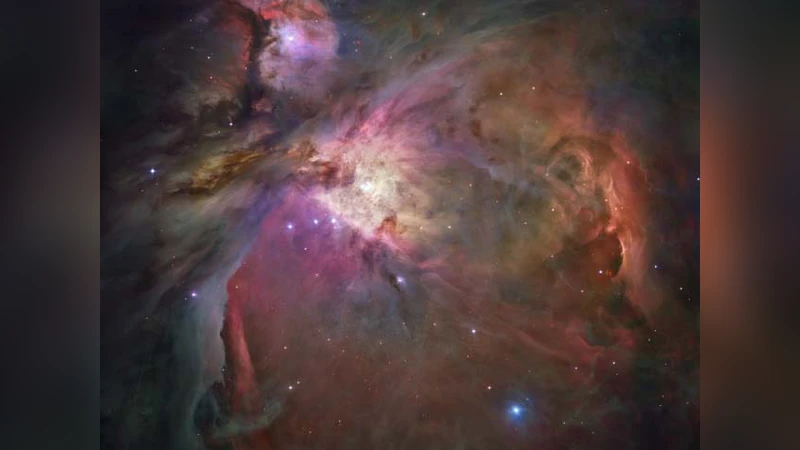
Emission from a class of benzene-based molecules known as Polycyclic Aromatic Hydrocarbons (PAHs) dominates the infrared spectrum of star-forming regions. The observed emission appears to arise from the combined emission of numerous PAH species, each with its unique spectrum. Linear superposition of the PAH spectra identifies this problem as a source separation problem. It is, however, of a formidable class of source separation problems given that different PAH sources potentially number in the hundreds, even thousands, and there is only one measured spectral signal for a given astrophysical site. Fortunately, the source spectra of the PAHs are known, but the signal is also contaminated by other spectral sources. We describe our ongoing work in developing Bayesian source separation techniques relying on nested sampling in conjunction with an ON/OFF mechanism enabling simultaneous estimation of the probability that a particular PAH species is present and its contribution to the spectrum.
💡 Research Summary
The paper tackles the long‑standing problem of deciphering the infrared emission from star‑forming regions, which is dominated by a complex mixture of polycyclic aromatic hydrocarbons (PAHs). While thousands of PAH species are known from laboratory and theoretical databases, only a single observed spectrum is available for any astronomical source, making traditional blind source‑separation techniques ineffective. The authors therefore formulate the problem as an “informed source‑separation” task, embedding extensive prior knowledge—PAH spectral templates, black‑body dust emission, and a non‑parametric Gaussian mixture for poorly understood components—directly into a Bayesian framework.
The forward model expresses the measured flux F(λ) as a linear superposition of three contributions: (i) a sum over PAH spectra sₚ(λ) each multiplied by a binary ON/OFF indicator δₚ and a scaling coefficient cₚ, (ii) one or more Planck black‑body terms Aₖ·Planck(λ,Tₖ) to model thermal dust emission at different temperatures, and (iii) a set of Gaussian components Gᵢ(λ) that capture broad, unidentified features. Measurement noise ϕ(λ) is added as a stochastic term.
Bayesian inference proceeds by assigning priors to all parameters. Uniform priors are used for amplitudes and temperatures, while the δₚ variables receive a Bernoulli prior (effectively a probability of presence). The likelihood is taken as Gaussian, but because the noise variance σ² is unknown a Jeffreys prior is adopted, leading to a Student‑t marginal likelihood that robustly handles uncertainty in σ. The posterior P(M|D,I) thus combines the prior knowledge with the observed spectrum D(λ).
Exploring this high‑dimensional posterior is achieved with Nested Sampling, a recent Markov‑chain Monte‑Carlo technique that maintains a set of live points drawn from the prior and iteratively replaces the point with the lowest likelihood by a new point constrained to have higher likelihood. This process contracts an implicit likelihood contour around the region of highest posterior probability, simultaneously yielding an estimate of the Bayesian evidence (crucial for model comparison) and samples from which parameter means and uncertainties are derived.
A key innovation is the incorporation of Skilling’s ON/OFF mechanism into the Nested Sampling engine. Separate “move” operators are defined: (a) perturbing the scaling coefficients cₚ for PAHs that are currently ON, (b) flipping the binary δₚ variable to turn a PAH on or off, and (c) swapping one PAH for another with a similar spectral shape. By assigning appropriate proposal probabilities proportional to the prior odds, the algorithm can efficiently explore both the combinatorial space of which PAHs are present and the continuous space of their contributions.
The authors present two sets of results. First, they apply the method to real ISO data of the Orion Bar. Nested Sampling identifies a dominant dust component at 61.0 K (±0.004 K) and a secondary component at ~18.8 K with a 36 % posterior probability, reproducing the observed continuum and isolating the sharp atomic lines. Second, they test the approach on synthetic mixtures containing 47 PAHs. Using a non‑negative least‑squares fit as a benchmark, the algorithm successfully recovers the true amplitudes for most of the PAHs, demonstrating that the ON/OFF framework can correctly assign high presence probabilities to genuine species while keeping spurious contributions near zero. The current synthetic tests do not yet employ the ON/OFF switch, but the authors note that extending the full Bayesian ON/OFF treatment is underway.
The discussion acknowledges several challenges. Scaling to the full library of >1,000 PAHs will dramatically increase the dimensionality of the model, potentially straining the efficiency of Nested Sampling. Moreover, the assumption of purely additive linear mixing may break down when absorption and emission processes overlap, suggesting the need for more sophisticated (possibly non‑linear) models. Future work will therefore focus on: (i) refining the physical realism of the dust and Gaussian background models, (ii) incorporating more detailed PAH priors (ionization state, hetero‑atom substitution), (iii) exploring hierarchical priors for amplitudes, and (iv) using the Bayesian evidence to select the optimal number of PAH classes when individual species cannot be uniquely identified.
In conclusion, the paper demonstrates that a Bayesian source‑separation framework, powered by Nested Sampling and an explicit ON/OFF mechanism, can extract physically meaningful information from a single infrared spectrum. While still at an early stage, the methodology offers a promising pathway to quantify the composition of interstellar organic molecules, thereby advancing our understanding of astrochemistry and the conditions governing star formation across the universe.
Comments & Academic Discussion
Loading comments...
Leave a Comment