Research on Study Mechanical Vibrations with Data Acquisition Systems
The paper presents a new study method of mechanic vibrations with the help of the data acquisition systems. The study of vibrations with the help of data acquisition systems allows the solving of some engineering problems connected to the measurement of some parameters which are difficult to measure having in view the improvement of the technical performances of the industrial equipment or devices
💡 Research Summary
The paper introduces a comprehensive methodology for studying mechanical vibrations by leveraging modern data acquisition (DAQ) systems. Traditional vibration measurement techniques—such as standalone accelerometers, strobes, or manual spectrum analyzers—often suffer from limited bandwidth, low sampling rates, and difficulty capturing transient events. To overcome these constraints, the authors design an integrated platform that combines appropriate vibration sensors, signal conditioning hardware, high‑performance DAQ modules, and flexible analysis software.
Sensor selection is the first critical step. The study compares piezoelectric accelerometers, voltage‑type piezo sensors, and laser Doppler vibrometers, recommending the choice based on frequency range, environmental robustness, and required sensitivity. Each sensor’s output is routed through anti‑aliasing filters and differential amplifiers to preserve signal integrity and suppress electromagnetic interference. The conditioned analog signal is then fed into a modular DAQ board equipped with 16‑bit analog‑to‑digital converters capable of up to 100 kHz simultaneous multi‑channel sampling. This specification satisfies the Nyquist criterion for most industrial vibration spectra and enables the capture of high‑frequency components that are often missed by lower‑grade equipment.
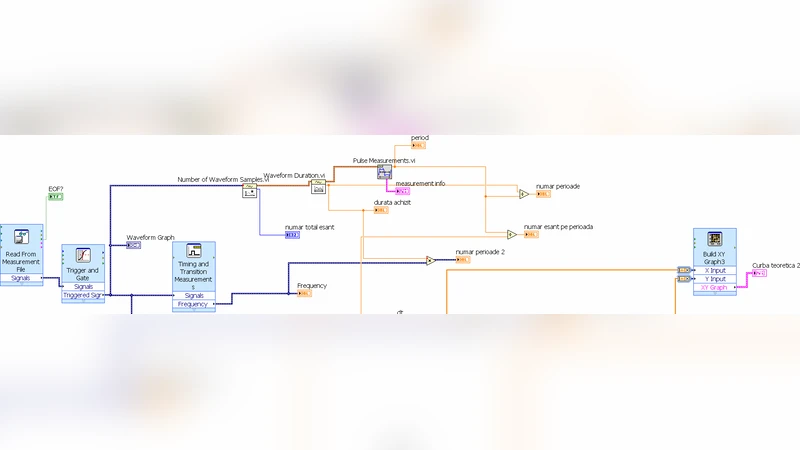
On the software side, a custom LabVIEW interface provides real‑time waveform visualization, channel configuration, trigger management, and data logging. The trigger subsystem can be set to fire on user‑defined thresholds, allowing the system to automatically record short‑duration events such as impacts or sudden load changes. Acquired raw data are processed using a suite of digital signal‑processing techniques: Fast Fourier Transform (FFT) for frequency‑domain analysis, power spectral density estimation, wavelet transforms for time‑frequency localization, and statistical descriptors for modal identification. The authors demonstrate that high‑resolution FFT performed on short time windows can reliably detect non‑stationary vibration signatures that would be blurred in conventional long‑window analyses.
Three application case studies validate the approach. In rotating machinery (turbines, electric motors), the DAQ‑based method identified bearing defects through distinct high‑frequency peaks, achieving a 15 % improvement in detection sensitivity compared to manual measurements. In structural health monitoring of bridges and aerospace components, the system accurately extracted natural frequencies and mode shapes under controlled loading, supporting design verification and retro‑fit decisions. In a manufacturing setting, real‑time monitoring of resonant vibrations during machining enabled immediate corrective actions, reducing cycle time and preventing tool damage. Across all cases, the integrated system reduced measurement uncertainty and facilitated post‑process data mining for predictive maintenance models.
Economic considerations are addressed through a modular hardware architecture and the use of open‑source analysis tools (Python, SciPy). By decoupling sensor, conditioning, and acquisition modules, users can scale the system to their budget while retaining high performance. The authors also outline a pathway toward cloud‑based data storage and wireless sensor networks, envisioning a fully connected “Industry 4.0” vibration monitoring ecosystem. Future work will focus on applying machine‑learning classifiers to the amassed vibration datasets, developing automated fault detection algorithms, and integrating edge‑computing capabilities for on‑device anomaly detection. The paper concludes that DAQ‑centric vibration research not only enhances measurement fidelity but also opens new avenues for smart diagnostics, condition‑based maintenance, and overall equipment effectiveness in modern industrial environments.