The Impact of Employment Web Sites Traffic on Unemployment: A Cross Country Comparison
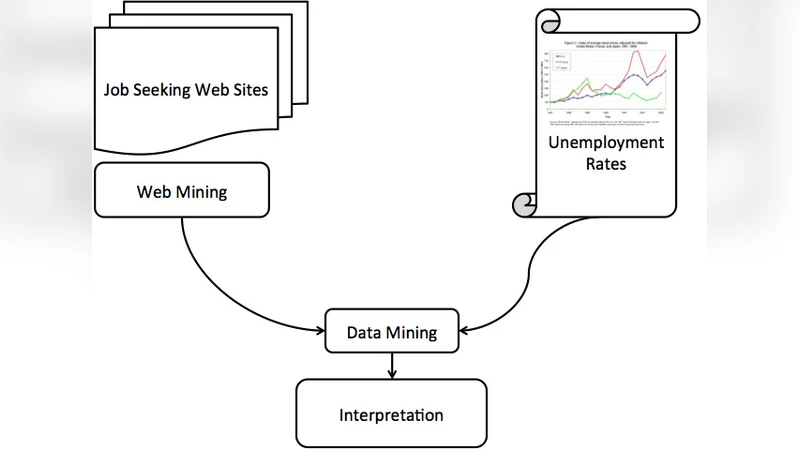
Although employment web sites have recently become the main source for re- cruitment and selection process, the relation between those sites and unemploy- ment rates is seldom addressed. Deriving data from 32 countries and 427 web sites, this study explores the correlation between unemployment rates of European countries and the attractiveness of country specific employment web sites. It also compares the changes in unemployment rates and traffic on all the aforementioned web sites. The results showed that there is a strong correlation between web sites traffic and unemployment rates.
💡 Research Summary
The paper titled “The Impact of Employment Web Sites Traffic on Unemployment: A Cross‑Country Comparison” investigates whether the amount of traffic to national employment websites is related to the unemployment rates of the corresponding European countries. The authors collected data from 32 European nations, identifying 427 job‑search portals listed on the European Youth Portal. For each portal they gathered traffic‑related metrics (Alexa rank, Google Trends indices, and other publicly available statistics) through manual web crawling, and paired these with the country’s official unemployment rate obtained from Eurostat. Because many records were incomplete, they applied a list‑wise deletion strategy, discarding any site lacking a full set of variables; after this cleaning step 382 observations remained.
The analytical core of the study is a Gaussian Process Regression (GPR) model. The authors present the mathematical formulation of GPR, including the covariance function and hyper‑parameter θ, but they do not specify which kernel was used, how hyper‑parameters were tuned, or whether any cross‑validation was performed. The model was fitted to the two‑column dataset (normalized traffic score vs. unemployment rate) and evaluated using three statistics: a Pearson‑type correlation coefficient of 54.49 %, a root‑mean‑square error (RMSE) of 0.50, and a root absolute error (RAE) of 0.98. Based on these figures the authors claim a “strong correlation” and argue that traffic levels can both predict unemployment rates and be predicted by them.
In the literature review the paper cites several studies that have linked Google search volumes to macro‑economic indicators (e.g., Askitas & Zimmermann 2009; D’Amuri 2009) and notes that, to the authors’ knowledge, no prior work has examined direct website traffic as a labor‑market indicator. The discussion emphasizes the novelty of using employment‑site traffic, but it glosses over methodological weaknesses. The manual crawling approach, reliance on list‑wise deletion, and lack of clarity about the exact traffic metric introduce potential bias. Moreover, the analysis does not control for confounding factors such as GDP growth, education levels, or labor‑market policies, nor does it employ panel‑data techniques that could account for country‑specific fixed effects.
The conclusion reiterates that a “close correlation” exists and suggests that policymakers could monitor job‑site traffic as an early warning signal for rising unemployment, or conversely, that rising unemployment could be inferred from increased traffic to job portals. While the research question is timely and the idea of leveraging web‑traffic data is appealing, the study’s statistical rigor is limited. Future work should adopt automated, reproducible data collection, employ robust missing‑data techniques, define traffic metrics unambiguously, and use multivariate econometric models (e.g., fixed‑effects panel regressions, vector autoregressions) to establish causality rather than mere association. Only with such enhancements can the promising link between online job‑search behavior and labor‑market outcomes be reliably quantified.
Comments & Academic Discussion
Loading comments...
Leave a Comment