The Inquisitions Semicolon: Punctuation, Translation, and Science in the 1616 Condemnation of the Copernican System
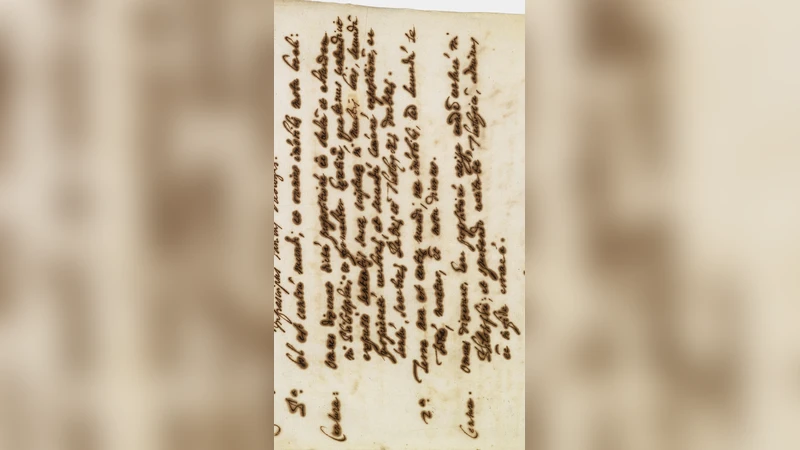
This paper presents high-resolution images of the original document of the 24 February 1616 condemnation of the Copernican system, as being “foolish and absurd in philosophy”, by a team of consultants for the Roman Inquisition. Secondary sources have disagreed as to the punctuation of the document. The paper includes a brief analysis of the punctuation and the possible effects of that punctuation on meaning. The original document and its punctuation may also have relevance to public perception of science and to science education.
💡 Research Summary
The paper presents a newly digitized, high‑resolution facsimile of the Roman Inquisition’s 24 February 1616 decree condemning the Copernican system as “foolish and absurd in philosophy.” By publishing the original Latin manuscript image, the authors are able to settle a long‑standing scholarly dispute concerning the placement of punctuation—most notably a semicolon—within the condemnation text. Earlier secondary sources have alternately reported a semicolon separating the adjectives “foolish” (stultus) and “absurd” (absurdus) or a full stop that would render the two judgments as separate sentences. The authors’ image analysis shows unequivocally that a semicolon follows the word “philosophia,” linking the two adjectives in a single, coordinated clause.
The core of the article is a linguistic‑philological examination of how this punctuation influences the logical structure and interpretive possibilities of the decree. In Latin, a semicolon (or its functional equivalent) signals a close syntactic relationship between clauses that are nevertheless distinct; it often marks a nuanced transition or a balanced juxtaposition. By placing a semicolon after “philosophia,” the Inquisition’s authors are explicitly presenting the two criticisms—“foolish” and “absurd”—as co‑equal, simultaneous attacks on the Copernican system. This construction suggests a multi‑layered condemnation that addresses both philosophical incoherence and logical absurdity, thereby portraying the heliocentric model as a comprehensive threat to the intellectual order upheld by the Church.
Conversely, if a period had been used, the two adjectives would be read as sequential, independent judgments. Such a reading would diminish the rhetorical force of the document, implying a more linear, perhaps less sophisticated, critique. The authors argue that this seemingly minor punctuation difference can reshape modern perceptions of the Inquisition’s stance: the semicolon version underscores a deliberate, sophisticated argumentation strategy, while the period version reinforces the stereotype of a blunt, authoritarian suppression of science.
Beyond textual analysis, the paper explores the broader implications for public understanding of science and for science education. First, an accurate reading of the original punctuation challenges the oversimplified narrative that the Church uniformly “opposed science.” It reveals that the Inquisition employed precise linguistic tools to construct a logical, philosophically grounded refutation, which can be used in curricula to illustrate the complex interplay between scientific ideas, theological doctrine, and rhetorical practice. Second, the availability of the high‑resolution image serves as a model for digital humanities projects, enabling scholars to conduct paleographic, codicological, and semiotic studies without relying on potentially corrupted printed editions. Third, the authors suggest that incorporating primary source analysis—complete with authentic punctuation—into classroom activities can foster critical thinking about how language shapes authority, how scientific controversies are framed, and how historical narratives are constructed.
In conclusion, the study demonstrates that the semicolon in the 1616 condemnation is not a trivial typographic artifact but a deliberate rhetorical device that conveys a coordinated, dual‑fold criticism of the Copernican system. Recognizing this nuance refines our historical understanding of the Church’s intellectual engagement with early modern astronomy and provides a valuable pedagogical resource for teaching the history and philosophy of science.