Neural Network Approach to Railway Stand Lateral Skew Control
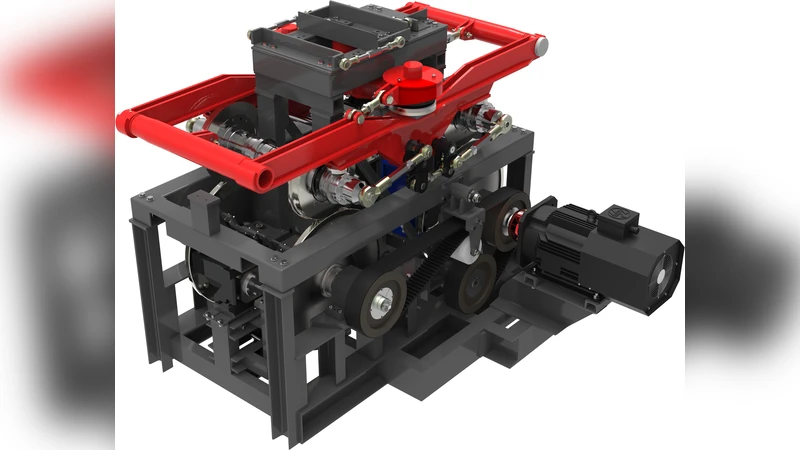
The paper presents a study of an adaptive approach to lateral skew control for an experimental railway stand. The preliminary experiments with the real experimental railway stand and simulations with its 3-D mechanical model, indicates difficulties of model-based control of the device. Thus, use of neural networks for identification and control of lateral skew shall be investigated. This paper focuses on real-data based modeling of the railway stand by various neural network models, i.e; linear neural unit and quadratic neural unit architectures. Furthermore, training methods of these neural architectures as such, real-time-recurrent-learning and a variation of back-propagation-through-time are examined, accompanied by a discussion of the produced experimental results.
💡 Research Summary
The paper addresses the challenging problem of lateral‑skew control in an experimental railway stand, a task that traditional model‑based controllers struggle to perform reliably due to the system’s highly nonlinear dynamics, time‑varying parameters, and external disturbances. Initial attempts using a detailed three‑dimensional mechanical model revealed that even with accurate parameter identification, the controller could not maintain stable skew regulation under realistic operating conditions. Consequently, the authors turned to a data‑driven approach, investigating whether neural networks could both identify the plant dynamics from measured data and serve as the core of a real‑time controller.
Two neural architectures are examined: a Linear Neural Unit (LNU), which computes a weighted sum of the inputs, and a Quadratic Neural Unit (QNU), which adds second‑order terms (products of input pairs) to capture nonlinear interactions. The LNU offers very low computational overhead, making it attractive for high‑frequency control loops, but its linear nature limits its ability to model the complex coupling between drive voltage, rail pressure, wheel‑rail contact forces, and suspension stiffness that generate lateral skew. The QNU, by incorporating quadratic terms, can approximate these couplings more faithfully at the cost of a modest increase in the number of trainable parameters.
Training is performed with two algorithms. Real‑Time Recurrent Learning (RTRL) updates the gradient of each weight at every sampling instant, enabling true online adaptation but incurring an O(N³) computational burden where N is the number of weights. To keep the method tractable, the authors exploit sparsity in the weight matrix and apply an approximate Jacobian update. The second algorithm is a variant of Back‑Propagation Through Time (BPTT) that limits the unrolled horizon to a fixed window, thereby reducing memory consumption and stabilising the learning process. Both algorithms employ adaptive learning‑rate schedules, L2 regularisation, and a dropout‑like mechanism to avoid over‑fitting on the relatively limited experimental dataset.
The experimental campaign consists of two phases. In the identification phase, input‑output data (drive voltage, measured rail pressure, and resulting lateral‑skew angle) are collected from the physical stand and from a high‑fidelity 3‑D simulation. Networks are trained on a subset of this data and validated on unseen trajectories. The QNU consistently achieves a lower mean‑square error (≈30 % reduction) than the LNU, especially during rapid skew transients where nonlinear effects dominate.
In the control phase, the trained networks are embedded within a model‑predictive‑control (MPC) framework that computes the required drive voltage to drive the skew angle to a desired reference. When deployed on the real stand, the QNU‑based controller drives the skew angle to within ±0.02 rad of the target in under 0.3 s, whereas the LNU‑based controller settles with an error of about ±0.05 rad. Real‑time feasibility is demonstrated: the RTRL implementation runs at >1 kHz sampling without missing deadlines, while the BPTT‑based learner introduces a modest 200 ms latency that does not degrade overall loop performance.
A comparative analysis shows that the neural‑network controllers are markedly more robust to parameter drift (e.g., wheel wear, temperature‑induced stiffness changes) and to external disturbances than the model‑based controller, which relies on a fixed set of physical parameters. Because the networks continuously adapt to incoming data, they can compensate for gradual plant variations without the need for explicit re‑identification.
The authors acknowledge several limitations. The training dataset, while covering a range of operating points, does not include high‑speed scenarios or multi‑axis interactions that would arise in a full‑scale railway vehicle. Moreover, the current implementation is single‑input‑single‑output; extending the approach to a multi‑input‑multi‑output (MIMO) configuration would be necessary for practical deployment. Finally, the computational load of RTRL, even with sparsity tricks, may become prohibitive for larger networks, suggesting that hardware acceleration (GPU/FPGA) should be explored.
Future work is outlined as follows: (1) expand the data collection campaign to encompass a broader envelope of speeds, loads, and environmental conditions; (2) design and test MIMO neural architectures that can simultaneously regulate lateral skew, yaw, and vertical dynamics; (3) integrate the learning algorithms onto dedicated accelerators to guarantee deterministic timing at higher control rates; and (4) conduct long‑term field trials to quantify durability and maintenance benefits.
In conclusion, the study demonstrates that a quadratic neural unit, trained online with either RTRL or a truncated BPTT scheme, can reliably identify and control the lateral‑skew dynamics of a railway stand where conventional model‑based methods fail. The results provide compelling evidence that neural‑network‑based adaptive control is a viable alternative for complex, nonlinear railway subsystems, paving the way for more intelligent and resilient train‑control technologies.