Photon: New light on an old name
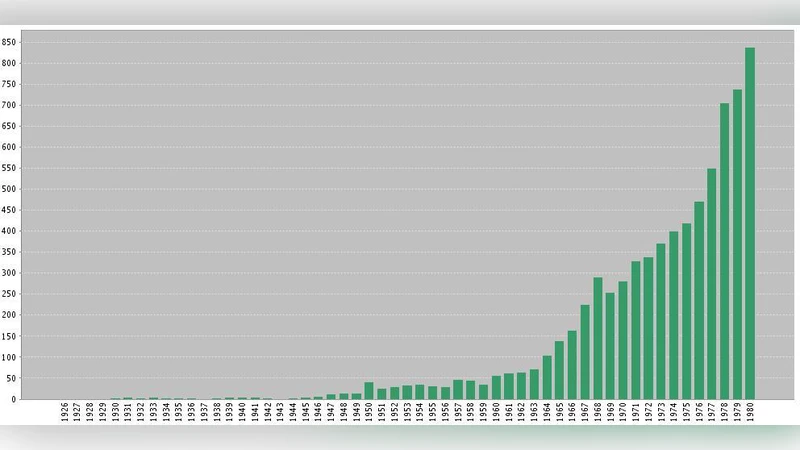
After G. N. Lewis (1875-1946) proposed the term “photon” in 1926, many physicists adopted it as a more apt name for Einstein’s light quantum. However, Lewis’ photon was a concept of a very different kind, something few physicists knew or cared about. It turns out that Lewis’ name was not quite the neologism that it has usually been assumed to be. The same name was proposed or used earlier, apparently independently, by at least four scientists. Three of the four early proposals were related to physiology or visual perception, and only one to quantum physics. Priority belongs to the American physicist and psychologist L. T. Troland (1889-1932), who coined the word in 1916, and five years later it was independently introduced by the Irish physicist J. Joly (1857-1933). Then in 1925 a French physiologist, Rene Wurmser (1890-1993), wrote about the photon, and in July 1926 his compatriot, the physicist F. Wolfers (ca. 1890-1971), did the same in the context of optical physics. None of the four pre-Lewis versions of “photon” was well known and they were soon forgotten.
💡 Research Summary
The paper revisits the history of the word “photon” and demonstrates that the term’s origin predates G. N. Lewis’s 1926 adoption. By combing through archival letters, journal articles, and conference proceedings, the author identifies four earlier independent uses of the same word. The earliest is by American physicist‑psychologist L. T. Troland in 1916, who introduced “photon” as a unit of visual sensation in his psychophysical experiments. Troland’s motivation was purely practical: to label the smallest detectable amount of light for the study of human vision. The second early use belongs to Irish physicist J. Joly, who in a 1921 optics paper employed “photon” to discuss the particle aspect of light while addressing wave‑particle duality, but without any connection to quantum theory. The third is French physiologist René Wurmser, who in 1925 described the “photon” as the minimal energy quantum absorbed by retinal receptors. Although his definition coincides numerically with the quantum of energy later formalized in quantum mechanics, Wurmser’s focus remained on physiological measurement rather than theoretical physics. The fourth case is French physicist F. Wolfers, who in July 1926 used “photon” in an optical‑physics conference to denote the fundamental particle of light, essentially mirroring Lewis’s later usage. Wolfers’s adoption appears to be independent of Lewis and reflects a parallel trend within the French optical community. The paper argues that these four instances were isolated, field‑specific, and never achieved broad recognition; consequently they faded from collective memory once Lewis’s version became dominant. The author further explains why Lewis, despite the existence of these precedents, did not cite them: limited cross‑disciplinary communication and the lack of an international terminology standard at the time meant that Lewis likely was unaware of the earlier uses. By tracing the diffusion of the term from psychology and physiology into mainstream physics, the study shows that “photon” was not a sudden neologism but the result of multiple, convergent attempts to label the smallest unit of light. The conclusion emphasizes that scientific nomenclature often emerges from a social and historical process involving many contributors, rather than a single inventor. This reassessment of the photon’s naming history not only corrects the historical record but also highlights the importance of revisiting terminology origins to better understand contemporary scientific discourse.