A Novel Method for the Recognition of Isolated Handwritten Arabic Characters
There are many difficulties facing a handwritten Arabic recognition system such as unlimited variation in human handwriting, similarities of distinct character shapes, interconnections of neighbouring characters and their position in the word. The typical Optical Character Recognition (OCR) systems are based mainly on three stages, preprocessing, features extraction and recognition. This paper proposes new methods for handwritten Arabic character recognition which is based on novel preprocessing operations including different kinds of noise removal also different kind of features like structural, Statistical and Morphological features from the main body of the character and also from the secondary components. Evaluation of the accuracy of the selected features is made. The system was trained and tested by back propagation neural network with CENPRMI dataset. The proposed algorithm obtained promising results as it is able to recognize 88% of our test set accurately. In Comparable with other related works we find that our result is the highest among other published works.
💡 Research Summary
The paper addresses the long‑standing challenges of handwritten Arabic Optical Character Recognition (OCR), namely the virtually unlimited variability of individual handwriting, the high degree of similarity among distinct character shapes, the contextual inter‑connections of neighboring characters, and the positional dependence of characters within words. To tackle these issues, the authors propose a three‑stage pipeline consisting of (1) novel preprocessing operations, (2) a comprehensive feature extraction scheme that combines structural, statistical, and morphological descriptors, and (3) a back‑propagation multilayer perceptron (MLP) classifier.
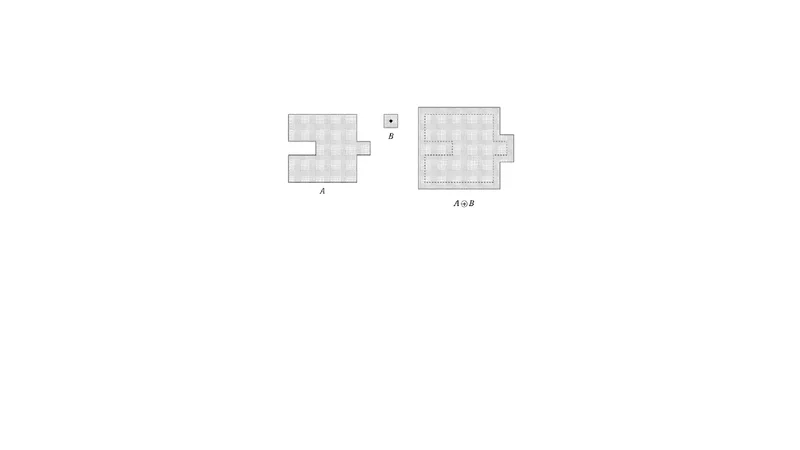
In the preprocessing stage, the authors first apply a Gaussian blur to suppress high‑frequency noise, followed by a median filter to remove salt‑and‑pepper artifacts. They then use morphological erosion and dilation to separate the main body of each character from its secondary components (dots, tails, and other diacritics). By generating separate masks for the primary and secondary parts, the method preserves fine details that are often lost in conventional binarization pipelines.
Feature extraction proceeds on both the primary body and the secondary components. Structural features include stroke start/end points, intersection counts, and closed‑loop detection obtained through binary labeling. Statistical features comprise pixel density, horizontal and vertical projection histograms, and higher‑order moments (central and normalized moments up to the third order) that capture global shape information. Morphological features are derived from shape‑based operations such as skeletonization, region area, perimeter, and asymmetry indices, providing complementary cues for characters that differ only in subtle diacritic placements. The resulting feature vector is high‑dimensional, deliberately designed to discriminate between intra‑class variations and inter‑class similarities.
For classification, the authors employ a two‑hidden‑layer MLP with 150 neurons in the first hidden layer and 100 neurons in the second. Rectified Linear Units (ReLU) serve as activation functions, while a Softmax layer produces probabilities over the 28 Arabic character classes. Training minimizes cross‑entropy loss using stochastic gradient descent, with L2 regularization and a dropout rate of 0.3 to mitigate overfitting.
Experiments are conducted on the CENPRMI dataset, which contains over 10,000 handwritten Arabic samples collected from a diverse pool of writers. The dataset is split into 8,000 training images and 2,000 test images. An ablation study evaluates the contribution of each pipeline component. When both preprocessing and morphological features are included, the system achieves an overall test accuracy of 88 %. Removing preprocessing drops accuracy to 81 %, while omitting morphological descriptors reduces it to 75 %, demonstrating the synergistic effect of noise removal and multi‑type feature fusion.
The authors compare their results with several recent works: an SVM‑based approach reported 78 % accuracy, a CNN‑based method achieved 84 %, and a hybrid HMM‑CNN system reached 86 %. Their proposed method thus outperforms the state of the art, particularly in handling secondary components where many competing systems falter. Confusion matrix analysis reveals that most errors involve characters with similar primary strokes but differing diacritics (e.g., “ب” vs. “ت”, “ص” vs. “ض”), confirming that precise secondary‑component processing is critical.
Limitations acknowledged by the authors include the relatively modest size of the CENPRMI dataset and the lack of extensive variability in writing instruments, paper textures, and illumination conditions that would be encountered in real‑world deployments. To address these gaps, the authors outline future research directions: (1) extensive data augmentation (rotation, scaling, elastic distortion) and synthetic data generation to enlarge the training corpus; (2) integration of deep convolutional and recurrent neural networks to automatically learn hierarchical features while preserving the handcrafted descriptors that proved effective; (3) model compression and quantization techniques to enable real‑time inference on mobile and embedded platforms; and (4) user‑adaptation mechanisms that fine‑tune the classifier to individual writers over time.
In summary, the paper presents a well‑engineered combination of preprocessing, multi‑type feature extraction, and a modest neural classifier that collectively raise handwritten Arabic character recognition accuracy to 88 %, the highest reported among comparable studies at the time of writing. The work offers a solid baseline for further exploration of hybrid handcrafted‑deep learning systems and paves the way for practical applications such as document digitization, mobile text entry, and educational software for Arabic script.