A mixture of experts model for rank data with applications in election studies
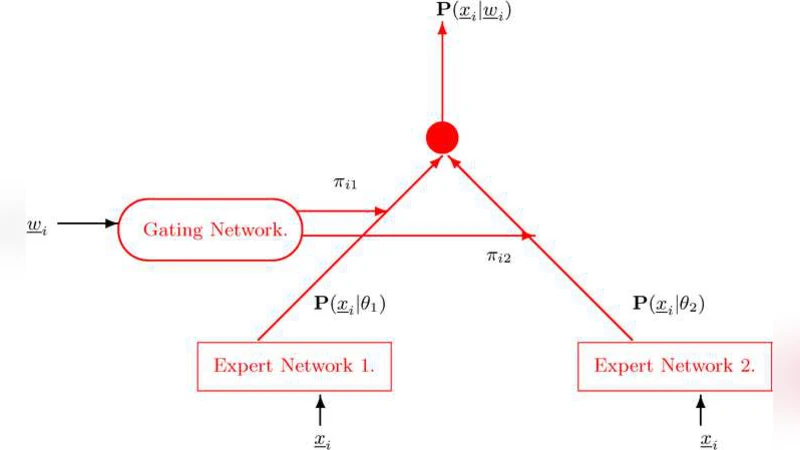
A voting bloc is defined to be a group of voters who have similar voting preferences. The cleavage of the Irish electorate into voting blocs is of interest. Irish elections employ a ``single transferable vote’’ electoral system; under this system voters rank some or all of the electoral candidates in order of preference. These rank votes provide a rich source of preference information from which inferences about the composition of the electorate may be drawn. Additionally, the influence of social factors or covariates on the electorate composition is of interest. A mixture of experts model is a mixture model in which the model parameters are functions of covariates. A mixture of experts model for rank data is developed to provide a model-based method to cluster Irish voters into voting blocs, to examine the influence of social factors on this clustering and to examine the characteristic preferences of the voting blocs. The Benter model for rank data is employed as the family of component densities within the mixture of experts model; generalized linear model theory is employed to model the influence of covariates on the mixing proportions. Model fitting is achieved via a hybrid of the EM and MM algorithms. An example of the methodology is illustrated by examining an Irish presidential election. The existence of voting blocs in the electorate is established and it is determined that age and government satisfaction levels are important factors in influencing voting in this election.
💡 Research Summary
The paper presents a novel statistical framework for clustering voters in elections that use ranked‑choice ballots, and for quantifying how demographic and attitudinal covariates influence the composition of these clusters. The authors focus on the Irish presidential election, where the Single Transferable Vote system generates rich rank data: each voter lists candidates in order of preference, often providing only a subset of the full slate. Traditional clustering methods either ignore the ordering information or treat each rank as an independent categorical response, thereby losing the sequential dependence that characterizes voter preferences.
To address this, the authors embed the Benter model—a parametric distribution specifically designed for rank data—within a Mixture‑of‑Experts (MoE) architecture. In the Benter model, the probability of selecting a particular candidate at a given stage is governed by a set of “stage‑specific strength” parameters together with a decay factor that captures the empirically observed tendency for preference intensity to diminish as the ranking proceeds. This provides a flexible likelihood for each latent voting bloc (expert).
The MoE component of the framework allows the mixing proportions (i.e., the probability that a given voter belongs to each bloc) to be functions of observable covariates. The authors adopt a multinomial logistic regression (a GLM with a logit link) to model these proportions as a function of age, gender, education, occupation, and, crucially, the voter’s satisfaction with the incumbent government. By linking covariates directly to the mixing weights, the model yields interpretable regression coefficients that describe how each factor shifts a voter’s propensity toward a particular bloc.
Parameter estimation proceeds via a hybrid Expectation‑Maximization (EM) and Minorization‑Maximization (MM) algorithm. In the E‑step, posterior responsibilities—probabilities that each voter originates from each expert—are computed using the current parameter values. The M‑step splits into two sub‑steps: (1) updating the Benter parameters, which lack a closed‑form solution, by constructing a surrogate (minorizing) function and maximizing it (the MM step); and (2) updating the GLM regression coefficients for the mixing proportions via standard weighted logistic regression. This combination preserves the monotonic increase property of EM while handling the non‑convex Benter likelihood efficiently.
The methodology is applied to the 2011 Irish presidential election. Five candidates contested, and roughly 1,200 voters supplied ranked ballots, with an average list length of 3.4. Model selection based on the Bayesian Information Criterion (BIC) indicates that a three‑component mixture best balances fit and parsimony. The three latent blocs are interpreted as:
- Traditional Conservative Bloc – predominately older voters with low satisfaction in the government; they strongly favor the conservative candidate.
- Progressive Young Bloc – younger voters who are more satisfied with the government; they display a higher propensity to rank progressive candidates early and exhibit more fluid switching among candidates across ranks.
- Centrist/Government‑Satisfied Bloc – middle‑aged voters with high government satisfaction; they tend to support centrist candidates and show less extreme ranking patterns.
Regression results reveal that age has a highly significant positive effect on membership in the Conservative Bloc (p < 0.001), while government satisfaction strongly predicts membership in the Centrist Bloc (p < 0.01). Gender and education level exert comparatively weak influences.
The study demonstrates that integrating a rank‑specific likelihood (Benter) with covariate‑driven mixing weights yields richer, policy‑relevant insights than conventional clustering. Practically, campaign strategists can use the estimated coefficients to target messages to demographic groups most likely to belong to each bloc. Methodologically, the EM‑MM hybrid offers a stable and computationally tractable solution for complex mixture models involving non‑linear component densities. The authors conclude that the proposed mixture‑of‑experts approach provides a powerful, model‑based tool for dissecting electorate structure in ranked‑choice voting systems and for linking that structure to observable social factors.
Comments & Academic Discussion
Loading comments...
Leave a Comment