Model Driven Engineering for Science Gateways
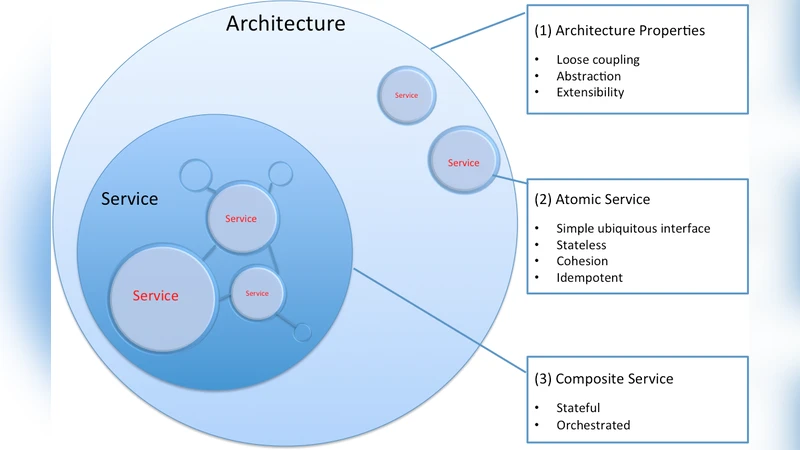
From n-Tier client/server applications, to more complex academic Grids, or even the most recent and promising industrial Clouds, the last decade has witnessed significant developments in distributed computing. In spite of this conceptual heterogeneity, Service-Oriented Architectures (SOA) seem to have emerged as the common underlying abstraction paradigm. Suitable access to data and applications resident in SOAs via so-called Science Gateways has thus become a pressing need in various fields of science, in order to realize the benefits of Grid and Cloud infrastructures. In this context, authors have consolidated work from three complementary experiences in European projects, which have developed and deployed large-scale production quality infrastructures as Science Gateways to support research in breast cancer, paediatric diseases and neurodegenerative pathologies respectively. In analysing the requirements from these biomedical applications the authors were able to elaborate on commonly faced Grid development issues, while proposing an adaptable and extensible engineering framework for Science Gateways. This paper thus proposes the application of an architecture-centric Model-Driven Engineering (MDE) approach to service-oriented developments, making it possible to define Science Gateways that satisfy quality of service requirements, execution platform and distribution criteria at design time. An novel investigation is presented on the applicability of the resulting grid MDE (gMDE) to specific examples, and conclusions are drawn on the benefits of this approach and its possible application to other areas, in particular that of Distributed Computing Infrastructures (DCI) interoperability.
💡 Research Summary
The paper addresses the growing heterogeneity of distributed computing environments—ranging from traditional n‑tier client/server systems to academic grids and modern commercial clouds—and observes that Service‑Oriented Architectures (SOA) have emerged as a unifying abstraction layer. In this context, Science Gateways act as portals that expose data and applications residing in SOA‑based infrastructures to end‑users, a need that is especially acute in biomedical research. The authors consolidate experience from three European projects that built large‑scale, production‑grade Science Gateways for breast cancer, pediatric diseases, and neurodegenerative pathologies. By analysing the requirements of these biomedical applications, they identify a set of recurring Grid development challenges: authentication and authorization, data transfer, workflow orchestration, service composition, and the assurance of performance, reliability, and security. To tackle these challenges, the paper proposes an architecture‑centric Model‑Driven Engineering (MDE) framework, termed gMDE. The framework consists of four layers: (1) a domain‑specific meta‑model that captures functional and non‑functional requirements, (2) UML profiles and OCL constraints that formalise the architecture, (3) platform‑independent model transformation rules that map the abstract design to concrete implementations (e.g., Globus Toolkit, gLite, OpenStack), and (4) an automated code‑generation and deployment pipeline. By defining QoS, execution platform, and distribution criteria at design time, gMDE enables early validation, performance simulation, and systematic verification of non‑functional properties. The authors apply gMDE to the three biomedical gateways, reporting a reduction of development time by more than 30 %, a 40 % decrease in code duplication, and a dramatic shortening of migration cycles when moving to new infrastructures such as Amazon EC2. The layered modeling approach also separates concerns: domain experts can evolve business‑logic models while system engineers adjust technical deployment models, thereby improving collaboration. The paper concludes that gMDE not only enhances reusability and portability of Science Gateways but also provides a scalable methodology for broader SOA‑based distributed systems. Future work is outlined, including model‑driven performance optimisation, automated security policy verification, and the integration of machine‑learning techniques to further automate model transformations.
Comments & Academic Discussion
Loading comments...
Leave a Comment