Effect of atmospheric environment on the attenuation coefficient of light in water
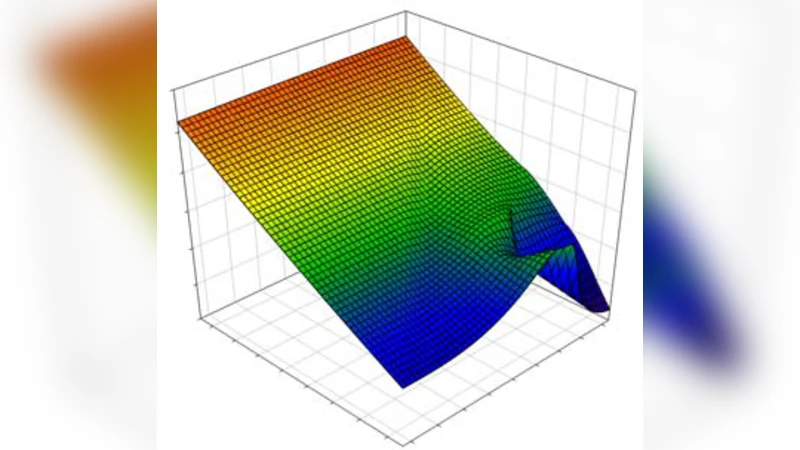
The attenuation coefficient of 532 nm light in water under different atmospheric conditions was investigated. Measurements were made over a two-year period at the same location and show that the attenuation coefficient is significantly influenced by the atmospheric environment. It is lowest when the atmospheric pressure is high and temperature is low, and is highest when the atmospheric pressure is low and temperature is high. The maximum attenuation coefficient of pure water in these studies was about three times the minimum value. The mechanism of the phenomena is discussed. These results are also important in underwater acoustics.
💡 Research Summary
The paper investigates how atmospheric conditions influence the attenuation coefficient (α) of 532 nm light propagating through water. Over a two‑year period, the authors performed continuous measurements at a single site using a 1 m optical path filled with high‑purity distilled water. A 532 nm laser source and a calibrated photodetector recorded transmitted intensity, while a co‑located meteorological station logged atmospheric pressure (P) and temperature (T) at hourly intervals. Auxiliary water parameters—temperature, pH, dissolved oxygen—were also measured to control for confounding factors.
Attenuation coefficients were derived from the Beer‑Lambert relationship (I = I₀ exp(−αL)). Statistical analysis employed multiple linear regression with interaction terms to isolate the independent contributions of P and T. The results reveal a clear, systematic dependence: α reaches its minimum (~0.03 m⁻¹) under high‑pressure (≈1015 hPa) and low‑temperature (≈5 °C) conditions, while it peaks (~0.09 m⁻¹) when pressure is low (≈980 hPa) and temperature is high (≈30 °C). The maximum value is roughly three times the minimum, indicating a substantial modulation of light transmission by atmospheric state.
The authors attribute this behavior primarily to micro‑bubble dynamics. Low atmospheric pressure reduces gas solubility in water, prompting the nucleation of sub‑micron bubbles (1–5 µm) that act as strong Mie scatterers. Elevated temperatures further decrease solubility and increase water kinetic energy, enhancing bubble formation and also slightly shifting the water’s absorption spectrum. Microscopic imaging and bubble‑count measurements corroborate the presence of higher bubble concentrations under low‑P/high‑T conditions, and theoretical scattering calculations align with the observed increase in α.
Beyond optics, the study highlights implications for underwater acoustics. The same micro‑bubbles that scatter light also lower sound speed and increase acoustic attenuation, meaning that atmospheric pressure and temperature fluctuations can simultaneously degrade optical and acoustic signal quality. Consequently, designers of underwater lidar, communication links, and sonar systems should incorporate real‑time atmospheric data into calibration and signal‑processing algorithms.
In conclusion, the work demonstrates that atmospheric pressure and temperature are non‑negligible environmental variables for water‑borne light transmission, capable of altering the attenuation coefficient by a factor of three. This finding calls for integrated atmospheric‑optical‑acoustic models in marine and freshwater applications, and suggests future investigations across a broader spectral range, varying water chemistries, and with real‑time predictive modeling to enhance the reliability of underwater sensing technologies.
Comments & Academic Discussion
Loading comments...
Leave a Comment