Managing information and knowledge sharing cultures in higher educations institutions
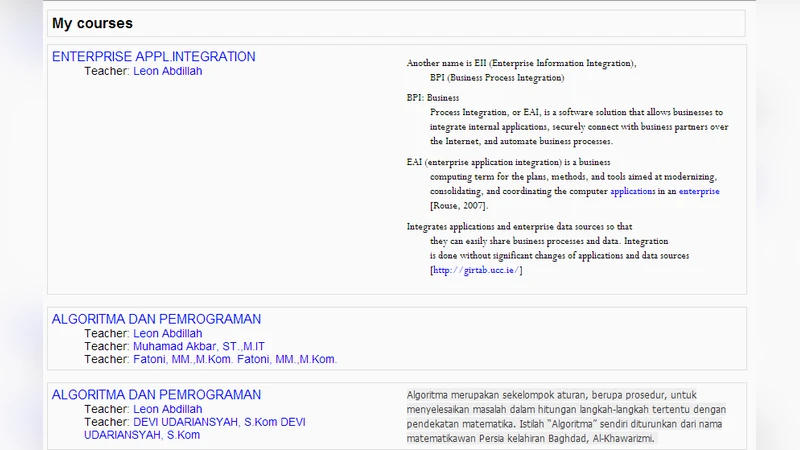
Information and knowledge (IK) are very important for any institution including education higher institution. Those IK are stored in every single individual in organization in the form of experiences, skills, etc. The growth of the higher education institution nowadays relies on how an institution manage the dissemination of those IK over the organization by using information technology (IT). This article discusses several ways and tools for engaging persons in the organization to build sharing cultures. This article gives some view of freely availabe application over internet to be used for IK sharing cultures.
💡 Research Summary
The paper addresses the critical role of information and knowledge (IK) management in the growth and competitiveness of higher‑education institutions (HEIs). It begins by characterizing IK as a distributed asset that resides in the experiences, skills, and research outputs of individual faculty, staff, and students. Because this knowledge is often fragmented and remains tacit, the institution’s ability to convert it into explicit, shareable forms determines its capacity for innovation, teaching quality, and strategic decision‑making.
The authors argue that cultivating a “knowledge‑sharing culture” is a prerequisite for effective IK dissemination. They identify three interlocking pillars: organizational culture, technological infrastructure, and governance mechanisms. From a cultural perspective, leadership commitment, incentive structures, trust, and a flattened hierarchy that blurs the traditional boundaries between academic and administrative units are essential. When faculty, administrators, and learners feel empowered to contribute and retrieve knowledge without bureaucratic friction, informal networks evolve into formalized channels of collaboration.
On the technology side, the paper surveys a suite of freely available, internet‑based applications that can be leveraged without substantial licensing costs. Cloud storage services such as Google Drive enable simple file‑based sharing, while real‑time communication platforms like Microsoft Teams or Slack support synchronous collaboration and quick knowledge exchange. Wiki systems (e.g., MediaWiki, WikiSpaces) are highlighted for their ability to capture collective expertise and produce living documentation. Open‑source learning management systems (LMS) such as Moodle provide a centralized hub for curricula, assessment data, and research resources. For more sophisticated knowledge‑graph modeling, the authors point to Neo4j and similar graph databases that allow the visualization of complex relationships among concepts, publications, and projects. Each tool is evaluated in terms of functionality, scalability, user experience, and integration potential with existing campus IT ecosystems.
Security and privacy considerations receive dedicated attention. Even when using free or open‑source tools, institutions must enforce robust authentication and authorization protocols, align with data‑protection regulations, and adopt metadata standards to ensure consistent classification of shared assets. The paper recommends a layered security model that includes role‑based access control, encrypted transmission, regular backups, and continuous patch management.
Performance measurement is presented as a feedback loop essential for sustaining the knowledge‑sharing culture. The authors propose a mixed‑methods evaluation framework that tracks quantitative indicators (e.g., login frequencies, document download counts, LMS activity logs) and qualitative metrics (e.g., user satisfaction surveys, focus‑group insights). Additionally, they suggest linking knowledge‑sharing outcomes to strategic KPIs such as the number of interdisciplinary research projects, joint publications, patents, and industry partnerships. By systematically analyzing these data, HEIs can calculate the return on investment (ROI) of their knowledge‑management initiatives and iteratively refine policies, incentives, and technology choices.
In the concluding section, the paper synthesizes its findings: effective IK dissemination in higher education requires an integrated approach that aligns cultural change, low‑cost technology adoption, and rigorous governance. The authors emphasize that knowledge becomes a strategic asset only when it flows freely across institutional silos, thereby fostering a learning community capable of rapid adaptation to digital transformation. They outline future research directions, including the exploration of artificial‑intelligence‑driven knowledge extraction and recommendation engines, blockchain‑based credential verification, and the development of institution‑wide ontologies to further enhance semantic interoperability.
Overall, the study provides a practical roadmap for HEIs seeking to build sustainable knowledge‑sharing ecosystems using readily available digital tools, while maintaining security, measuring impact, and continuously improving the underlying culture.