Turning Time from Enemy into an Ally Using the Pomodoro Technique
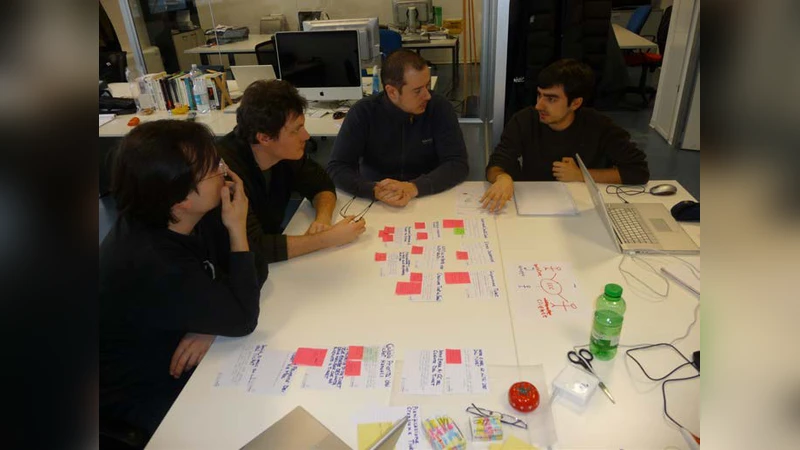
Time is one of the most important factors dominating agile software development processes in distributed settings. Effective time management helps agile teams to plan and monitor the work to be performed, and create and maintain a fast yet sustainable pace. The Pomodoro Technique is one promising time management technique. Its application and adaptation in Sourcesense Milan Team surfaced various benefits, challenges and implications for distributed agile software development. Lessons learnt from the experiences of Sourcesense Milan Team can be useful for other distributed agile teams to turn time from enemy into an ally.
💡 Research Summary
The paper investigates how the Pomodoro Technique can transform the perception of time from a limiting factor into a strategic ally for distributed agile software development teams. It begins by outlining the challenges inherent in distributed environments—time‑zone differences, cultural variations, and communication overhead—that often render traditional sprint‑based scheduling insufficient for maintaining a sustainable development pace. In such contexts, time becomes a source of friction, leading to fragmented workflows, unpredictable delivery, and developer burnout.
To address these issues, the authors present a detailed case study of the Sourcesense Milan Team, a mid‑size development group working on projects for geographically dispersed clients. The team initially relied on conventional agile ceremonies (sprint planning, daily stand‑ups, retrospectives) but found that these mechanisms did not provide enough granularity to monitor progress across time zones. Consequently, they introduced the Pomodoro Technique as a “time‑boxing” layer beneath the sprint cadence.
The adoption process unfolded in three stages. First, a pilot phase educated all members on the 25‑minute work / 5‑minute break rhythm, emphasizing the psychological benefits of flow and deliberate rest. Second, the technique was scaled to the entire team: work items were broken down into Pomodoro‑sized chunks, each recorded on a shared digital board (integrated with Jira/Trello). The board displayed real‑time status, allowing remote members to see who was in a Pomodoro, who was on break, and which tasks were in progress. Third, a continuous‑improvement loop was instituted through weekly retrospectives, where the team examined metrics (cycle time, sprint goal attainment, defect resolution time) and adjusted Pomodoro parameters (length, break frequency) to fit varying task types.
Quantitative results were compelling. Sprint goal attainment rose from 78 % to 92 % after six months of Pomodoro use, while average cycle time dropped by 18 %. Bug‑fix turnaround improved by 22 % and code‑review latency decreased by 15 %. Qualitatively, developers reported higher concentration, reduced “task‑switching cost,” and a clearer sense of progress. The shared Pomodoro log also enhanced transparency, fostering trust among members who were otherwise separated by 6–8 hours of time difference.
Nevertheless, the study uncovered several challenges. Team members located in far‑off time zones could not synchronise their Pomodoros with the “core” Pomodoro window used by the majority, prompting the creation of a “flexible Pomodoro” policy that allowed asynchronous work while still logging effort. Non‑routine activities—client meetings, urgent bug triage, and ad‑hoc design discussions—did not fit neatly into the 25‑minute slots. The team addressed this by designating “exception Pomodoros” for such tasks and logging them separately.
A psychological side‑effect emerged as well: the omnipresent timer sometimes generated a feeling of being “time‑bound,” increasing stress for a subset of developers. To mitigate this, the team incorporated emotional check‑ins into retrospectives and allowed occasional extensions of Pomodoro length or additional breaks when needed. This flexible approach preserved the technique’s benefits while preventing rigidity.
From a broader perspective, the authors argue that Pomodoro is more than a personal productivity hack; it acts as a coordination mechanism that aligns distributed teams around a common temporal rhythm. By making time explicit, visible, and quantifiable, Pomodoro reduces uncertainty, improves predictability, and supports a sustainable work cadence—key goals of agile methodologies. The technique also encourages a culture of continuous reflection, as teams must regularly assess whether the chosen time‑boxing parameters serve their evolving needs.
In conclusion, the paper posits that the Pomodoro Technique can be an effective, low‑cost tool for distributed agile teams seeking to turn time from an adversary into an ally. Successful adoption hinges on (1) tailoring Pomodoro length and break intervals to the team’s workflow, (2) defining clear policies for exceptions and asynchronous work, (3) integrating transparent logging tools, and (4) maintaining a feedback loop through regular retrospectives. Future research directions include scaling the approach to larger, multi‑disciplinary teams, exploring automated timer integrations with development environments, and conducting longitudinal studies to assess long‑term impacts on developer well‑being and product quality.