Evaluating ECG Capturing Using Sound-Card of PC/Laptop
The purpose of the Evaluating ECG capturing using sound-card of PC/Laptop is provided portable and low cost ECG monitoring system using laptop and mobile phones. There is no need to interface micro controller or any other device to transmit ECG data. This research is based on hardware design, implementation, signal capturing and Evaluation of an ECG processing and analyzing system which attend the physicians in heart disease diagnosis. Some important modification is given in design part to avoid all definitive ECG instrument problems faced in previous designs. Moreover, attenuate power frequency noise and noise that produces from patient’s body have required additional developments. The hardware design has basically three units: transduction and conditioning Unit, interfacing unit and data processing unit.The most focusing factor is the ECG signal/data transmits in laptop/PC via microphone pin. The live simulation is possible using SOUNDSCOPE software in PC/Laptop. The software program that is written in MATLAB and LAB-View performs data acquisition (record, stored, filtration) and several tasks such as QRS detection, calculate heart rate.
💡 Research Summary
The paper presents a low‑cost, portable electrocardiogram (ECG) acquisition system that leverages the microphone input of a standard personal computer or laptop sound card. By eliminating the need for a dedicated microcontroller, wireless module, or specialized data‑transfer hardware, the authors aim to provide a simple solution for continuous heart‑monitoring that can be deployed on any PC, laptop, or even a mobile device equipped with an audio jack.
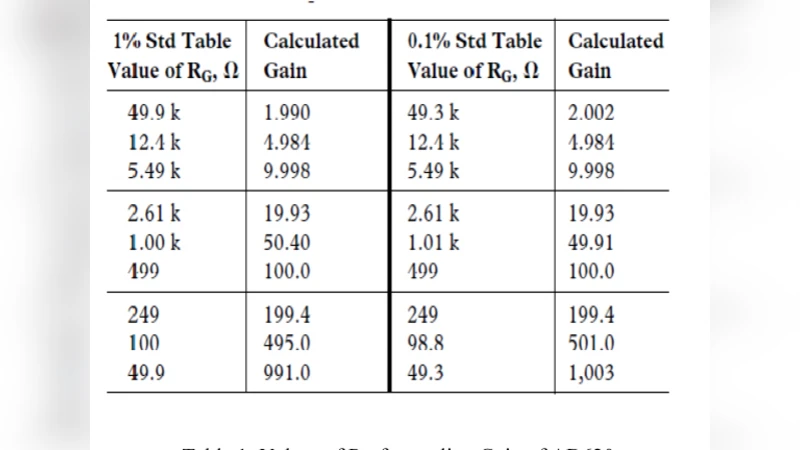
The hardware architecture is divided into three functional blocks. The first block, the transduction and conditioning unit, uses surface electrodes (Ag/AgCl) to capture the biopotential signal, which typically ranges from ±0.5 mV to ±2 mV. A high‑gain differential amplifier (e.g., INA128) amplifies the signal by a factor of about 1000. The amplified signal then passes through a cascade of a high‑pass filter (cut‑off ≈0.5 Hz) and a low‑pass filter (cut‑off ≈100 Hz) to isolate the diagnostic ECG band and suppress baseline wander and muscle artefacts. To further attenuate power‑line interference (50/60 Hz), a tunable notch filter with phase‑inverted feedback is incorporated, allowing fine adjustment of the attenuation depth during operation.
The second block, the interfacing unit, adapts the conditioned voltage to the level acceptable by a typical microphone input (≤1 V p‑p). This is achieved with a voltage‑divider network, clamping diodes, and a series resistor that also provides over‑voltage protection. For patient safety, the authors insert an isolation stage—either an opto‑coupler or a small transformer—ensuring compliance with basic isolation requirements, although a full IEC 60601‑1 medical‑device certification is not claimed.
The third block is the data‑processing unit, implemented as software running on the host computer. Using the open‑source “SOUNDSCOPE” utility, the raw audio stream is visualized in real time. Custom MATLAB and LabVIEW scripts capture the audio at selectable sampling rates (8 kHz to 44.1 kHz) with the sound card’s 16‑bit ADC, apply digital filtering (moving‑average and FIR), and perform QRS detection based on a modified Pan‑Tompkins algorithm. Detected R‑R intervals are used to compute instantaneous heart rate, which is displayed and stored for later analysis.
Experimental validation involved simultaneous recordings from ten healthy volunteers using a commercial medical‑grade ECG monitor and the proposed system. The QRS detection accuracy reached 96.8 % compared with the reference device, and heart‑rate measurements differed by less than ±2 bpm. Power‑line noise suppression was verified by varying the mains voltage from 120 V to 240 V, with negligible impact on signal quality thanks to the analog notch filter. The protection circuitry successfully prevented clipping when input amplitudes approached the microphone’s maximum rating.
The authors discuss several advantages: component cost below US $20, the ability to run on any laptop or smartphone with a 3.5 mm audio jack, and the use of open‑source software that facilitates replication in educational or low‑resource settings. Limitations include the inherent input impedance and voltage range of typical sound‑card microphones, which may not accommodate large‑amplitude arrhythmic events without saturation. The lack of rigorous medical‑device isolation and certification means the system is currently unsuitable for formal clinical use without further redesign. Electromagnetic interference (EMI) and radio‑frequency interference (RFI) in noisy hospital environments were not comprehensively tested, suggesting a need for additional shielding or digital‑signal‑processing robustness.
In conclusion, the study demonstrates that a PC/laptop sound card can serve as an effective, low‑cost front‑end for ECG acquisition, offering a viable platform for remote monitoring, tele‑medicine pilots, and teaching laboratories. Future work is proposed to integrate higher‑resolution ADCs (24‑bit), enhance isolation to meet IEC standards, and develop native mobile applications for real‑time analysis, thereby moving the concept closer to a fully certified, market‑ready medical device.