Sensitivity of Yield Optimized Superoscillations
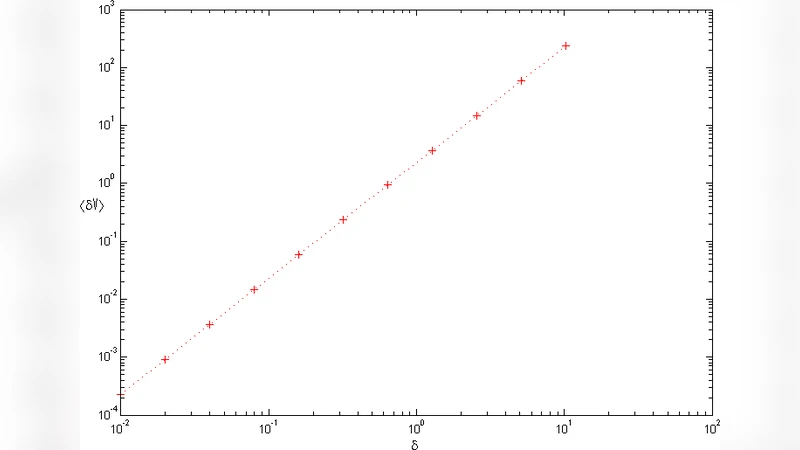
Super oscillating signals are band limited signals that oscillate in some region faster than their largest Fourier component. Such signals have many obvious scientific and technological applications, yet their practical use is strongly limited by the fact that an overwhelming proportion of the energy goes into that part of the signal, which is not superoscillating. In a recent article the problem of optimization of such signals has been studied. In that article the concept of superoscillation yield is defined as the ratio of the energy in the super oscillations to the total energy of the signal, given the range in time and frequency of the superoscillations, which is imposed by forcing the signal to interpolate among a set of predetermined points. The optimization of the superoscillation yield consists of obtaining the Fourier coefficients of the low frequency components of which the signal consists, that maximize the yield under the interpolation constraint. Since in practical applications it is impossible to determine the Fourier coefficients with infinite precision, it is necessary to answer two questions. The first is how is the superoscillating nature of the signal affected by random small deviations in those Fourier coefficients and the second is how is the yield affected? These are the questions addressed in the present article. Limits on the necessary precision are obtained. Those limits seem not to be impractical.
💡 Research Summary
Superoscillation refers to the counter‑intuitive phenomenon where a band‑limited signal locally oscillates faster than its highest Fourier component. Although this property promises breakthroughs in high‑resolution imaging, signal processing, and quantum control, its practical exploitation has been hampered by the fact that most of the signal’s energy resides outside the superoscillating region. The “superoscillation yield” – the ratio of the energy contained in the superoscillating interval to the total signal energy – therefore becomes a crucial figure of merit.
In a previous work the authors introduced a systematic way to maximize this yield. The signal is expressed as a finite sum of low‑frequency Fourier modes, (f(t)=\sum_{k=0}^{K-1}A_k\cos(\omega_k t)+B_k\sin(\omega_k t)) with (\omega_k\le\Omega_{\max}). A set of (N) prescribed points ({t_j}) inside the desired superoscillating interval is forced to take predetermined values ({y_j}) (for example, the samples of a high‑frequency sine wave). This interpolation constraint can be written as a linear system (\mathbf{C}\mathbf{a}=\mathbf{y}). The yield, \
Comments & Academic Discussion
Loading comments...
Leave a Comment