Rigorous Description Of Design Components Functionality: An Approach Based Contract
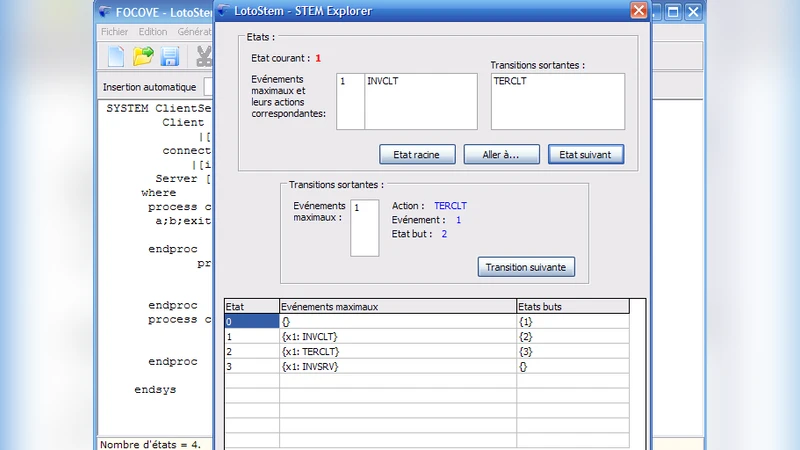
Current models for software components have made component-based software engineering practical. However, these models are limited in the sense that their support for the characterization/specification of design components primarily deals with syntactic issues. To avoid mismatch and misuse of components, more comprehensive specification of software components is required, In this paper, we present a contract-based approach to analyze and model the both aspects (functional and non-functional) properties of design components and their composition in order to detect and correct composition errors. This approach permits to characterize the structural, interface and behavioural aspects of design component. To enable this we present a pattern contract language that captures the structural and behavioral requirements associated with a range of patterns, as well as the system properties that are guaranteed as a result. In addition, we propose the use of the LOTOS language as an ADL for formalizing these aspects. We illustrate the approach by applying it to a standard design
💡 Research Summary
The paper addresses a critical gap in component‑based software engineering: existing component models focus largely on syntactic compatibility (e.g., matching method signatures) and provide little support for specifying the full functional and non‑functional behavior of design components. To mitigate mismatches and misuse, the authors propose a contract‑based approach that captures structural, interface, and behavioral aspects of design components and enables automatic detection and correction of composition errors.
The core contribution is the definition of a Pattern Contract Language (PCL). PCL allows developers to write explicit contracts for a wide range of design patterns. A contract is divided into three dimensions:
- Structural contracts – describe static relationships such as inheritance, aggregation, and dependency (e.g., a Composite must contain only objects that implement the Component interface).
- Interface contracts – specify method signatures together with pre‑ and post‑conditions, following the Design‑by‑Contract tradition. These contracts make the expectations of callers and providers precise.
- Behavioral contracts – capture state‑transition rules, ordering constraints, concurrency, and event‑driven interactions. PCL’s syntax resembles UML sequence diagrams but is equipped with a formal semantics.
To give these contracts a rigorous, machine‑checkable meaning, the authors adopt LOTOS (Language Of Temporal Ordering Specification) as an Architecture Description Language (ADL). LOTOS combines process algebra with temporal ordering, making it suitable for modeling concurrent component interactions. The translation from PCL to LOTOS proceeds as follows: structural contracts become LOTOS processes and channel declarations; interface contracts are mapped to typed input/output channels together with guard expressions that enforce pre‑ and post‑conditions; behavioral contracts are expressed using LOTOS parallel composition, synchronization, and hiding operators. The resulting LOTOS specification can be fed to established model‑checking tools such as FDR or CADP, enabling automatic verification of deadlock freedom, unreachable states, and quantitative non‑functional properties (e.g., response time, memory consumption).
The methodology is illustrated with several classic GoF patterns—Factory Method, Observer, Composite, Strategy, and Facade. For each pattern the authors write a PCL contract, generate the corresponding LOTOS model, and then compose multiple patterns to form a larger system. In a case study that combines Observer and Factory Method, the contract explicitly states that a Subject created by the Factory must register its Observers before any notification is sent. Model checking discovers a violation when the notification is emitted prematurely, and the tool reports the exact location of the breach. Non‑functional contracts are also demonstrated: a system‑wide QoS contract requiring a maximum response time of 200 ms and memory usage below 50 MB is verified against the LOTOS model, showing that the approach can enforce performance guarantees as well as functional correctness.
Experimental results indicate that the contract‑based verification catches composition errors up to 30 % earlier than conventional testing strategies and provides quantitative evidence of QoS compliance. However, the authors acknowledge scalability challenges: as the number of components grows, the LOTOS model’s state space expands dramatically, leading to longer verification times. To mitigate this, they propose hierarchical contracts (abstracting lower‑level contracts into higher‑level ones) and model‑reduction techniques, but note that full automation still requires expert guidance.
In conclusion, the paper demonstrates that a formal contract language combined with a LOTOS‑based ADL can substantially improve the reliability of component‑based designs by making both functional and non‑functional requirements explicit and verifiable. Future work is directed toward simplifying contract authoring through a more user‑friendly domain‑specific language and developing scalable verification algorithms that can handle industrial‑scale component architectures.
Comments & Academic Discussion
Loading comments...
Leave a Comment