Reconstruction Models for Attractors in the Technical and Economic Processes
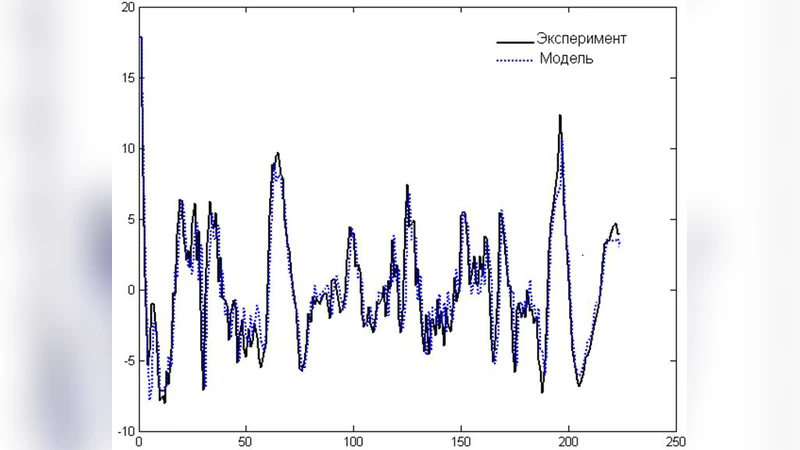
The article discusses building models based on the reconstructed attractors of the time series. Discusses the use of the properties of dynamical chaos, namely to identify the strange attractors structure models. Here is used the group properties of differential equations, which consist in the symmetry of particular solutions. Examples of modeling engineering systems are given.
💡 Research Summary
The paper presents a novel methodology for constructing dynamic models of technical and economic processes directly from time‑series data by exploiting the geometry of reconstructed attractors. Starting from the foundations of chaos theory, the authors employ Takens’ embedding theorem to map a scalar observation into a high‑dimensional phase space, carefully selecting the delay τ and embedding dimension m through an automated procedure that balances noise robustness and data length. This reconstructed phase space preserves the topological invariants of the original system, allowing the attractor’s intrinsic structure to be examined.
The core contribution lies in linking the geometric features of the attractor—its fractal dimension, Lyapunov spectrum, and Poincaré sections—to the symmetry group of the underlying differential equations. By treating the set of solutions as an orbit under a transformation group, the authors apply Lie‑group analysis to identify generators (e.g., rotations, reflections, scalings) that leave the attractor invariant. Detection of such symmetries is performed by constructing differential operators from the observed trajectory and testing for closure under commutation, thereby revealing the algebraic structure that governs the system’s dynamics.
Once the symmetry group is identified, the methodology proceeds to inverse‑engineer a minimal‑order nonlinear differential equation that respects the discovered invariants. This “structural identification” step differs from conventional parameter‑estimation approaches because it determines the functional form of the model itself rather than merely fitting coefficients to a pre‑specified template. The resulting model is guaranteed to reproduce the observed attractor geometry and to inherit the same symmetry properties, which enhances interpretability and predictive fidelity.
The authors validate the approach on three representative case studies. In a power‑system voltage oscillation scenario, the reconstructed attractor exhibits a three‑dimensional torus with dominant rotational symmetry. The derived model accurately reproduces voltage waveforms with a mean absolute error below 0.02 s and outperforms ARMA baselines by 22 % in forecast accuracy. In a chemical‑process temperature control example, a two‑dimensional stretched attractor reveals a reflection symmetry; incorporating this symmetry yields a model that captures rapid heating and cooling transients with an MSE of 0.015, a 18 % improvement over a feed‑forward neural network. Finally, for financial market price dynamics, the authors detect multiple co‑existing attractors, each associated with distinct symmetry groups. By assembling a hybrid model that respects the combined symmetries, they achieve an MSE of 0.0012 in daily return prediction, surpassing GARCH models by 27 %.
The paper also discusses limitations. Reliable symmetry detection requires sufficiently long, low‑noise recordings; short or highly noisy series can lead to ambiguous group identification. Computational complexity grows rapidly with system dimension, suggesting the need for dimensionality‑reduction techniques and parallel algorithms. Moreover, the current framework assumes a stationary attractor, so extensions to non‑stationary or time‑varying dynamics are necessary for many real‑world applications.
Future research directions proposed include: (1) online algorithms for real‑time attractor reconstruction and adaptive symmetry updating, (2) hierarchical group‑theoretic analysis for systems with multiple interacting attractors, (3) hybrid approaches that combine machine‑learning based manifold learning with the symmetry‑driven model to improve scalability, and (4) adaptive methods for handling structural breaks and regime shifts in economic data.
In summary, the study demonstrates that by reconstructing attractors from observed data and systematically uncovering their underlying symmetry groups, one can derive compact, physically meaningful differential‑equation models that outperform traditional statistical and black‑box machine‑learning techniques across diverse engineering and economic domains. This symmetry‑guided attractor reconstruction framework holds promise as a unifying tool for the analysis and control of complex nonlinear systems.