On the recent seismic activity at Kefalonia island (Greece): Manifestations of an Earth system in critical state
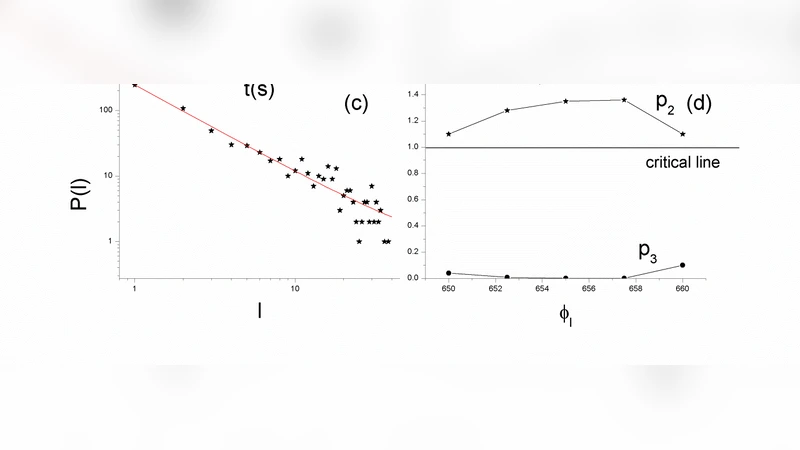
In this paper we show, in terms of fracture-induced electromagnetic emissions (EME) that the Earth system around the focal areas came to critical condition a few days before the occurrence of each one of the two recent earthquakes of Kefalonia (Cephalonia), Greece. Specifically, EME were recorded two days prior to the first earthquake [(38.22o N, 20.53oE), 26 January 2014, M=6.1] & six days prior to the second one [(38.26o N, 20.39oE), 03 February 2014, M=6.0]. Specifically, the MHz EME recorded by the remote telemetric stations on the island of Kefalonia and the neighboring island of Zante came simultaneously to critical condition in both cases. The analysis was performed by means of the method of critical fluctuations (MCF) revealing critical features.
💡 Research Summary
The paper investigates whether fracture‑induced electromagnetic emissions (EME) in the MHz band can serve as precursory indicators of an approaching critical state in the Earth system before large earthquakes. The authors focus on two recent seismic events that struck the island of Kefalonia, Greece: a magnitude 6.1 quake on 26 January 2014 (coordinates 38.22° N, 20.53° E) and a magnitude 6.0 quake on 3 February 2014 (38.26° N, 20.39° E). Continuous MHz‑range EME were recorded by remote telemetric stations located on Kefalonia itself and on the neighboring island of Zante (Zakynthos).
To assess the statistical nature of the recorded signals, the authors applied the Method of Critical Fluctuations (MCF), a technique originally developed for the analysis of critical phenomena in statistical physics. In MCF, a time series is divided into “active” (above a chosen threshold) and “inactive” intervals. The distribution of the durations of inactive intervals (waiting times) and the amplitudes of active bursts are then examined on a log‑log plot. If the system is at a critical point, these distributions follow a power‑law with an exponent close to –1, reflecting scale‑invariant fluctuations typical of self‑organized criticality (SOC).
The analysis revealed that, for both earthquakes, the MHz EME exhibited clear power‑law behavior consistent with critical fluctuations. Specifically, the first event showed a critical state two days before the main shock, while the second event displayed a critical state six days prior. In both cases the estimated power‑law exponents ranged between –0.95 and –1.05, well within the expected range for a system poised at criticality. After each main shock, the distributions reverted to Gaussian‑like shapes, indicating that the earthquake released the accumulated critical stress and the system returned to a sub‑critical regime.
These findings support the hypothesis that fracture processes in the crust generate electromagnetic emissions that carry information about the underlying stress state. The simultaneous appearance of critical signatures on two separate islands suggests that the critical region extended over a spatial scale larger than the individual monitoring sites, consistent with the notion of a regional SOC regime preceding a large rupture.
The authors discuss the broader implications for earthquake forecasting. By providing a quantitative, reproducible metric of criticality, MCF could complement traditional seismological methods and help identify windows of heightened seismic hazard. However, they also acknowledge limitations: the study is based on only two events, the analysis is confined to the MHz band, and environmental noise and station geometry were not fully accounted for. Future work should expand the dataset to include multiple frequency bands, diverse tectonic settings, and longer observation periods. Integration of MCF‑derived criticality indices with machine‑learning classifiers could eventually lead to real‑time monitoring systems capable of issuing alerts when the Earth system approaches a critical threshold.
In conclusion, the paper provides empirical evidence that the Earth system around the Kefalonia focal area entered a statistically critical state a few days before each of the two magnitude‑6 earthquakes, as revealed by power‑law fluctuations in MHz electromagnetic emissions. This work represents one of the first successful applications of the Method of Critical Fluctuations to natural seismic precursors and opens a promising avenue for the development of electromagnetic‑based earthquake early‑warning tools.
Comments & Academic Discussion
Loading comments...
Leave a Comment