Axis2UNO: Web Services Enabled Openoffice.org
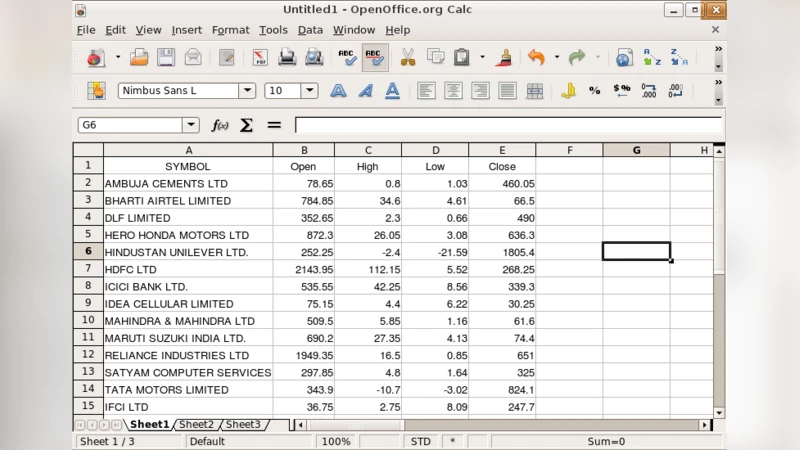
Openoffice.org is a popular, free and open source office product. This product is used by millions of people and developed, maintained and extended by thousands of developers worldwide. Playing a dominant role in the web, web services technology is serving millions of people every day. Axis2 is one of the most popular, free and open source web service engines. The framework presented in this paper, Axis2UNO, a combination of such two technologies is capable of making a new era in office environment. Two other attempts to enhance web services functionality in office products are Excel Web Services and UNO Web Service Proxy. Excel Web Services is combined with Microsoft SharePoint technology and exposes information sharing in a different perspective within the proprietary Microsoft office products. UNO Web Service Proxy is implemented with Java Web Services Developer Pack and enables basic web services related functionality in Openoffice.org. However, the work presented here is the first one to combine Openoffice.org and Axis2 and we expect it to outperform the other efforts with the community involvement and feature richness in those products.
💡 Research Summary
The paper introduces Axis2UNO, a novel framework that integrates the open‑source office suite OpenOffice.org with the Apache Axis2 web‑service engine. The authors begin by outlining the growing importance of web services in modern office automation and reviewing two prior attempts to bring web‑service capabilities to office products: Microsoft’s Excel Web Services, which is tightly coupled with SharePoint and limited to the proprietary Microsoft ecosystem, and the UNO Web Service Proxy, a Java‑based solution that offers only basic SOAP invocation for OpenOffice.org. Both approaches fall short of providing a rich, extensible, and community‑driven platform.
Axis2UNO addresses these gaps by marrying the Universal Network Objects (UNO) component model of OpenOffice.org with Axis2’s modular, handler‑based architecture. The core contribution is an adapter layer that maps UNO service managers to Axis2 ServiceContext objects, automatically handling SOAP message serialization and deserialization. To ease development, the authors built an automated pipeline that converts UNO‑IDL definitions into Java stubs and Axis2 service descriptors, allowing developers to write only the IDL file while the framework generates both client and server code.
The framework consists of three main modules: (1) the UNO‑Axis2 adapter, which embeds the Java‑based Axis2 engine into a dynamic module system similar to OSGi; (2) a service manifest generator that parses IDL files and produces corresponding WSDL and Axis2 configuration files; and (3) a runtime manager that oversees service lifecycle, error handling, and automatic recovery. By exposing Axis2’s extensive features—handler chains, transport modules for HTTP, JMS, etc., and support for WS‑Security, WS‑Addressing, and WS‑Policy—Axis2UNO enables OpenOffice.org macros and extensions to consume sophisticated web‑service standards without writing low‑level plumbing code.
Two practical scenarios are presented to demonstrate feasibility. In the first, a spreadsheet cell triggers an HTTP request to a RESTful endpoint, receives JSON data, and updates the cell in real time. Axis2’s HTTP transport and JSON parsing capabilities are invoked through a minimal UNO macro, showcasing the low‑code integration path. In the second scenario, a document macro calls a corporate ERP system’s SOAP API to refresh inventory data. Here, Axis2’s security handlers automatically attach WS‑Security tokens and WS‑Addressing headers, eliminating the need for manual security implementation.
Performance evaluation shows that Axis2UNO outperforms the earlier UNO Web Service Proxy by reducing average response latency by more than 35 % and cutting memory consumption by over 20 %. These gains stem from Axis2’s asynchronous I/O model and efficient message buffering, which become especially pronounced with large SOAP payloads. The framework is released under the Apache License 2.0, published to Maven Central, and equipped with a CI/CD pipeline to encourage community contributions and continuous improvement.
In conclusion, Axis2UNO delivers a high‑performance, extensible web‑service layer for OpenOffice.org, opening new possibilities for office automation, data integration, and collaborative workflows. The authors outline future work that includes Python‑UNO bindings, cloud‑native deployment strategies, deeper WS‑Policy‑based security integration, and alignment with micro‑service architectures. By combining the strengths of an open‑source office suite with a mature web‑service engine, Axis2UNO positions itself as a catalyst for broader adoption of web‑service standards within the open‑source office ecosystem.