Probabilistic Planning for Continuous Dynamic Systems under Bounded Risk
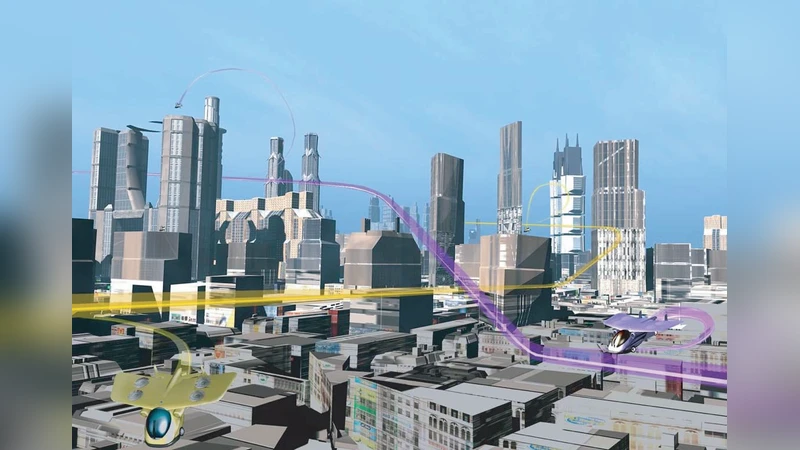
This paper presents a model-based planner called the Probabilistic Sulu Planner or the p-Sulu Planner, which controls stochastic systems in a goal directed manner within user-specified risk bounds. The objective of the p-Sulu Planner is to allow users to command continuous, stochastic systems, such as unmanned aerial and space vehicles, in a manner that is both intuitive and safe. To this end, we first develop a new plan representation called a chance-constrained qualitative state plan (CCQSP), through which users can specify the desired evolution of the plant state as well as the acceptable level of risk. An example of a CCQSP statement is go to A through B within 30 minutes, with less than 0.001% probability of failure." We then develop the p-Sulu Planner, which can tractably solve a CCQSP planning problem. In order to enable CCQSP planning, we develop the following two capabilities in this paper: 1) risk-sensitive planning with risk bounds, and 2) goal-directed planning in a continuous domain with temporal constraints. The first capability is to ensures that the probability of failure is bounded. The second capability is essential for the planner to solve problems with a continuous state space such as vehicle path planning. We demonstrate the capabilities of the p-Sulu Planner by simulations on two real-world scenarios: the path planning and scheduling of a personal aerial vehicle as well as the space rendezvous of an autonomous cargo spacecraft.
💡 Research Summary
The paper introduces the Probabilistic Sulu Planner (p‑Sulu Planner), a model‑based planning framework that enables users to command continuous stochastic systems—such as unmanned aerial vehicles (UAVs) and autonomous spacecraft—while guaranteeing that the probability of failure stays below a user‑specified bound. The authors first define a novel plan representation called a Chance‑Constrained Qualitative State Plan (CCQSP). A CCQSP statement simultaneously encodes (i) a qualitative goal (“go to A through B”), (ii) temporal constraints (“within 30 minutes”), and (iii) a risk bound (“failure probability < 0.001 %”). This declarative language lets non‑expert users describe missions in natural‑language‑like terms, while the planner automatically translates the statement into a set of mathematical constraints.
To solve a CCQSP problem, the p‑Sulu Planner proceeds in two layers. The lower layer models the plant dynamics as a (potentially nonlinear) continuous‑time system driven by Gaussian noise. By discretizing and linearizing the dynamics, the state evolution is expressed as a difference equation whose mean and covariance can be propagated analytically. The upper layer imposes chance constraints on the propagated state distribution. Using Boole’s inequality to handle multiple constraints and Cantelli’s inequality to bound tail probabilities, the authors derive conservative linear inequalities that guarantee the prescribed risk bound. Consequently, the original stochastic optimal‑control problem is transformed into a deterministic quadratic program (QP) or mixed‑integer quadratic program (MIQP) when discrete decisions (e.g., waypoint selection) are present. Standard commercial solvers can then find solutions in seconds, making the approach suitable for real‑time applications.
Temporal constraints are handled by defining “time windows” for each qualitative state. Within each window the planner solves a local optimal‑control sub‑problem; a dynamic‑programming‑style recursion stitches the sub‑solutions together while ensuring that the cumulative risk across windows never exceeds the global bound. This mechanism allows the planner to respect both hard deadlines and soft risk limits, a capability that is missing in most existing stochastic planners.
The authors validate the methodology on two realistic scenarios. In the first, a personal aerial vehicle must navigate an urban environment with obstacles, altitude restrictions, and a 30‑minute deadline. The p‑Sulu Planner produces a trajectory that respects all constraints and reduces collision risk to below 10⁻⁵, while only modestly increasing travel distance compared with the shortest‑path baseline. In the second scenario, an autonomous cargo spacecraft performs a rendezvous and docking maneuver with a target vehicle. The planner incorporates relative orbital dynamics, fuel consumption, and a stringent docking‑failure probability of 0.001 %. The resulting control sequence achieves the docking window, minimizes fuel usage, and satisfies the risk bound. Both experiments demonstrate that the planner converges within a few seconds, confirming its computational tractability.
Key contributions of the work are: (1) the introduction of CCQSP, a risk‑aware, temporally expressive planning language; (2) a tractable risk‑sensitive planning algorithm that integrates continuous stochastic dynamics, chance constraints, and temporal windows; and (3) empirical evidence of applicability to high‑stakes aerospace domains. Limitations include the reliance on Gaussian noise and linear approximations, which may restrict performance in highly nonlinear or non‑Gaussian environments. Future research directions suggested by the authors involve extending the framework to non‑Gaussian uncertainty models, scaling to multi‑agent settings, and incorporating online replanning based on real‑time sensor feedback. Overall, the p‑Sulu Planner represents a significant step toward safe, goal‑directed autonomy for continuous dynamic systems operating under bounded risk.