A Conceptual Framework for ERP Evaluation in Universities of Pakistan
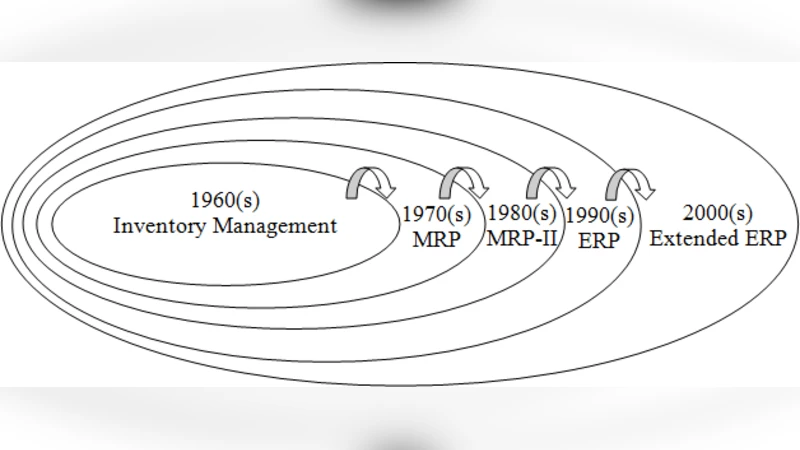
The higher education has been greatly impacted by worldwide trends. In a result, the universities throughout the world are focusing to enhance performance and efficiency in their workings. Therefore, the higher education has moved their systems to Enterprise Resource Planning (ERP) systems to cope with the needs of changing environment. However, the literature review indicates that there is void on the evaluation of success or failure of ERP systems in higher education Institutes in Pakistan. In overall, ERP systems implementation in higher education of Pakistan has not been given appropriate research focus. Thus, in this paper the authors have attempted to develop a conceptual framework for ERP evaluation in Universities of Pakistan. This seeks to expand the knowledge on ERP in higher educational institutes of Pakistan and focuses on understanding the ERP related critical success factors.
💡 Research Summary
The paper addresses a notable gap in the scholarly literature concerning the assessment of Enterprise Resource Planning (ERP) implementations within higher‑education institutions in Pakistan. While universities worldwide have increasingly adopted ERP systems to improve administrative efficiency, academic performance, and resource management, there is a paucity of systematic studies evaluating whether these initiatives succeed or fail in the Pakistani context. Recognizing this deficiency, the authors set out to develop a comprehensive conceptual framework that can be used to measure ERP success and to identify the critical success factors (CSFs) that most strongly influence outcomes in Pakistani universities.
To construct the framework, the authors draw on two well‑established theoretical models. The first is the DeLone‑McLean Information Systems (IS) Success Model, which posits six interrelated dimensions of success: system quality, information quality, service quality, use (or intention to use), user satisfaction, and net benefits (or overall success). The second is the Technology‑Organization‑Environment (TOE) framework, which emphasizes the role of technological readiness, organizational context, and external environmental pressures in the adoption and diffusion of innovations. By integrating these models, the authors create a multi‑layered structure that captures both the performance attributes of the ERP system itself and the broader contextual factors that shape its implementation in higher‑education settings.
The next step involves identifying CSFs specific to the Pakistani university environment. Through an extensive literature review complemented by semi‑structured interviews with ERP project managers, senior administrators, and faculty representatives, the authors isolate seven primary CSFs: (1) top‑management leadership and sustained support, (2) comprehensive user training and change‑management programs, (3) business‑process reengineering and standardization, (4) data quality and governance, (5) effective vendor partnership and contract management, (6) adequate financial resources, and (7) organizational culture that embraces change while mitigating resistance. Each factor is mapped onto the TOE dimensions (e.g., leadership aligns with organizational readiness, data governance with technological adequacy) and linked to the DeLone‑McLean constructs (e.g., training influences system quality and user satisfaction).
The resulting conceptual framework specifies concrete measurement items for each dimension. System quality is assessed through metrics such as response time, system availability, and user‑interface intuitiveness. Information quality focuses on data accuracy, timeliness, and relevance. Service quality evaluates support‑team responsiveness, expertise, and problem‑resolution speed. User satisfaction is captured via Likert‑scale surveys, while organizational impact is measured through indicators of process efficiency, decision‑making speed, and financial performance improvements. The final “overall success” construct aggregates these sub‑dimensions to determine whether the ERP implementation contributes to strategic university goals such as enhanced teaching quality, streamlined administration, and strengthened research support.
Methodologically, the authors propose a mixed‑methods research design. Quantitative data will be collected via structured questionnaires administered to a representative sample of public and private universities across Pakistan, enabling the use of structural equation modeling (SEM) to test hypothesized relationships among CSFs, IS success dimensions, and overall outcomes. Qualitative data—derived from follow‑up interviews and case studies—will enrich the analysis by uncovering contextual nuances, implementation challenges, and best‑practice insights that may not be captured in survey data alone. The authors also outline a validation plan that includes pilot testing of the instrument, reliability and validity assessments, and cross‑institutional comparisons to examine how regional, size‑related, and governance differences affect ERP performance.
In the discussion, the paper emphasizes the practical implications of the framework. University administrators can employ the model as a diagnostic tool to monitor ERP implementation progress, identify weak spots early, and allocate resources more effectively. Policymakers and funding agencies can use the findings to design targeted support programs, such as capacity‑building workshops or incentives for data‑standardization initiatives. Moreover, the framework offers a template that can be adapted to other developing‑country contexts where higher‑education institutions face similar resource constraints, bureaucratic inertia, and cultural resistance to large‑scale information‑system change.
Finally, the authors outline future research directions, including empirical testing of the framework across multiple institutions, longitudinal studies to track ERP impact over time, and exploration of additional variables such as student outcomes, faculty research productivity, and external stakeholder satisfaction. By providing a theoretically grounded, empirically testable, and context‑sensitive model, the paper makes a substantive contribution to both the academic literature on ERP evaluation and the practical management of ERP projects in Pakistani higher‑education institutions.
Comments & Academic Discussion
Loading comments...
Leave a Comment