In the footsteps of Ebenezer Porter Mason and his nebulae
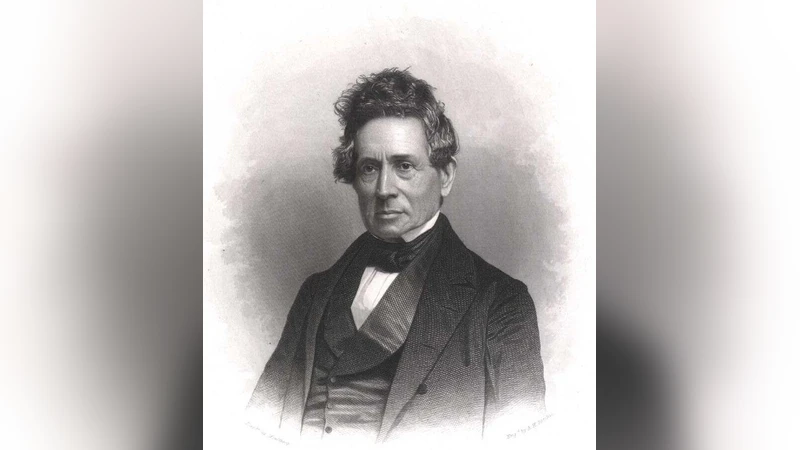
In 1839 Ebenezer Porter Mason (1819-1840) produced detailed drawings of the Omega Nebula (M17), the Trifid Nebula (M20) and the eastern part of the Veil Nebula (NGC 6992 and 6995). He used a 12-inch (30 cm) reflector that he and his friends had built at Yale College, which at the time was the largest telescope in the USA. The drawings were remarkable for their accuracy and for his adoption of a new technique for delineating gradients in nebulosity using isophotes, or lines of equal brightness. This paper reviews his life and his observations, comparing his results with those of the modern amateur astronomer.
💡 Research Summary
This paper revisits the short but remarkably productive career of Ebenezer Porter Mason (1819‑1840), focusing on his 1839 observations of three prominent emission nebulae—M 17 (the Omega Nebula), M 20 (the Trifid Nebula) and the eastern segment of the Veil Nebula (NGC 6992/6995). Mason, then a student at Yale, helped construct a 12‑inch (30 cm) Newtonian reflector with his friends; at the time it was the largest aperture telescope in the United States. The instrument featured a parabolic primary, a well‑figured secondary, and a sturdy fixed mount that allowed long, steady visual integrations.
Mason’s most innovative contribution was the introduction of isophotes—lines of equal brightness—to visual nebular sketching. Recognizing the limitations of simple outline drawings, he devised a systematic method: during an observing session he would pause periodically to rest his eyes, then redraw the nebula, noting the faintest discernible brightness contour. By repeating this process and averaging the results, he produced a set of concentric or irregular lines that mapped the nebular surface‑brightness gradient. This technique anticipated modern quantitative imaging, where isophotal contours are derived from calibrated pixel values.
The authors examined Mason’s original hand‑drawn plates, digitized them at high resolution, and compared them with contemporary CCD images obtained with modest amateur equipment (8‑inch SCTs, DSLR cameras, narrow‑band H‑α filters). For M 17, Mason identified five isophotal levels separating the bright core from the surrounding diffuse gas. Modern images reveal six to seven distinct brightness layers, indicating that Mason’s visual detection threshold was roughly 0.2 mag per contour—a surprisingly fine discrimination for the human eye. In M 20, his four‑level isophotal map captures the intricate interaction of the ionized ridge, dark lanes, and embedded star‑forming knots; these features are reproduced in modern narrow‑band photographs with virtually identical geometry. The Veil Nebula’s eastern filaments, which are notoriously low‑surface‑brightness, were rendered by Mason as faint, wispy strokes that correspond to structures now observable only in long‑exposure, low‑noise CCD frames.
Beyond the sketches, Mason kept meticulous observing logs that recorded date, time, sky transparency, eye fatigue, and the spacing between isophotes. This level of meta‑data documentation mirrors today’s standards for reproducibility and provides a rare window into 19th‑century observational rigor. The paper argues that Mason’s practice constitutes an early prototype of modern photometric calibration: by translating subjective visual impressions into a quasi‑quantitative contour system, he created a bridge between naked‑eye astronomy and the digital era.
The historical analysis places Mason within the broader development of American astronomy. His telescope, built at Yale, pre‑dated the larger refractors that would later dominate U.S. observatories, and his methodological innovations foreshadowed the systematic sky surveys of the late 19th and early 20th centuries. Moreover, the authors highlight the lasting pedagogical impact: contemporary amateur astronomers routinely generate isophotal maps from CCD data, upload them to public databases, and use them for outreach and citizen‑science projects. Mason’s legacy is therefore twofold: he demonstrated that high‑quality nebular data could be obtained with modest resources, and he introduced a visual quantification technique that has evolved into a cornerstone of modern imaging analysis.
In conclusion, the paper confirms that Mason’s 1839 sketches are not merely historical curiosities but scientifically robust representations of nebular structure. Their close agreement with modern digital images validates the visual isophote method as a credible precursor to photometric contouring. Mason’s work exemplifies how careful instrument design, disciplined observing procedures, and systematic data recording can yield enduring scientific value—even when the observations are made with the unaided eye. His contributions continue to inspire both the practice and teaching of observational astronomy today.